Tinder's Voter Push: Civic Duty or Compatibility Data Play?
Key Points
- •Tinder UK has partnered with youth charity My Life My Say to present non-partisan voter registration resources to 7.4 million members before the UK general election.
- •Internal research from Tinder UK claims that 33 percent of young singles under 25 consider whether a potential match is registered to vote in the UK.
- •According to Tinder UK data, 21 percent of young UK singles say they would end a romantic relationship over political disengagement from their partner.
- •Electoral Commission figures from December 2023 show voter registration rates among 18-to-24-year-olds in the UK sit at 66 percent, compared to 62 percent in 2018.
Tinder UK has positioned itself at the intersection of romance and civic duty, launching an in-app voter registration campaign ahead of the snap general election. The move transforms political engagement from personal preference into quantifiable compatibility data, surfacing registration prompts to 7.4 million UK users through a partnership with youth charity My Life My Say. What the platform frames as democratic participation may actually represent product strategy—accelerating the transformation of politics into first-date dealbreaker territory.

Politics as filter criteria, not personality trait
Dating platforms have spent the past five years steadily monetising political signalling. Bumble introduced political badges in 2020, OkCupid has featured politics-adjacent match questions since launch, and Hinge added political preference filters. What's shifted isn't the presence of politics in dating—it's the granularity with which platforms now quantify and surface political engagement as compatibility shorthand.
Tinder's research—methodology and sample size undisclosed—frames voter registration as a third-rail issue for young daters. According to company figures, 65% of women say respecting political opinions is essential in a partner, whilst men are more 'swayable' on political topics at 32%. The gender split mirrors broader trends in political engagement, where young women have consistently outpaced young men in voter registration and turnout since 2017.
Create a free account
Unlock unlimited access and get the weekly briefing delivered to your inbox.
But whether this data reflects genuine shifts in relationship formation or platform-driven narrative remains unclear. Political compatibility has always mattered to some subset of daters. What's changed is the friction cost of filtering for it.
When political views required conversation to uncover, they arrived later in relationship formation. When they're surfaced in-app before a first message, they become pre-qualification criteria.
The civic engagement alibi
Tinder frames the campaign through the lens of democratic participation. The company states that talking about the UK General Election and voter registration has never been more important. The partnership with My Life My Say—a non-partisan youth engagement organisation—provides institutional cover for what is fundamentally a product decision: surfacing political engagement signals to users who increasingly filter matches on those signals.
The causal chain Tinder implies—that in-app prompts will drive registration, which will drive turnout—remains aspirational. Voter registration is the lowest-friction form of political participation. Registration rates among 18-24 year olds sit at 66%, according to Electoral Commission figures from December 2023, up from 62% in 2018 but still trailing every other age cohort.
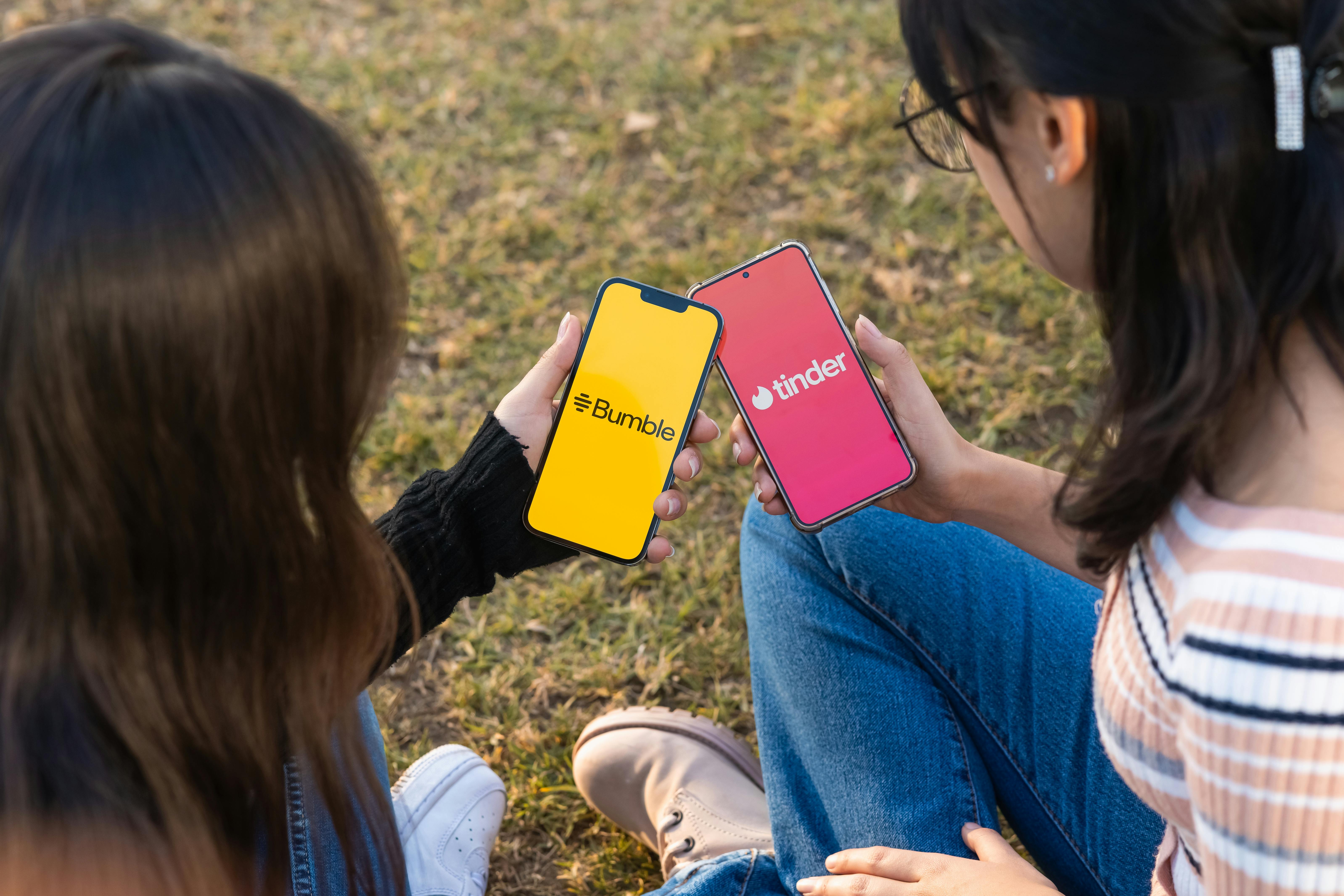
What the campaign does accomplish is brand differentiation in a market where product features have largely converged. Tinder trails Hinge in the 'relationship-seeking' positioning that drives subscriber conversion. Civic engagement messaging—particularly when timed to external events like elections—offers a values-based differentiation play that costs nothing to implement and generates press coverage.
Echo chambers or engagement drivers
The harder question is what happens when political engagement becomes standard filter criteria. Dating apps already face criticism for enabling aesthetic and demographic filtering that reinforces social stratification. Political filtering introduces a new dimension: the possibility of romantic echo chambers that parallel social media's algorithmic ones.
Research on political homophily in relationships is mixed. Analysis from Stanford's How Couples Meet and Stay Together survey shows political similarity in couples has increased since 2000, but attributes this to broader political polarisation rather than selection mechanisms. Dating apps that make political filtering explicit—and frictionless—could accelerate that trend.
Platforms defend political features as user-driven, but user demand and platform incentive aren't always distinguishable. Features that increase engagement and time-in-app get built.
The alternative reading: political filtering could drive civic engagement among men, who Tinder's research suggests are more politically 'swayable'. If 33% of potential matches care about voter registration, and if that preference is surfaced pre-match, the market incentive shifts. Registration becomes a low-cost signal of relationship-readiness, like height or job title.
Which mechanism dominates—polarisation or participation—depends on implementation. Tinder's current campaign stops at information and registration prompts. It doesn't offer political filters or badges. That's a product decision, not a moral one.

What operators should watch
Dating platforms face a version of the content moderation dilemma that engulfed social networks: whether to facilitate user preferences that may have negative social externalities. Political filtering is legal, often requested, and provably increases engagement. It also potentially accelerates political sorting in relationship formation, with downstream effects on political polarisation.
Regulatory frameworks haven't caught up. The UK Online Safety Act and EU Digital Services Act focus on illegal content and child safety, not political filtering. Competition authorities care about market concentration, not whether apps make it easier to date only within political tribes.
For operators, the calculus is simple: political features generate press, satisfy vocal user segments, and differentiate products in a crowded market. The civic engagement framing provides moral licensing. Whether platforms are obligated to consider second-order effects—on polarisation, on democratic discourse, on relationship formation—is a question the industry hasn't seriously engaged.
Tinder's voter registration campaign is the acceptable face of politics in dating apps: non-partisan, civic-minded, unobjectionable. What comes next—filters, badges, match boosting based on political alignment—will test whether the industry believes it has a responsibility beyond user engagement metrics. The research Tinder published suggests the demand is there. Whether platforms build for it will determine if political tribes become romantic ones.
Key Takeaways
- •Political alignment features offer dating app operators low-cost brand differentiation and user engagement in markets where core product features have largely converged.
- •Dating operators must weigh user demand for political filtering against the risk of creating romantic echo chambers that mirror social media polarisation dynamics.
- •Current regulatory frameworks like the UK Online Safety Act ignore political filtering mechanisms, leaving platforms to self-regulate on features with broader social externalities.
Frequently Asked Questions
Technology & AI Desk
The DII Technology Desk reports on product, engineering, AI and platform infrastructure across dating and social discovery apps.
Comments
Join the discussion
Industry professionals share insights, challenge assumptions, and connect with peers. Sign in to add your voice.
Your comment is reviewed before publishing. No spam, no self-promotion.