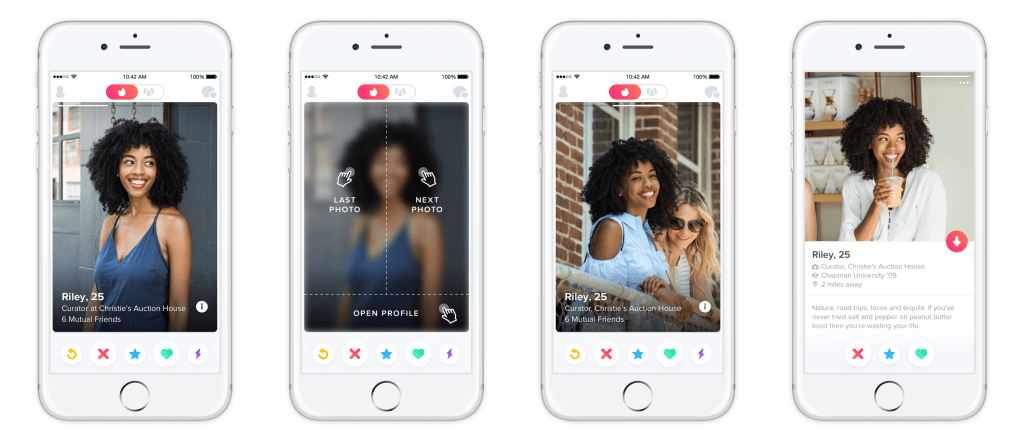
Rodeo's $8.5M Bet: Hinge Founders Pivot from Dating to Friendship Logistics
Key Points
- •Rodeo raised $8.5 million in seed funding led by Coefficient Capital to develop a friend activity coordination application.
- •Former Hinge executives Michelle Lai and Michael Laing co-founded Rodeo after departing the dating app operator in 2022.
- •The Rodeo application scrapes venue details from Instagram and TikTok, gathering 20,000 beta users to convert content into bookable plans.
- •Rodeo generates revenue through affiliate booking fees with OpenTable and Resy rather than relying on user subscriptions or advertising.
The founding team behind Hinge's transformation into Match Group's most successful relationship app has placed their next bet on a radically different proposition: that the problem worth solving isn't helping strangers meet, but helping people who already know each other actually see one another. Their pivot from dating infrastructure to "friendship maintenance" reveals a strategic acknowledgement that the loneliness epidemic driving dating app usage extends well beyond romantic connection. If they're right, the entire swipe-to-chat model looks like infrastructure for the wrong problem.

This is what a mature assessment of social connection looks like after a decade of dating apps promising to solve loneliness whilst building business models that depend on sustained singledom. Rodeo's founding bet — that the friction isn't in discovering people but in converting digital interest into physical presence — applies just as forcefully to dating as it does to friendship. The fact that two executives who benefited enormously from that model are now building its potential replacement should concern anyone still doubling down on traditional dating app features.
Solving for flaky execution, not sparse networks
Rodeo's core mechanic addresses what its founders identify as the "saved for later" problem: content accumulates in DMs and group chats, plans get discussed but never finalised, and the organisational burden of converting "we should do that" into confirmed calendar entries falls to whoever has the most tolerance for logistics friction. The app monitors users' social feeds, identifies venues and events tagged or mentioned, and surfaces them as potential plans. Users can share options with friends, vote on preferences, and book directly through partnerships with reservation platforms including OpenTable and Resy.
Create a free account
Unlock unlimited access and get the weekly briefing delivered to your inbox.
According to the company, 20,000 users have joined during the beta period, though no engagement or retention metrics have been disclosed. Monetisation runs through affiliate fees on bookings rather than subscriptions or advertising. That positions Rodeo as coordination infrastructure rather than a content platform — it makes money when people actually show up to restaurants and venues, not when they scroll or click.
The model depends on consistent conversion from saved content to executed plans, which remains unproven at scale.
What's notable here is the deliberate rejection of the "meet new people" category that has absorbed hundreds of millions in venture capital with limited success. Bumble's BFF mode has existed since 2016 and rarely features in the company's earnings commentary. Peanut raised $25M to connect mothers and reports 3.5M downloads but hasn't disclosed active user figures.

Meetup, the decade-old incumbent, sold to AllegisCyber for an undisclosed sum in 2023 after struggling to convert free users into paying members. Rodeo distinguishes itself by targeting existing relationships rather than building new ones. That's a narrower opportunity but potentially a more defensible one: the coordination problem exists for anyone with friends, not just people actively seeking to expand their social circle.
The dating industry's adjacent crisis
For dating operators, Rodeo's thesis should prompt uncomfortable questions about whether apps have overindexed on discovery mechanics whilst underinvesting in the transition from match to meeting. Match Group has acknowledged this friction repeatedly. In its Q3 2024 earnings, CEO Bernard Kim noted that 'helping members move from digital to in-person experiences' remained a strategic priority, though actual product investments have been limited to date suggestions and timing prompts rather than logistical infrastructure.
Bumble introduced "Bumble Compliments" to encourage conversation starters but hasn't tackled the calendar coordination problem that sits between conversation and dates. The gap between chat and commitment represents unmonetised friction that dating apps have largely ignored. Rodeo's approach — treating plan execution as the product rather than a byproduct of connection — suggests a different business model entirely.
If affiliate booking fees generate sustainable unit economics, dating apps may eventually need similar infrastructure to capture value from the dates they enable rather than extracting it entirely from the pre-date discovery phase.
The founders' background makes the strategic pivot particularly pointed. Hinge's "designed to be deleted" positioning and relationship-focused product design drove subscriber growth to 1.1M by Q2 2024, according to Match Group's most recent disclosure. Lai and Laing were instrumental in building that growth. Their move away from dating apps toward friend coordination suggests they believe the former has matured as a category whilst the latter represents unsolved demand.
What $8.5M buys in execution risk
The seed round is substantial for a consumer social app in 2025, particularly one without disclosed retention data or revenue. Coefficient Capital's involvement is significant: the firm led Hinge's Series A in 2017 and has sector-specific credibility. Vaswani's participation adds Match Group proximity, though he departed in 2020 and hasn't been involved in the company's recent strategic direction.
The funding provides runway to test whether content scraping and booking infrastructure actually convert to habitual usage. Consumer social apps face brutal retention curves; even well-designed products struggle to survive the first 30 days. Rodeo's bet is that solving genuine logistical friction creates enough retained utility to overcome novelty drop-off, but the evidence for that remains thin.
The competitive question centres on whether OpenTable, Resy, or Google could simply build similar features into existing booking flows. If plan coordination is genuinely valuable, platforms that already own reservation infrastructure have distribution advantages Rodeo can't match. The counter-argument is that social feeds live elsewhere and extracting them into structured plans requires neutral third-party positioning that incumbent booking platforms lack.
For dating industry observers, the relevant precedent isn't Bumble BFF or Peanut. It's whether apps built around facilitating offline meetings can sustain venture-scale businesses without depending on sustained user dissatisfaction. Dating apps monetise the gap between desire and fulfilment; Rodeo monetises successful execution.
That's a fundamentally different relationship with user outcomes, and whether it's financeable at scale will determine whether other operators follow the same path. The broader trend of Gen Z prioritising in-person verification over extended digital communication suggests the market may be shifting toward products that reduce rather than extend the time between connection and meeting. If that preference extends beyond dating into general social coordination, Rodeo's timing could prove prescient—though adjacent social platforms are also recognising similar opportunities to facilitate real-world connection.
Key Takeaways
- •Dating app operators should evaluate whether monetising pre-date discovery remains viable as consumers demand better tools to bridge the gap between matching and meeting.
- •If Rodeo proves affiliate booking models work, dating platforms may need to capture value from offline execution rather than relying on sustained singlehood.
Frequently Asked Questions
Financial Intelligence Desk
The DII Financial Intelligence Desk covers earnings, valuations, funding and the financial performance of the global online dating industry.
Comments
Join the discussion
Industry professionals share insights, challenge assumptions, and connect with peers. Sign in to add your voice.
Your comment is reviewed before publishing. No spam, no self-promotion.