Grindr's AI Productivity Claim: A 200-Engineer Mirage?
Key Points
- •Grindr reported that its engineering output increased 2.5 to 3.5 times since mid-2024 with flat headcount, equivalent to roughly 200 additional engineers.
- •Grindr Chief Executive Officer George Arison stated that hiring 200 additional engineers to achieve equivalent output would cost approximately 60 million US dollars annually.
- •Grindr measured these engineering productivity gains primarily through code volume shipped, without disclosing bug rates, quality metrics, or technical debt levels.
- •Chief Executive Officer George Arison acknowledged during Grindr's Q2 earnings call that the higher 3.5 times productivity multiplier appeared difficult to substantiate.
Grindr has become an unlikely test case for quantifying generative AI's impact on software development, with CEO George Arison claiming the dating platform's engineering output has increased up to 3.5 times despite stable headcount. The equivalent capacity would cost roughly $60 million annually to hire—a figure that represents 200 additional engineers the company hasn't needed to recruit. Few tech executives have attempted to put such precise numbers on AI productivity gains, making the disclosure both remarkable and potentially revealing about how the technology reshapes competitive dynamics across the dating industry.
The claim is striking in its precision. Arison initially cited the lower 2.5x multiplier in written materials because, as he later acknowledged on the company's Q2 earnings call, the actual 3.5x figure 'appeared difficult to substantiate'. That admission is doing some heavy lifting.
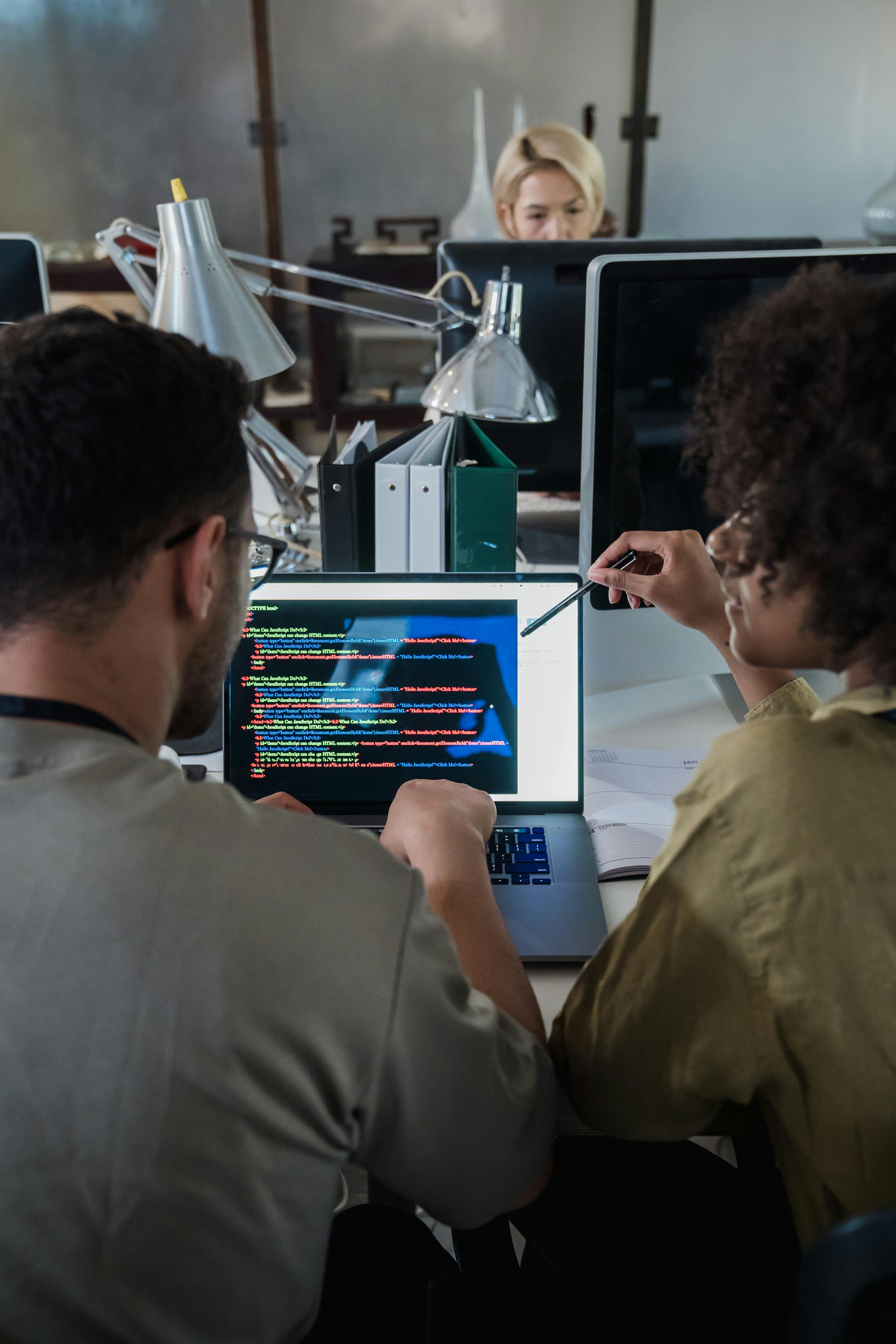
Grindr measures the gain primarily through volume of code shipped, a metric that says nothing about code quality, bug rates, technical debt, or whether the additional output actually translates into features that members use. The company hasn't disclosed what portion of AI-generated code requires human review or rework, nor how much of the productivity boost comes from automating grunt work versus enabling genuinely new capabilities.
Create a free account
Unlock unlimited access and get the weekly briefing delivered to your inbox.
Grindr deserves credit for putting hard numbers to something most of its peers won't discuss publicly. Whether those numbers hold up under scrutiny is another matter entirely. Measuring productivity by code shipped is like measuring a journalist's output by word count—it tells you something, but not the thing that matters.
The real question isn't whether AI lets engineers write more code; it's whether that code ships faster, breaks less, and solves actual user problems better than what came before.
What Grindr is actually claiming
The company isn't saying it's replaced 200 engineers. The figure represents additional capacity that could theoretically be deployed to Grindr itself or 'any additional projects, platforms or technology that the company chooses to put resources into', according to the disclosure. That's a meaningful distinction.
Grindr's engineering team hasn't shrunk; it's ostensibly doing more with the same number of people. Arison framed the shift as allowing engineers to focus on work requiring 'human creativity and judgment' rather than rote implementation.
That's the optimistic read. The less optimistic one is that Grindr has found a way to extract significantly more output from its existing team without proportional compensation increases, at a moment when the broader tech sector is resetting salary expectations downward. The company also pointed to recruiting challenges as a factor in its AI adoption strategy.
Hiring senior engineers has become more difficult and expensive, particularly for a business that operates in a category some candidates consider reputationally complicated. If AI tooling can reduce the need to compete for scarce talent in an overheated market, that's a genuine competitive advantage—though one that works only as long as competitors face the same constraints.

The competitive wedge
Dating platforms have historically competed on feature velocity. Whoever ships faster, iterates more frequently, and responds to user feedback most nimbly tends to win attention and retention. If Grindr's claims hold, AI-assisted development fundamentally changes that calculus.
A well-resourced operator with the infrastructure and expertise to deploy generative AI at scale can now move at a pace that smaller competitors simply cannot match. Match Group and Bumble almost certainly have similar AI initiatives underway, though neither has quantified the impact as explicitly as Grindr.
Both companies have larger engineering organisations and more brands to support, which could amplify the benefits—or create integration complexity that negates them. The real stress point is further down the stack: white-label providers, bootstrapped apps, and regional specialists operating on thin margins with small teams.
If the productivity gap is real, those operators face a choice between adopting AI tooling they may lack the expertise to implement effectively or falling further behind on product development.
White-label dating platforms, which sell turnkey software to smaller operators, could become the equaliser here. If providers like Venntro or Diatonus build AI-assisted development into their platforms, smaller operators could access some of the same velocity gains without needing in-house AI expertise. That would preserve competitive dynamics.
If they don't—or if the gains require custom engineering that only larger teams can sustain—the industry consolidates further.
The measurement problem
The difficulty Arison acknowledged in substantiating the 3.5x figure points to a broader issue the industry will need to grapple with as AI adoption accelerates. Code shipped is a vanity metric. What matters is whether that code delivers user value, maintains system stability, and reduces rather than increases technical debt.
Generative AI is excellent at producing plausible-looking code quickly. It's less reliable at producing correct, efficient, or maintainable code. Grindr hasn't disclosed what its bug rates look like post-AI adoption, how much engineering time is spent reviewing and correcting AI-generated code, or whether the productivity gains hold once you account for downstream maintenance costs.
Those details matter, particularly for trust and safety teams. A feature that ships faster but introduces new attack vectors or privacy vulnerabilities isn't a productivity win; it's a liability. The company also hasn't clarified whether the productivity gains are uniform across its engineering organisation or concentrated in specific functions.
If AI primarily accelerates front-end development or UI work, that's useful but not transformative. If it meaningfully speeds backend infrastructure, data pipeline work, or machine learning model development, that's a different order of magnitude.

What operators should watch
Grindr's disclosure sets a new benchmark for transparency around AI productivity claims. Other platforms will face pressure from investors to quantify their own gains—or explain why they're not seeing similar results. Expect more companies to start breaking out AI-related metrics in earnings materials, though the methodologies will vary wildly and comparisons will be fraught.
For operators, the immediate question is whether to invest in AI-assisted development tooling and, if so, how aggressively. The technology is improving rapidly, but implementation isn't trivial. Smaller teams may find that the overhead of integrating and managing AI tools outweighs the productivity gains, at least in the near term.
Larger platforms with dedicated infrastructure and machine learning teams are better positioned to capture the upside. The longer-term question is whether AI-driven productivity becomes a new competitive moat. If the gap between well-resourced platforms and everyone else widens significantly, the dating industry—already tilted toward consolidation—tips further.
Grindr's 200-engineer claim may prove optimistic, poorly measured, or both. But the direction is clear: AI is changing how dating platforms build product, and not every operator will benefit equally.
Key Takeaways
- •Dating app operators risk widening the competitive gap between well-resourced platforms like Grindr or Match Group and smaller niche operators if artificial intelligence tools are not adopted sector-wide.
- •Investors and compliance teams examining dating platforms should demand metrics on bug rates and technical debt rather than relying solely on code volume output claims from executives.
- •White-label dating software providers such as Venntro or Diatonus may need to integrate artificial intelligence tools to help smaller operators match the feature velocity of larger platforms.
Frequently Asked Questions
Technology & AI Desk
The DII Technology Desk reports on product, engineering, AI and platform infrastructure across dating and social discovery apps.
Comments
Join the discussion
Industry professionals share insights, challenge assumptions, and connect with peers. Sign in to add your voice.
Your comment is reviewed before publishing. No spam, no self-promotion.