

Breeze's Height Filter Data: A Sign of UK Dating Inertia?
Key Points
- •According to Breeze's 2025 Dating Report, 32 percent of United Kingdom dating app users apply height filters to matches, compared to 39 percent of users in the Netherlands.
- •British dating app users take an average of 12 days to convert a digital match into an in-person date, compared to a sub-seven-day median in New York.
- •Internal data from Hinge suggests 40 to 50 percent of United Kingdom users apply physical attribute filters, significantly higher than the 32 percent recorded by Breeze.
Breeze, a dating app positioned as an anti-swipe alternative to the mainstream, has published findings claiming UK users are the least height-conscious daters in its global dataset. British members apply height filters at just 32%, versus 39% in the Netherlands and higher rates across US markets. But the data also reveals British users take nearly twice as long as Americans to convert matches into actual dates—a 12-day average that raises uncomfortable questions about whether open-mindedness is masking simple inertia.
The timing is notable. Over the past 18 months, height filters have become a flashpoint in the broader debate about superficiality on dating platforms. Bumble experimented with removing physical attribute filters entirely in select markets last year, whilst Hinge has increasingly buried filter options deeper in its interface, nudging users towards what it frames as 'personality-led' discovery.

Whether those changes reflect genuine product philosophy or marketing repositioning in response to user criticism is an open question, but the narrative shift is unmistakable: filters are out, compatibility is in. Breeze's data is self-serving—this is a small player with a vested interest in positioning itself as the thoughtful alternative—but the height finding is genuinely surprising, particularly given the Netherlands comparison.
Create a free account
Unlock unlimited access and get the weekly briefing delivered to your inbox.
That Dutch users, who average 183cm for men and are statistically the tallest population globally, are more height-conscious on apps than Brits is counterintuitive enough to warrant attention. The 12-day wait time, however, tells a different story. If British daters are so open-minded and compatibility-focused, why are they taking nearly twice as long as Americans to actually meet?
That's not selectivity; that's inertia.
The pen-pal problem dressed as open-mindedness
What Breeze frames as a 'more open-minded approach' could just as easily be read as indecision, over-optimisation, or the well-documented phenomenon of endless messaging replacing actual dating. The company's interpretation—that fewer height filters means UK singles are 'prioritising personality, lifestyle and compatibility'—is a leap. It's entirely possible that British users simply care less about height as a specific criterion whilst still being highly selective on other dimensions Breeze doesn't measure or disclose.
The 12-day average between match and meeting is the more revealing figure. In the US, particularly in major metros like New York, the median time to first date is under seven days, according to data disclosed by Hinge in 2023. British users taking nearly double that suggests something structural: either cultural caution, a higher tolerance for protracted text-based interaction, or simple app fatigue manifesting as slower follow-through.
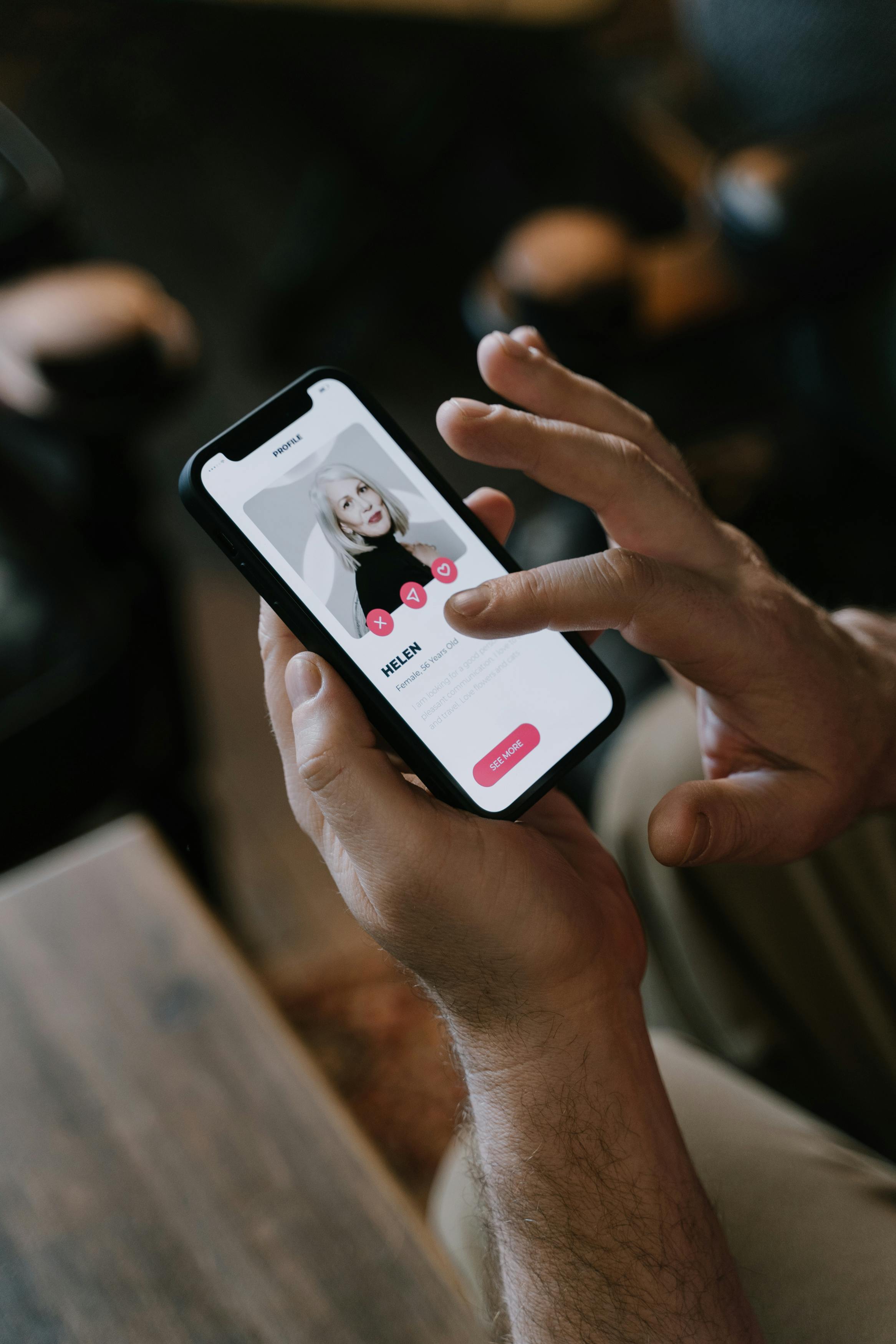
That willingness to travel over 400km for a first date—cited by Breeze as evidence of commitment—doesn't necessarily contradict the delay. Long-distance interest may signal intent, but it also introduces logistical friction that naturally extends timelines. The question for operators is whether that 12-day window represents healthy vetting or a symptom of diminishing conversion from match to meeting.
Methodology gaps and market representation
Breeze hasn't disclosed sample size, timeframe, or demographic composition for its 'millions of matches' claim. That matters. The company is a relatively small player with a product that explicitly markets itself against swipe-based incumbents.
Its user base skews towards singles already dissatisfied with mainstream apps—a self-selected cohort unlikely to represent broader UK behaviour on Tinder, Hinge, or Bumble, which collectively account for the vast majority of UK dating app activity. Match Group (MTCH) and Bumble (BMBL) haven't released comparable height filter data, but internal metrics from Hinge shared at industry events suggest physical attribute filters are applied by 40–50% of users in the UK, depending on gender and age cohort.
That's materially higher than Breeze's 32% figure, which suggests either a genuinely different user behaviour on Breeze's platform or a measurement approach that isn't directly comparable.
The Netherlands comparison is the most intriguing element. Dutch users applying height filters at 39%—the highest rate Breeze recorded—challenges the assumption that taller populations would be less height-conscious. One plausible explanation: in markets where average height is higher, relative height differences become more salient as a selection criterion.
What this means for product strategy
If the height filter trend Breeze identifies is real and broadening beyond its own platform, it has implications for how operators balance user control with nudges towards less superficial matching. Bumble's decision to experiment with removing filters was polarising; some members appreciated the forced serendipity, whilst others found it patronising and restrictive. Hinge's approach—retaining filters but de-emphasising them in UI—may be the middle path, but it still assumes users need to be steered away from their own stated preferences.

The alternative view, held by Tinder and increasingly by Grindr (GRND), is that users should have maximum control and transparency. Grindr's product philosophy has consistently been that explicitness reduces friction and time-wasting. Filters aren't superficial; they're efficient.
What's missing from Breeze's analysis is outcome data. Are UK users who don't filter by height more satisfied with their matches? Do they report higher-quality dates or longer-term relationship formation? Without that, the finding is descriptive but not actionable.
The 12-day wait time, meanwhile, should concern every operator tracking conversion metrics. If British users are taking longer to meet, that's either a cultural constant that products need to accommodate—or it's a signal that messaging features are enabling avoidance rather than connection. The latter would align with broader platform fatigue trends: users staying active on apps not because they're successfully dating, but because the apps have become low-stakes social spaces that delay rather than facilitate real-world interaction.
Operators focused on time-to-meeting as a health metric—Hinge has publicly committed to this as a measure of product success—will be watching whether the UK timeline compresses or continues to extend. If it's the former, Breeze's height filter data may indeed reflect a maturing market moving past superficial selection. If it's the latter, British daters may just be slower to commit, open-minded or not.
The company's recent launch in the UK with its offline-first model positions it to test whether limiting pre-date messaging can compress these timelines and improve conversion rates.
Key Takeaways
- •Extended timeframes between matching and meeting in the United Kingdom present an operational challenge for dating platforms like Hinge and Breeze that track offline conversion as a success metric.
- •Platform operators must evaluate whether restricting physical attribute filters improves matching outcomes or creates friction, balancing guided discovery against user demands for search control.
Frequently Asked Questions
Data & Analytics Desk
The DII Data Team maintains the publication's trackers, market data and analytical reference hubs for the online dating industry.
Comments
Join the discussion
Industry professionals share insights, challenge assumptions, and connect with peers. Sign in to add your voice.
Your comment is reviewed before publishing. No spam, no self-promotion.


