Unemployment Anxiety: Dating Apps' Blind Spot in Economic Precarity
Key Points
- •A US survey of over 1,000 adults by Tawkify revealed that 71 per cent of singles do not consider unemployment a dealbreaker when dating someone new.
- •More than half of unemployed respondents report feeling anxious about disclosing their job status to potential partners despite high levels of reported peer acceptance.
- •Around two-thirds of individuals who lost jobs cited financial strain as their primary obstacle to dating, prompting venue changes or complete social withdrawal.
- •A strong majority of survey participants stated that unemployed men experience greater romantic stigma than unemployed women, leading to higher reported breakup rates.
Job loss is now common enough that most singles say they can look past it. Yet more than half of unemployed people still feel anxious disclosing their status to potential partners, according to a US survey of over 1,000 adults conducted by matchmaking service Tawkify. The gap between what daters claim to accept and what jobless singles actually experience reveals something uncomfortable about how economic instability and dating culture interact—and it's not just about money.
According to Tawkify's data, 71% of respondents don't consider unemployment a dealbreaker when meeting someone new. That suggests openness, even empathy. But the same survey found that more than half of unemployed singles report anxiety about revealing their job status, whilst a comparable proportion say unemployment damages their self-esteem. The numbers expose a disconnect: theoretical tolerance doesn't translate into lived experience.
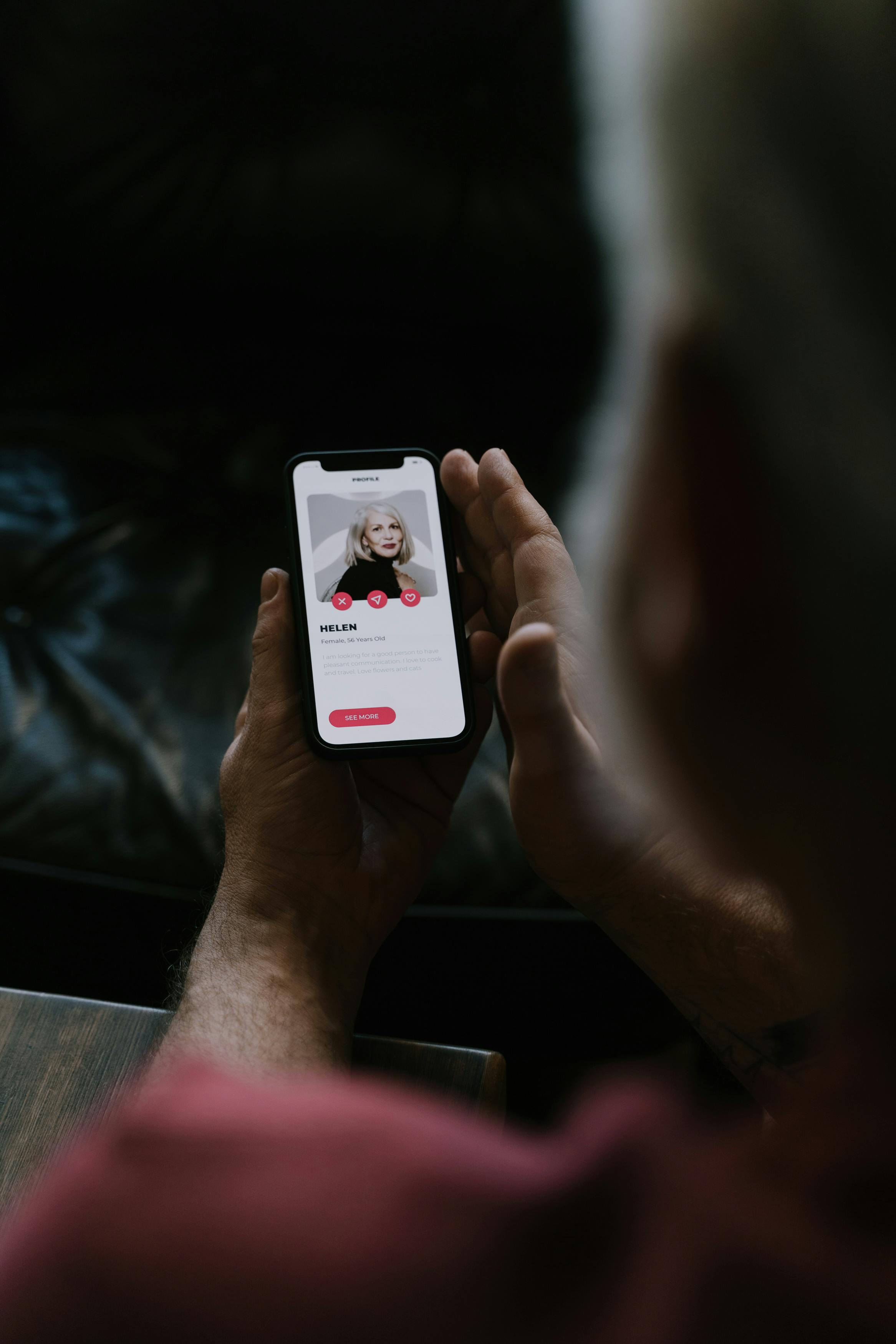
Unemployed singles aren't imagining the stigma. They're internalising it, even when the people they're dating claim not to judge.
Create a free account
Unlock unlimited access and get the weekly briefing delivered to your inbox.
This is the dating industry's version of the empathy gap that plagues hiring, housing, and healthcare.
Singles perform acceptance—unemployment happens, everyone's been there, it's fine—but the emotional architecture of dating apps and the cultural weight of "what do you do?" make joblessness feel like failure. Operators who treat employment status as just another profile field are missing how deeply it shapes member behaviour, from message anxiety to churn. The bigger question: can platforms designed around achievement signalling ever truly accommodate economic precarity, or does the format itself encode the stigma?
Financial strain drives behavioural retreat
Money explains part of the pattern. Tawkify's figures show that around two-thirds of those who've lost jobs cite financial strain as the biggest barrier to dating. That's not just about affording dinner. It's about the transactional expectations baked into dating culture, where "going out" still defaults to spending, and where scaling back can feel like signalling you're not serious or not worth the effort.
The result is predictable: unemployed singles adjust their behaviour. Many opt for fewer dates, cheaper venues, or withdraw from dating altogether. That's rational resource management, but it also means platforms lose active users precisely when those members might benefit most from connection.
Churn driven by economic precarity doesn't show up in trust and safety metrics, but it's a retention problem with macro-level implications as labour markets remain unstable. Operators watching engagement drop among certain cohorts would do well to consider whether affordability—not just of subscriptions, but of participation itself—is quietly reshaping who stays active. The cost-of-living crisis hasn't ended. Neither has the string of tech sector redundancies that defined 2023 and early 2024.

Gendered stigma persists despite shifting norms
Tawkify's data also highlights a gendered dimension that complicates the empathy narrative. A strong majority of respondents believe unemployed men face more stigma in dating than unemployed women, and men are more likely to report relationship breakups following job loss. That's perception data, not evidence of differential treatment, but perception shapes behaviour. If men expect judgement, they're more likely to withdraw, self-edit, or avoid dating entirely whilst unemployed.
This sits awkwardly alongside two decades of progress toward more egalitarian relationship models. Women now out-earn men in a growing share of heterosexual partnerships, and dating discourse increasingly rejects traditional breadwinner expectations. Yet the survey suggests those cultural scripts haven't disappeared—they've just gone underground, manifesting as internalised shame rather than explicit rejection.
The implications for product teams are worth considering. Dating apps that emphasise job titles, education, and career milestones in profile prompts or verification flows may be amplifying employment anxiety, even unintentionally. Hinge's "I'm looking for someone who..." prompts often default to professional ambition. LinkedIn integration was once a trust signal; in a precarious labour market, it becomes a vulnerability.
The limits of performative acceptance
What makes this story more than a soft feature about dating feelings is the structural mismatch it reveals. Dating apps are curated identity platforms. Members signal value through photos, bios, and prompts that frame them as desirable, successful, and socially proof. Employment fits neatly into that logic—it's shorthand for stability, ambition, compatibility.
Removing it, or acknowledging its absence, disrupts the performance. The format itself encodes judgement. Swiping is sorting. Profiles are portfolios.
"What do you do?" remains one of the first questions people ask, online and off, because it's a socially acceptable proxy for worth. Changing that norm requires more than adding "it's okay to be job-hunting" to community guidelines.

Tawkify, as a matchmaking service rather than a self-serve app, has commercial incentive to frame dating challenges as solvable through human intervention. The survey was conducted with its client demographic in mind, which skews toward higher-income users willing to pay for personalised matchmaking. That may limit generalisability, but it also suggests that even relatively affluent singles—who might weather unemployment with savings or networks—still experience status anxiety.
Regulatory and trust frameworks don't yet touch this terrain, but they should inform how platforms think about member vulnerability. Unemployment isn't a protected characteristic, but economic precarity intersects with mental health, which increasingly is within scope for duty-of-care obligations under frameworks like the UK Online Safety Act. A member spiralling into anxiety over disclosure, or withdrawing from dating entirely due to financial shame, represents a kind of harm that platforms rarely measure but absolutely enable.
The empathy gap won't close through better survey data or awareness campaigns. It requires rethinking how dating platforms encode value, what they ask members to disclose, and whether the achievement-signalling model that defined the last decade of product design still serves users navigating an economy where job loss is routine. When work is the most important way of proving your worth in America, being unemployed can make it difficult to date, and platforms must reckon with broader patterns of vulnerability and disclosure anxiety in dating culture. Until then, expect the disconnect to widen.
Key Takeaways
- •Dating app operators must reconsider achievement-signalling features such as mandatory career fields and ambition-focused prompts that drive user withdrawal and silent churn during economic downturns.
- •Compliance and product teams should monitor economic precarity as an intersecting mental health factor under emerging regulatory duty-of-care frameworks such as the UK Online Safety Act.
Frequently Asked Questions
Data & Analytics Desk
The DII Data Team maintains the publication's trackers, market data and analytical reference hubs for the online dating industry.
Comments
Join the discussion
Industry professionals share insights, challenge assumptions, and connect with peers. Sign in to add your voice.
Your comment is reviewed before publishing. No spam, no self-promotion.