Dating Apps Break Barriers, But Racial Bias Remains Unchecked
Key Points
- •A 2020 University of New Mexico study of over 3,000 adults found dating app users exhibit stronger same-race preferences than couples meeting offline.
- •Research indicates couples meeting on platforms like Hinge and Bumble progress to marriage faster than offline couples, with similar long-term stability rates.
- •Match Group and Bumble face potential compliance obligations under the EU Digital Services Act and UK Online Safety Act regarding algorithmic bias transparency.
- •Design interventions such as Bumble removing ethnicity filters in 2020 have not demonstrably eliminated racial filtering caused by rapid visual sorting mechanisms.
Platforms claim to democratise dating by connecting people across traditional social boundaries. New research suggests they're doing exactly that—just selectively. The findings arrive as dating platforms face mounting scrutiny over algorithmic fairness and design choices that may amplify user biases rather than diminish them.
The Barrier-Breaking Paradox
A 2020 study from the University of New Mexico analysed over 3,000 adults and found that couples who meet through dating apps are significantly more likely to cross religious, educational, and geographical lines than those who meet offline. Partners who met online were more likely to have different educational backgrounds, religious affiliations, and prior geographic locations than those introduced through friends, family, or workplace contexts.
The educational finding is particularly striking. Traditional offline meeting venues—universities, professional networks, neighbourhood social groups—tend to be stratified by class and education level. Dating apps flatten that structure by putting graduates and non-graduates in the same discovery pool, at least theoretically.
Create a free account
Unlock unlimited access and get the weekly briefing delivered to your inbox.

Geography tells a similar story. Apps enable connections across city boundaries and neighbourhood divides that would rarely occur through organic social mixing. Someone in Shoreditch can match with someone in Clapham without needing mutual friends or shared institutions as connective tissue.
Dating apps appear to reinforce existing racial divisions, with users showing stronger same-race preferences than in traditional meeting contexts, according to research published by sociology professor Reuben Thomas
But age and race show the opposite pattern. According to the research, online daters demonstrated stronger preferences for partners of similar age and the same race compared to those meeting through traditional channels. The age preference might be explained by filter settings—most apps allow users to screen out age ranges entirely. Race is more complex.
When Design Amplifies Bias
Multiple studies beyond Thomas's work have documented racial preference patterns in online dating. A 2018 analysis from Cornell University found that minority users received significantly fewer matches than white users with otherwise identical profiles. OkCupid's internal data, published in 2014, showed Black women and Asian men received the lowest response rates across the platform.
The question facing operators is whether app mechanics intensify pre-existing biases. Rapid-fire swiping through profile photographs may heighten snap judgments based on physical appearance and perceived race in ways that slower-burn offline introductions don't. When your mutual friend introduces you to someone at a dinner party, you're socially obligated to engage for at least a few minutes. When you're scrolling through Hinge at 11pm, the friction to dismiss someone is zero.
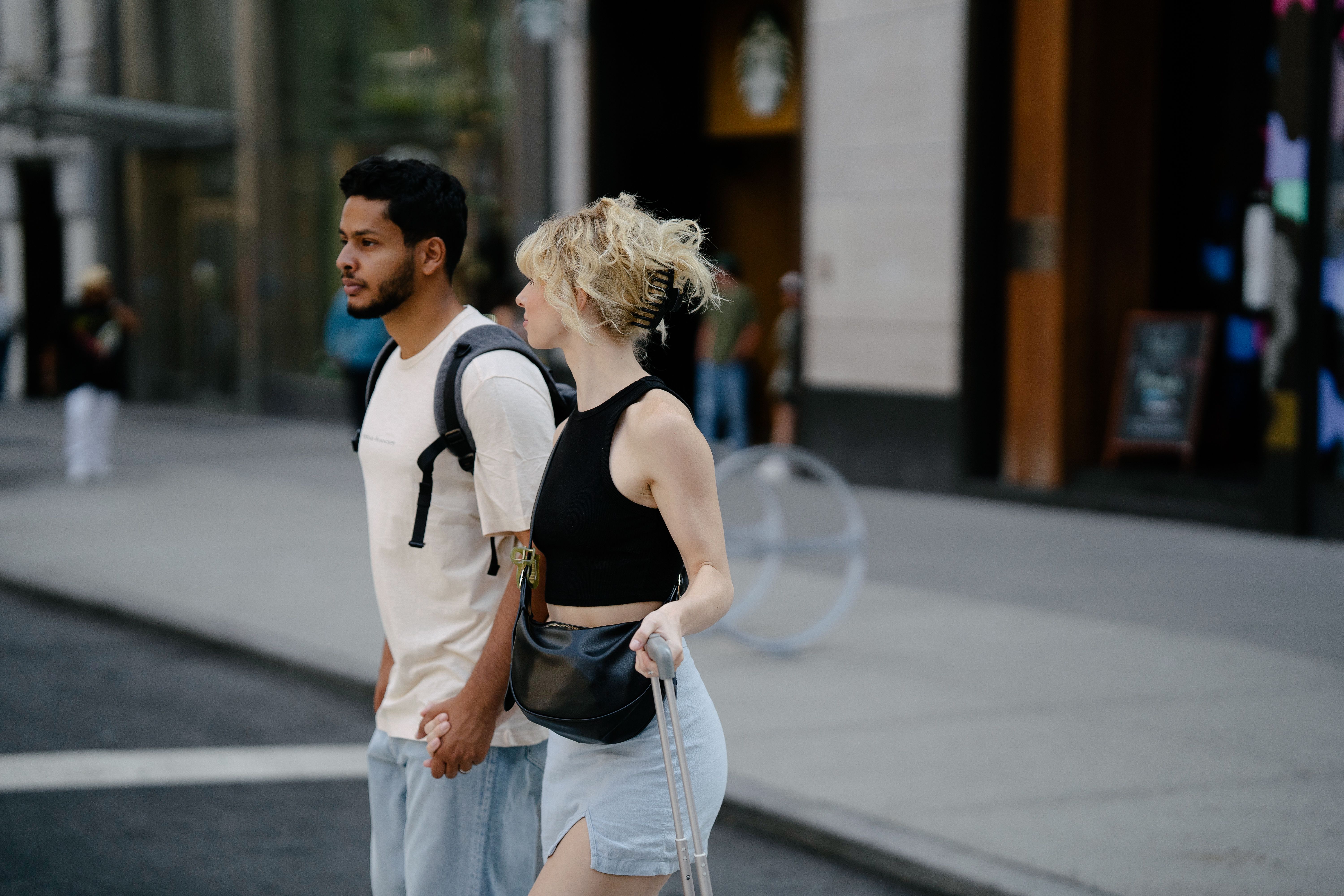
Some platforms have attempted design interventions. Bumble removed ethnicity filters in 2020, though users can still self-identify and others can still filter by location as a proxy. Match introduced an 'Open to All' badge for users willing to date across racial lines. Hinge has tested prompts designed to surface personality over appearance first.
Apps claim to expand possibilities, but the architecture of swiping through faces appears to heighten racial filtering rather than diminish it
Whether these features actually shift behaviour remains unclear. The Thomas research suggests the structural problem may be more fundamental: when you're presented with unlimited options and asked to make binary accept/reject decisions based primarily on photos, you're likely to default to ingrained preferences—including racial ones.
The Marriage Velocity Question
One unexpected finding from the research: couples who met online progressed to marriage faster than those who met offline, though long-term relationship stability showed no significant difference between the two groups. Thomas attributed the faster timeline to intentionality.
Dating apps require users to explicitly state relationship goals in ways that organic offline meetings don't. Someone who specifies they're looking for a long-term partner on their profile is pre-filtering for others with similar intent, potentially accelerating the progression from first date to commitment.
For operators, that's a useful data point. Subscription revenue increasingly depends on conversion to serious relationships rather than endless swiping—features that facilitate clearer intent signalling may improve both user satisfaction and retention. Match has leaned into this with its 'Relationship Goals' feature. Hinge's entire brand positioning centres on being 'designed to be deleted'.
But the finding also raises questions about whether apps are creating different relationship dynamics. If couples meet with explicit shared intent to find a long-term partner, does that produce different outcomes than relationships that evolve organically from friendship or casual dating? The research doesn't address long-term satisfaction rates, only progression speed and basic stability metrics.
What Platforms Aren't Measuring
The broader implication is that dating apps aren't neutral matchmaking tools—they're actively reshaping society's romantic landscape in specific, measurable ways. They're breaking down some barriers whilst reinforcing others, and those patterns are functions of design choices, not inevitabilities.

Operators face a tension: user preferences drive engagement, and engagement drives revenue. If your members demonstrate clear racial preferences in their swiping behaviour, surfacing more same-race profiles improves match rates and session time. Fighting against those preferences means potentially degrading core metrics.
Regulatory pressure may force the issue. The EU Digital Services Act (DSA) requires platforms to assess systemic risks, including whether algorithms amplify societal harms. If dating apps can be shown to reinforce racial segregation through recommendation systems, that could trigger compliance obligations. The UK Online Safety Act (OSA) contains similar provisions, though enforcement mechanisms remain unclear.
Match Group disclosed in its most recent 10-K filing that it faces ongoing scrutiny related to algorithmic transparency and fairness. Bumble's S-1 filing ahead of its 2021 IPO highlighted platform safety and inclusive design as risk factors. Neither company has published comprehensive bias audits of their matching algorithms, though Grindr (GRND) released limited demographic data in 2022 showing usage patterns by race.
The University of New Mexico research is now four years old, conducted before pandemic-driven dating app adoption surged. Whether these patterns have intensified, diminished, or shifted as apps captured larger market share and expanded the dating pool remains an open question—and one that operators have both the data and the obligation to answer.
Key Takeaways
- •Dating app operators face a strategic conflict between optimising user engagement metrics and mitigating regulatory risks associated with algorithmic bias.
- •Compliance teams at Match Group and Bumble must prepare for external algorithmic audits as European regulators enforce systemic risk and fairness provisions.
Frequently Asked Questions
Policy & Regulation Desk
The DII Regulatory Monitor tracks legislation, enforcement action, safety rules and compliance across dating industry markets.
Comments
Join the discussion
Industry professionals share insights, challenge assumptions, and connect with peers. Sign in to add your voice.
Your comment is reviewed before publishing. No spam, no self-promotion.