

Goldrush's 'Rejection Insurance' App: A Symptom, Not a Solution
Key Points
- •A King's College London master's student launched Goldrush across UK universities, requiring a .ac.uk email address to anonymously match with existing acquaintances.
- •Facebook launched a similar mutual-reveal feature called Secret Crush in 2019 allowing nine contacts, before discontinuing the product in 2022 without disclosing usage figures.
- •Down, formerly known as Bang With Friends, raised venture capital and achieved several million downloads using mutual connections before user engagement steadily declined.
- •Closed-loop campus dating applications like Goldrush face structural post-graduation churn as their entire university user base ages out every three to four years.
A King's College London master's student has built a dating app designed to eliminate the possibility of face-to-face rejection. Goldrush, which launched this month across UK universities, lets students anonymously signal interest in people they already know—revealing matches only when both parties swipe right. The premise is straightforward: take the social risk out of asking someone out.
What makes this noteworthy isn't the technology. Mutual-reveal mechanics have been around for years, from Facebook's shuttered Secret Crush feature to the Down app (formerly Bang With Friends). The difference here is the target demographic and the pitch: this is explicitly marketed as rejection insurance for a generation that apparently needs it.

If university students—people living in the same halls, attending the same lectures, drinking in the same bars—require an app to avoid the emotional exposure of asking someone out in person, that's a demand signal the dating industry should be paying attention to.
This feels less like product innovation and more like a symptom. Whether Goldrush succeeds or not matters less than what its existence tells us about where user behaviour is heading: towards ever-lower thresholds for interpersonal risk. For operators, the question isn't whether to build rejection-proof features. It's whether leaning into avoidance culture creates sustainable engagement or just accelerates the commodification spiral that's already eroding the category.
Create a free account
Unlock unlimited access and get the weekly briefing delivered to your inbox.
The closed-loop problem
Goldrush operates exclusively within university networks, requiring a .ac.uk email address to join. According to the founder, this creates a 'safe, familiar environment' for students to explore romantic interest within their existing social circles. The mechanism is simple: users add people from their contacts or social media, and both parties are notified only if there's a mutual match.
The closed ecosystem addresses one genuine pain point in mainstream dating apps—the endless scroll through strangers. Members aren't browsing profiles of people three postcodes away. They're selecting from a known pool: coursemates, flatmates, people they've seen at the student union. That constraint could drive engagement if it creates urgency. Limited inventory makes every swipe feel higher-stakes.
But the model inherits all the friction of school-based social networks. Verification becomes critical—fake accounts in a closed loop cause immediate trust collapse. Post-graduation churn is structural; the entire user base ages out every three to four years. That's manageable if you're Meta absorbing undergrads into Instagram. For a standalone app, it's a treadmill.
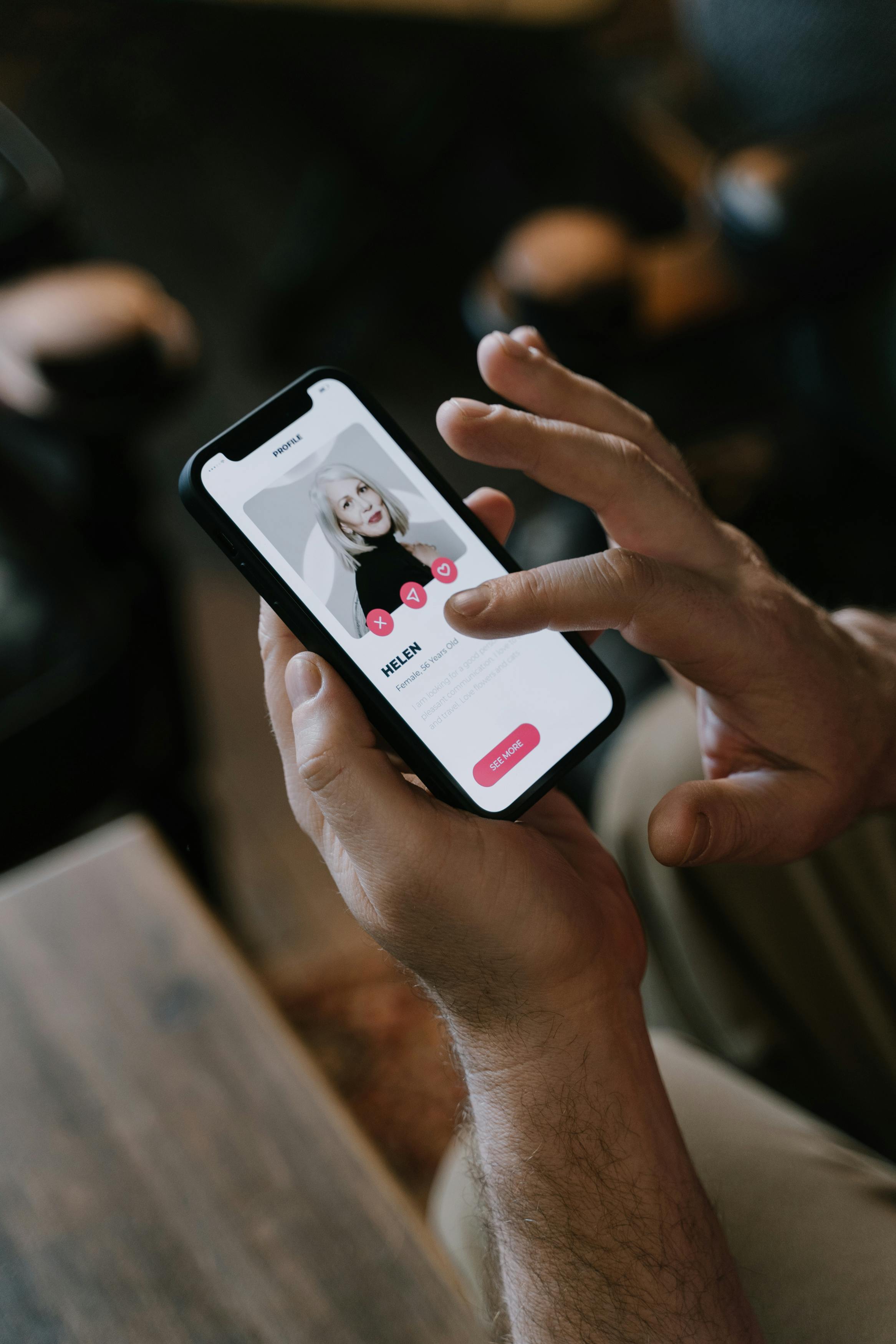
More fundamentally, the 'no rejection' claim doesn't withstand scrutiny. If you add someone and they don't add you back, you've been rejected. The rejection is simply privatised rather than public. That might feel psychologically gentler, but it's a UX sleight of hand, not a structural solution. The app doesn't eliminate rejection—it just ensures you won't know exactly when it happened, which arguably makes the whole exercise more anxious, not less.
Why mutual-reveal keeps failing
This isn't the first attempt at rejection-proof dating. Facebook tested Secret Crush in 2019, letting users select up to nine Facebook friends they were interested in. If the feeling was mutual, both were notified. Facebook killed the feature in 2022 without ever disclosing usage figures, which tells you most of what you need to know.
Down (formerly the far less subtle Bang With Friends) tried a similar model in 2013, pulling from Facebook connections to facilitate hookups. It raised venture funding, hit a few million downloads, then quietly faded. The pattern is consistent: these products generate launch buzz, some initial curiosity installs, then collapse under low match rates and the inherent awkwardness of digitally propositioning people you'll see in the library tomorrow.
Dating apps work when they expand your pool of potential matches. Mutual-reveal apps contract it to people you already know, which is a small set, and then further contract it to the subset willing to use the app, which is smaller still.
Unless adoption reaches critical mass within a specific social graph—say, 60% of a university's students—the likelihood of mutual matches stays low enough that the app becomes a source of disappointment rather than connection. Goldrush's university-only targeting could change that equation if it achieves density within individual campuses. A thousand users spread across 50 universities is useless. A thousand users at King's College London is a functional network. Whether the app can achieve that kind of concentrated penetration remains the open question, and the launch announcement provides no traction data to assess.
What this signals for the broader market
Strip away the app itself and what you're left with is a demand signal: a meaningful share of Gen Z wants romantic interaction with training wheels. That cohort grew up on Snapchat streaks and Instagram DMs—communication channels designed to minimise emotional exposure. Asking someone out in person, with no algorithmic buffer and no way to unsend the message, represents a level of vulnerability many haven't practised.
For dating operators, that creates a fork in the road. One path is to lean into safety and comfort: more features that reduce perceived risk, longer pre-date messaging phases, more robust filtering to ensure every match feels 'safe'. That path leads to products that feel less like dating and more like pen pal services, optimised for engagement metrics but increasingly detached from the stated goal of getting people together in physical space.
The other path is to push back. Hinge has spent years positioning itself as 'designed to be deleted', emphasising outcomes over time-on-app. That framing implicitly rejects the infinite-scroll, low-commitment model. If the industry decides rejection avoidance is a feature rather than a bug, it risks building products that train users out of the very behaviours required to form relationships.
The trust and safety angle complicates this further. Operators face regulatory pressure to make platforms safer, which often translates to more friction, more verification, more pre-match filtering. Those measures protect members from harassment and harm, which is non-negotiable. But they also make the experience more mediated, more sterile. Finding the line between safe and sanitised is the design challenge of the next five years, and apps like Goldrush suggest user preference is trending towards the latter.
What happens next
Goldrush will either achieve campus-level density and become sticky within specific university networks, or it will join the long list of mutual-reveal apps that sounded clever in theory but couldn't generate enough matches to retain users. The smart money is on the latter, based on precedent.
What matters more is whether mainstream operators take the lesson and start building rejection-minimising features into their own products. Bumble's women-message-first mechanic already does this to some extent. Hinge's 'We Met' prompts and video features try to facilitate lower-stakes interaction before the first date. If enough users signal they want more buffers and fewer stakes, the product roadmaps will follow.
The risk is that the industry ends up optimising for comfort at the expense of effectiveness. Rejection is unpleasant. It's also how humans learn to assess interest, calibrate their own behaviour, and develop resilience. If dating apps become rejection-avoidance mechanisms rather than introduction platforms, they're not solving the problem. They're just delaying it until someone has to ask for a second date.
Key Takeaways
- •Dating app operators risk accelerating user disengagement if they optimize platforms for rejection avoidance rather than fostering real-world interpersonal interactions.
- •Niche campus-based platforms must achieve high localized density within specific social graphs to survive the steep structural churn inherent in student demographics.
Frequently Asked Questions
Technology & AI Desk
The DII Technology Desk reports on product, engineering, AI and platform infrastructure across dating and social discovery apps.
Comments
Join the discussion
Industry professionals share insights, challenge assumptions, and connect with peers. Sign in to add your voice.
Your comment is reviewed before publishing. No spam, no self-promotion.


