Grindr's AI Claims: Revenue Diversification or Genuine Innovation?
Key Points
- •Grindr Chief Executive Officer George Arison claimed that artificial intelligence currently generates 70 percent of the dating app software codebase.
- •Grindr plans a full platform rollout by 2026, integrating venue recommendations, travel bookings, and a health services marketplace into its core application.
- •Grindr currently charges $24.99 monthly for its XTRA subscription and $49.99 monthly for Unlimited, alongside a new EDGE tier with undisclosed pricing.
- •Norwegian data protection authorities fined Grindr $11.7 million in 2020 for sharing user location data and HIV status with third-party advertisers.
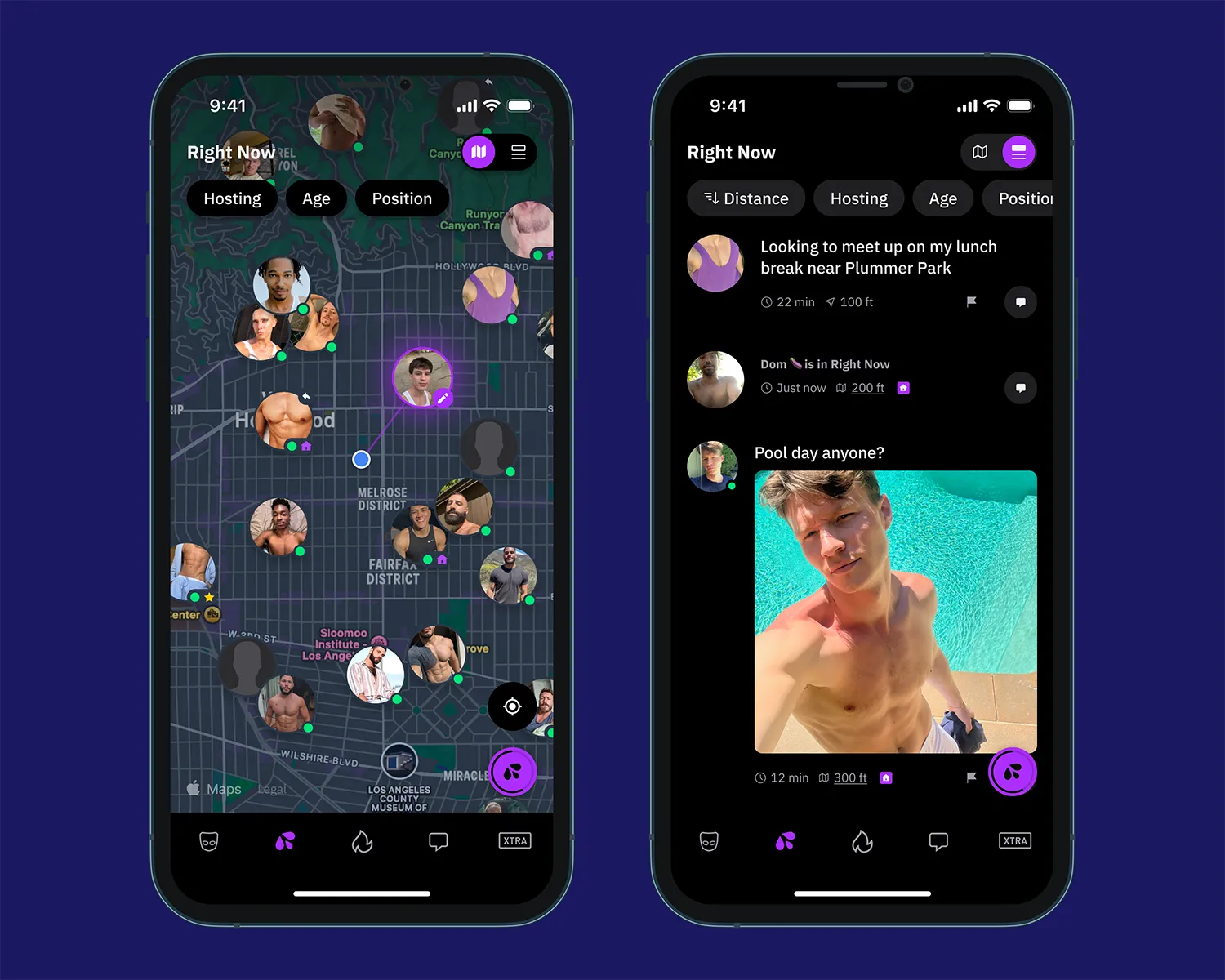
Grindr's CEO George Arison spent Tuesday's product announcement describing an app that won't exist until 2026, whilst simultaneously claiming artificial intelligence already writes 70% of the company's code today. The gap between those two timelines tells you everything about where the dating industry is heading: the AI revolution is both already here and perpetually just around the corner, depending on which slide of the investor deck you're reading. The dating app for gay, bi, trans and queer people has unveiled a product roadmap that transforms Grindr (GRND) from a hookup-focused platform into what the company calls an 'AI-native' lifestyle marketplace.
According to materials released by the company, the strategy embeds its proprietary gAI™ technology—yes, with a trademark—across every feature whilst expanding into venue recommendations, hotel bookings, and a health services marketplace. Grindr Roam, previously a standalone travel feature, gets absorbed into the core app. A new Health Center will sell everything from STI testing to hair loss treatments.
What Grindr is calling innovation looks rather more like the dating industry's emerging playbook: use AI as justification for premium pricing whilst quietly transforming apps into broader lifestyle platforms that monetize every adjacent behaviour.
Grindr's roadmap is less about artificial intelligence and more about revenue diversification dressed in machine learning terminology. The 70% AI-generated code claim is extraordinary—and conspicuously unverifiable—but even if accurate, says nothing about whether the resulting product actually works better for members. The real story is a dating app attempting to become Foursquare, Booking.com, and a telehealth service simultaneously, betting that LGBTQ+ users will accept lifestyle creep in exchange for convenience.
Create a free account
Unlock unlimited access and get the weekly briefing delivered to your inbox.
That's a wager predicated on platform loyalty that may not survive aggressive monetization. Grindr's competitors will be watching conversion rates on those premium tiers very carefully indeed.
When 'AI-native' means 'AI-everywhere'
Grindr's gAI technology—launched in beta earlier this year—will become mandatory across the platform by 2026, according to the company's announcement. The system purports to deliver 'smarter matching' by analyzing user behaviour to surface profiles with the 'highest likelihood of progressing', though Grindr has disclosed neither the training data nor the success metrics underpinning those claims.
Members on XTRA and Unlimited subscription tiers, which start at $24.99 and $49.99 monthly respectively, will receive priority in AI-powered matching queues and enhanced profile visibility. A forthcoming EDGE tier—pricing undisclosed—adds what the company describes as 'AI matchmaking' and 'exclusive features'. Translation: the app you already use becomes demonstrably worse unless you pay for algorithmic preferment.

The AI assertion that demands scrutiny is Arison's claim that artificial intelligence now generates 70% of Grindr's codebase. That's not iterative automation or developer assistance tooling—that's the CEO saying the overwhelming majority of his product is written by large language models. No dating company, not Match Group (MTCH) with its considerable engineering resources, not Bumble (BMBL) with its AI matching experiments, has made a claim remotely approaching that magnitude.
Either Grindr has achieved a software development breakthrough that has somehow escaped broader industry notice, or the definition of 'AI-generated' is doing rather more work than it should.
The company has not disclosed its quality assurance processes for AI-generated code, nor explained how it validates outputs from systems known to produce plausible-sounding but functionally incorrect results. For an app handling geolocation data, sexual health information, and intimate communications for millions of LGBTQ+ users, that's not a trivial omission.
From dating app to lifestyle marketplace
Grindr's expansion beyond matchmaking follows a pattern increasingly common amongst mature dating platforms seeking growth beyond subscription revenue. The company's roadmap positions the app as a comprehensive lifestyle platform for LGBTQ+ users, monetizing adjacent behaviours that previously occurred off-platform.
Grindr Roam, which previously existed as a separate feature for travelers, will be integrated into the main app with AI-powered recommendations for venues, events, and accommodations. According to the announcement, hotel booking functionality will allow members to reserve rooms directly through the app—with Grindr presumably taking a referral fee or commission on each transaction.
The Health Center represents the most ambitious expansion, offering what the company describes as a marketplace for wellness services tailored to LGBTQ+ needs. The platform will connect members with STI testing, PrEP access, mental health resources, and other health services, including treatments for hair loss and erectile dysfunction.
That health services push requires acknowledging Grindr's data privacy history. Between 2018 and 2020, the company shared users' HIV status, GPS coordinates, and other sensitive information with third-party advertising vendors—a practice that triggered regulatory investigations and a $11.7M fine from Norwegian authorities under GDPR provisions. Grindr subsequently implemented stricter data controls and appointed a chief privacy officer, but the episode established the company's willingness to monetize highly sensitive health information.
A Health Center handling wellness data, prescriptions, and medical consultations operates in that shadow, regardless of current policies.
What this means for LGBTQ+ dating competition
Grindr's aggressive feature expansion and AI monetization arrives as LGBTQ+ dating faces intensifying competition and regulatory pressure. Scruff, Her, and Feeld all compete for overlapping audiences, whilst mainstream platforms like Tinder and Hinge have invested heavily in inclusive features and LGBTQ+ marketing.
The revenue strategy relies on Grindr's network effects—its status as the dominant gay dating app in most Western markets—to justify lifestyle creep that might trigger backlash on a smaller platform. Members tolerate feature bloat and aggressive upselling when the alternative is switching to an app with fewer potential matches.
But that tolerance has limits, particularly when basic functionality gets paywalled. Grindr already restricts profile views, message filtering, and ad-free browsing to paying subscribers. Layering AI-powered preferment atop those restrictions creates a two-tier experience where free users become progressively invisible—a dynamic that risks undermining the network effects the monetization strategy depends upon.
Competitor platforms will be monitoring Grindr's conversion rates and retention metrics closely. If the EDGE tier and AI features drive meaningful subscription growth without accelerating churn, expect similar lifestyle expansions across LGBTQ+ dating. If members reject the upselling or migrate to simpler alternatives, Grindr's roadmap becomes a cautionary case study in overextension.
The 2026 timeline gives Grindr two years to build this AI-native lifestyle platform whilst simultaneously justifying premium pricing to a membership base that's seen dating apps promise algorithmic breakthroughs before. Whether artificial intelligence genuinely improves matching or simply provides rhetorical cover for monetization experiments will become clear in retention data long before the roadmap reaches completion. Watch the Q4 2025 earnings call for early signals on premium tier adoption. That's where the AI narrative meets financial reality.
Key Takeaways
- •Dating app operators should monitor Grindr conversion rates to determine if users will accept lifestyle features and algorithmic paywalls or migrate to simpler competitors.
- •Compliance teams must evaluate the heightened data privacy risks associated with dating platforms expanding into medical services following historical enforcement actions.
Frequently Asked Questions
Technology & AI Desk
The DII Technology Desk reports on product, engineering, AI and platform infrastructure across dating and social discovery apps.
Comments
Join the discussion
Industry professionals share insights, challenge assumptions, and connect with peers. Sign in to add your voice.
Your comment is reviewed before publishing. No spam, no self-promotion.