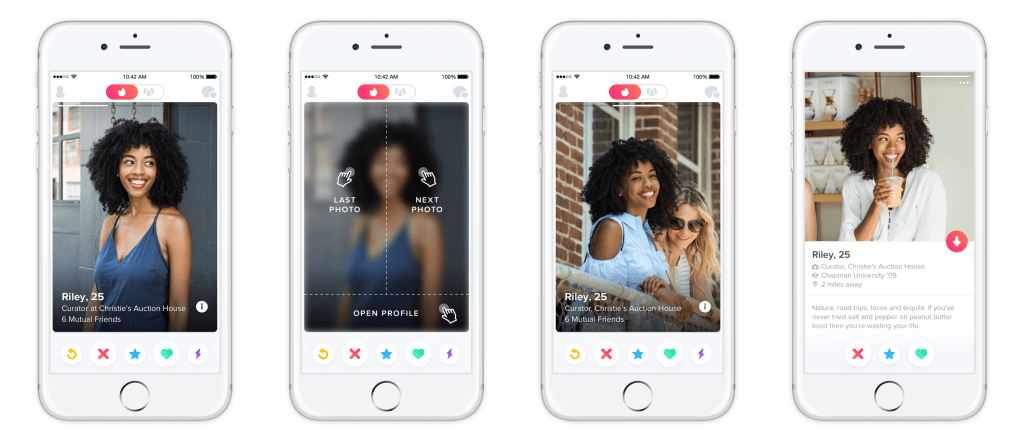
Tinder's AI Match: A Defensive Move in a Shrinking Market
Key Points
- •Match Group announced that Tinder will introduce AI-curated matching in late 2024 as an alternative to its traditional swipe mechanic.
- •Tinder recorded five consecutive quarters of user decline, with monthly active users falling by approximately 8% year-on-year in Q3 2024.
- •Tinder generated approximately $1.6B of Match Group's $3.47B total revenue in 2024, remaining the business's largest brand despite share price falls.
- •Match Group's share price dropped by roughly 23% over the twelve months preceding late 2024 due to user contractions at Tinder.
Match Group has announced that Tinder will introduce AI-curated matching later this year, marking the first time the dating app has offered an alternative to the swipe mechanic that built its $9.3B market capitalisation. The feature will complement rather than replace the signature gesture, according to chief executive Bernard Kim. The timing, however, tells a more urgent story than the carefully calibrated corporate messaging suggests.
Tinder's user base has been contracting for five consecutive quarters, according to figures disclosed by Match Group. Adding algorithmic curation now, more than a decade after Tinder launched and years after rivals made compatibility matching their core value proposition, looks less like confident innovation and more like a defensive scramble to stem subscriber losses.

Feature parity dressed up as product vision
This is not innovation. This is catch-up. Hinge has been algorithmically serving matches since 2016. eharmony built its entire business model on curated compatibility. Even Bumble introduced algorithmic prompts to reduce swipe fatigue years ago.
Create a free account
Unlock unlimited access and get the weekly briefing delivered to your inbox.
Tinder is adding what the rest of the market already offers whilst clinging to the very mechanism that may be driving users away. The real question isn't whether AI matching works. It's whether Tinder can credibly pivot to curation without admitting the swipe was the problem all along.
Late to algorithmic matching, unwilling to abandon the swipe
Match Group framed the announcement as offering users 'more personalised and engaging matches', according to the earnings disclosure. That language has become standard corporate vernacular for any machine learning application in dating. Without technical specifics on what data inputs the algorithm will prioritise, how it differs from existing recommendation systems Match Group already operates across its portfolio, or what success metrics the company will use to evaluate it, the claim remains marketing copy rather than product detail.
What's notable is the insistence on preserving the swipe. Kim emphasised that AI curation would sit alongside Tinder's existing browse-and-swipe interface, not replace it. That's a hedged bet.
If algorithmic matching is genuinely superior for engagement and retention, why not make it the default experience? If the swipe remains central to Tinder's identity, why publicly acknowledge it needs supplementing?
The likely answer: Match Group can't afford to alienate the users who remain. Tinder still generates the majority of Match Group's revenue, contributing approximately $1.6B of the company's $3.47B in total sales for 2024, based on segment breakdowns in previous filings. Ripping out the swipe would be an existential gamble. Adding AI matching as an optional layer lets Match Group claim innovation whilst avoiding the risk of wholesale product rejection.

Competitors already own the curation narrative
Tinder's move into AI-curated matching arrives in a market where that proposition is no longer novel. Hinge repositioned itself around algorithmic compatibility in 2016 and has since grown to become Match Group's fastest-growing brand by revenue, according to the company's Q3 2024 earnings. Bumble introduced its own AI-powered 'Opening Moves' feature in mid-2024, designed to reduce match abandonment by prompting conversation starters based on profile data. Even apps outside the major public players have differentiated on curation, vetting, or compatibility over volume.
What these competitors understood early is that infinite choice doesn't drive engagement. It drives fatigue. Paradox of choice isn't a new concept in behavioural psychology, and dating apps have been grappling with swipe exhaustion since at least 2018, when Hinge's rebrand explicitly targeted users 'tired of swiping'. Tinder's decision to add curation now suggests the company has finally accepted what user behaviour has been signalling for years: browsing hundreds of profiles doesn't convert to meaningful engagement.
The challenge for Tinder is credibility. Hinge built its brand identity around 'designed to be deleted'. eharmony stakes its reputation on compatibility algorithms. Tinder's brand is speed, volume, and casual discovery.
Bolting on AI matching doesn't change that perception overnight, and it's unclear whether Tinder's existing user base wants a curated experience or whether users seeking that have already migrated to competitors.
Declining users, stagnant innovation, and investor patience
Match Group has disclosed five consecutive quarters of user decline at Tinder, though the company does not break out precise subscriber figures for individual brands in public filings. Analysts at Bloomberg reported Tinder's monthly active user count fell approximately 8% year-on-year in Q3 2024, citing company guidance. That decline has weighed on Match Group's share price, which has fallen roughly 23% over the past twelve months, according to the DII Stock Tracker.
The company's response has been incremental feature additions — video prompts, profile verification, premium tiers — rather than structural product change. AI matching represents the most significant shift in Tinder's core experience since the introduction of Super Likes in 2015. That's a decade of iterative tweaks to a single interaction model.

Investors and operators will be watching whether this moves retention metrics. Match Group's challenge isn't just stemming declines at Tinder. It's proving that the company can still innovate on its flagship product without cannibalising the behaviours that made it dominant. If AI matching pulls users away from swiping, does that validate the feature or expose the weakness of the original model? If users ignore it entirely, Tinder is left with a declining product and a failed feature experiment.
The rollout timeline remains vague. Match Group committed to launching AI matching 'later this year' but provided no specifics on whether it would be a phased regional rollout, available only to premium subscribers, or accessible across the free tier. That ambiguity matters. A premium-only release signals Match Group sees this as a monetisation lever. A free-tier launch suggests desperation to re-engage lapsing users.
Either way, the industry will be measuring this against one clear benchmark: does it stop the bleeding? Feature parity alone won't reverse subscriber declines. Tinder needs to prove it can still shape user behaviour, not just react to it.
Key Takeaways
- •Dating app operators must recognise that feature parity alone cannot reverse user churn when competitors like Hinge already dominate the algorithmic compatibility narrative.
- •Investors should monitor whether Match Group offers AI matching to free users or premium subscribers to determine if it functions as a retention strategy or monetisation effort.
Frequently Asked Questions
Financial Intelligence Desk
The DII Financial Intelligence Desk covers earnings, valuations, funding and the financial performance of the global online dating industry.
Comments
Join the discussion
Industry professionals share insights, challenge assumptions, and connect with peers. Sign in to add your voice.
Your comment is reviewed before publishing. No spam, no self-promotion.