AI Chatbots in Dating: Solving Swipe Fatigue or Killing Connection?
Key Points
- •Match Group and Bumble are testing artificial intelligence assistants designed to converse, filter matches, and schedule dates on behalf of app users.
- •Pew Research Center data from 2023 indicates that 71 percent of dating app users report feeling that other users misrepresent themselves on online platforms.
- •Hinge achieved 32 percent year-on-year revenue growth in Q4 2024 whilst avoiding artificial intelligence automation in favour of human-first feature design.
- •No major regulatory jurisdiction currently enforces specific rules governing artificial intelligence impersonation within online dating environments.
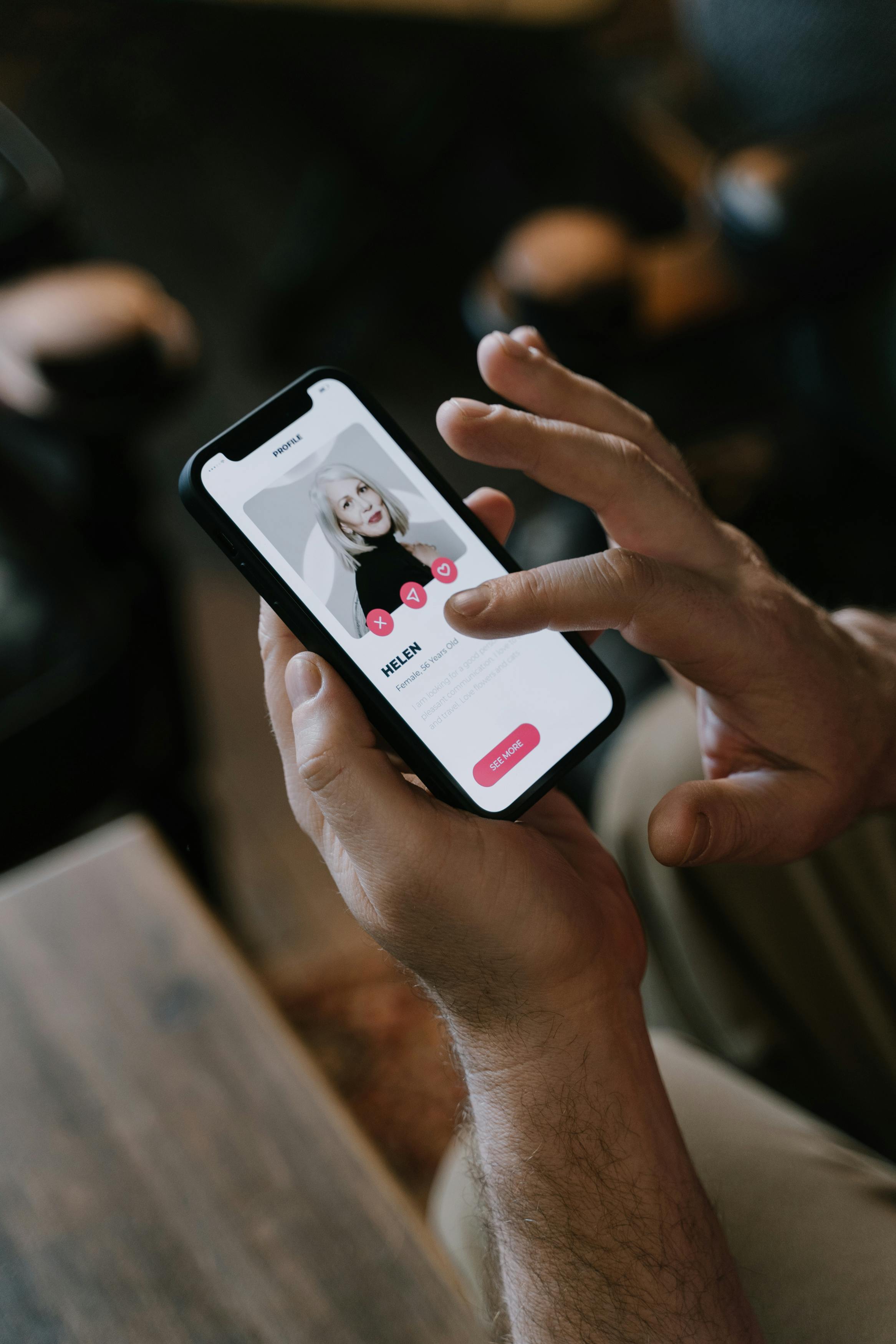
Dating app operators are preparing to automate the very interactions their users signed up to have. Match Group and Bumble are testing AI assistants that can converse, filter, and schedule on your behalf—features pitched as solutions to swipe fatigue, but which risk replacing human contact with a simulation layer that learns nothing about actual compatibility.
After a decade of declining trust in algorithmic matching, the industry is proposing to insert another layer of mediation between two people who might have simply spoken to each other. The premise is that AI can handle tedious opening exchanges and surface only promising connections, but the reality is far more complicated.

Solving for the Wrong Variable
Dating app operators are treating declining engagement as a workflow problem that automation can fix. In reality, burnout stems from ghosting fatigue and the creeping sense that apps optimise for time-on-platform rather than successful relationships. Handing conversation over to AI doesn't reduce friction—it removes the signal entirely.
Create a free account
Unlock unlimited access and get the weekly briefing delivered to your inbox.
If two chatbots are getting along beautifully, what exactly have the humans learned about each other? The answer is nothing, and that's the fundamental flaw in the product hypothesis.
Declining engagement isn't a workflow problem that automation can fix—it's a product of user burnout, ghosting fatigue, and the creeping sense that apps optimise for time-on-platform rather than successful relationships.
From Swiping Back to Sorting
The industry has been here before, in a sense. eHarmony built its business on a 450-question personality assessment that promised to predict compatibility. OkCupid assigned match percentages with actuarial confidence. Both approaches had adherents, but neither fundamentally changed online dating success rates, and both were eclipsed by Tinder's radical simplification.
What's under development in 2025 is categorically different. Earlier platforms matched you, then left the interaction in your hands. The AI features now being tested don't just match—according to company presentations and investor briefings, they converse, filter, schedule, and make judgments about who's worth your attention.
Bumble has discussed AI that pre-screens opening messages to protect users from low-effort chat. Match Group disclosed experiments with an assistant that can maintain multiple conversations simultaneously, learning your preferences and engaging on your behalf until a connection seems viable. The technical capability is real, but whether large language models should be flirting in romantic contexts is a separate question entirely.
The Regulatory Vacuum
No major jurisdiction has specific rules governing AI impersonation in dating contexts. The EU's Digital Services Act requires transparency about automated systems, but its provisions were written with content moderation and advertising in mind, not chatbots flirting on your behalf. The UK's Online Safety Act is silent on the matter.
In the US, dating apps fall under the Federal Trade Commission's general consumer protection mandate, but there's no case law yet on whether failing to disclose that a match is talking to your AI rather than you constitutes deceptive practice. Trust and safety teams at major platforms are navigating this without clear guidance.
The operational questions are thorny. If an AI assistant misrepresents a user's intentions or interests, who's liable? If two AI systems match enthusiastically but the humans have nothing in common, has the platform failed in its duty of care? Dating companies have not yet published policies addressing these scenarios.
Match Group CFO Gary Swidler, speaking on the Q4 2024 call, noted that AI tools are 'early days' but positioned them as efficiency plays—features that 'help our members get to meaningful connections faster'. Bumble founder Whitney Wolfe Herd suggested in interviews that AI could reduce the emotional labour of dating, a framing that positions automation as feminist progress rather than a substitution of authenticity.
If users realise they're spending weeks exchanging messages with code, engagement doesn't increase. It craters.
The Product Hypothesis No One's Testing
Operators are betting that singles will trade authenticity for convenience. The evidence that this trade-off appeals to the core dating audience is thin. According to Pew Research Center data from 2023, 71% of dating app users already report feeling that others misrepresent themselves on platforms. Trust is the scarcest resource in the market, and AI-mediated chat consumes it faster than any feature yet introduced.
What's telling is how these features are being positioned. Bumble frames its AI tools as 'safety' features, implying they protect users from bad actors. Match Group emphasises 'efficiency', suggesting they save time. Neither company is marketing AI as a route to better relationships, because there's no data supporting that claim.
Algorithmic matching has been studied extensively—most recently in a 2023 review published in Psychological Science in the Public Interest—and the consensus finding is that algorithms cannot predict romantic chemistry better than chance. Adding conversational AI on top of matching algorithms doesn't change the fundamental limitation: compatibility is revealed through interaction, not inferred from data.
The hypothesis that users want to delegate early-stage conversation also deserves scrutiny. Dating app fatigue is real, but the exhaustion comes from repetitive failures and emotional investment in connections that evaporate, not from the act of typing. If AI assistants extend the period before users discover they're incompatible, that doesn't solve the problem—it compounds it.
What Operators Should Be Watching
Conversion rates from AI-assisted chat to in-person dates will be the metric that matters. If these tools are genuinely surfacing better matches, that will show up in sustained engagement, lower churn, and qualitative feedback from users who report successful relationships. If they're extending time-on-platform without improving outcomes, the engagement bump will be short-lived, and trust metrics will deteriorate further.
Regulatory scrutiny is coming. The UK's Department for Science, Innovation and Technology has flagged AI transparency as a priority for its OSA implementation roadmap. Brussels is beginning secondary consultations on DSA enforcement in niche verticals. Dating platforms that deploy AI conversational agents without clear disclosure policies are building compliance debt.
Competitors moving in the opposite direction bear watching too. Hinge, still owned by Match Group but operating with relative product autonomy, has conspicuously avoided AI automation in favour of prompts and features designed to showcase personality. Its 'Designed to be Deleted' positioning is the ideological inverse of AI-mediated chat. If Hinge continues to grow share within the Match portfolio, that's a signal the market prefers human-first design.
The question isn't whether AI can chat convincingly on your behalf. It can. The question is whether romantic connection can survive being optimised, scheduled, and pre-filtered by an algorithm that's never felt a thing.
Key Takeaways
- •Dating app operators risk eroding user trust if artificial intelligence agents conceal their identity, creating compliance liability under emerging European Union and United Kingdom transparency frameworks.
- •Investors should monitor conversion rates from automated chat to physical dates, as extending conversation duration without improving outcome metrics could accelerate user churn.
- •The revenue growth of Hinge demonstrates that a substantial segment of the online dating market prefers authentic human interaction over automated communication features.
Frequently Asked Questions
Technology & AI Desk
The DII Technology Desk reports on product, engineering, AI and platform infrastructure across dating and social discovery apps.
Comments
Join the discussion
Industry professionals share insights, challenge assumptions, and connect with peers. Sign in to add your voice.
Your comment is reviewed before publishing. No spam, no self-promotion.