HeeSay's Community Pivot: A Survival Strategy, Not Innovation
Key Points
- •LGBTQ+ dating app HeeSay launched a Community feature combining in-person event discovery, group chat functionality, and local event curation during Pride Month.
- •Over 400 users registered for HeeSay's 63-person Lip Sync Battle event held in Toronto to test its new offline social features.
- •Competitors Bumble and Tinder previously introduced social features, launching Bumble BFF in 2016 and Tinder Explore in 2019 respectively.
- •Formerly the international version of Blued, HeeSay has expanded offline event testing across multiple international markets, including Vietnam and Canada.
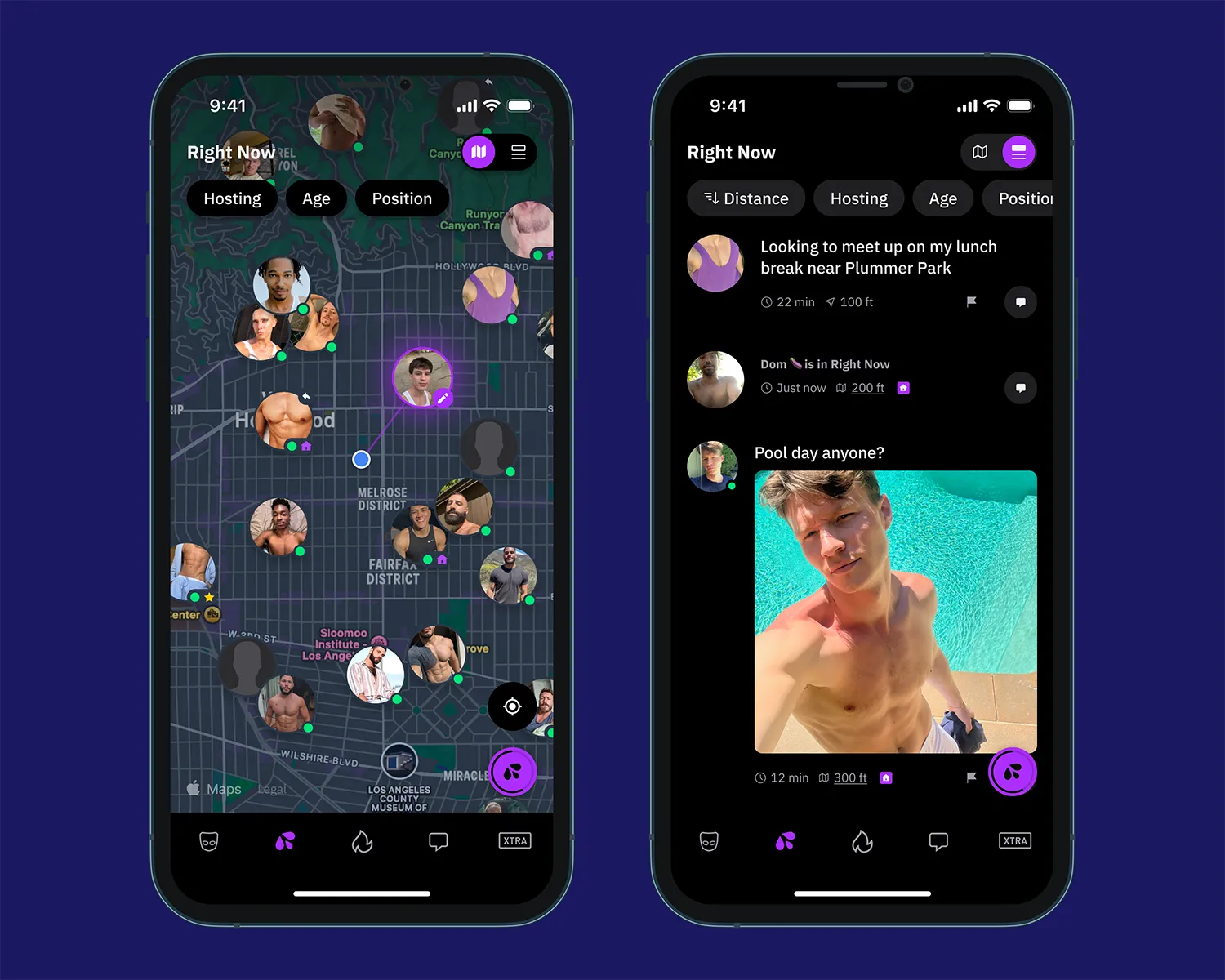
HeeSay, an LGBTQ+ dating app, has launched a Community feature that packages in-person event discovery with group chat functionality, betting that facilitating offline gatherings will prove a more defensible business model than competing on matchmaking scale. The timing is strategic as dating apps across the board scramble to extend user engagement beyond the swipe-to-match loop that's increasingly showing signs of fatigue. But whilst Match Group and Bumble bolt community features onto platforms built for dating, HeeSay is attempting something more fundamental: repositioning itself as social infrastructure for queer communities.
This is less about product innovation and more about survival strategy. HeeSay isn't pivoting to events because it's cracked some new insight about human connection—it's doing it because niche apps can't win an arms race on matching algorithms, ad spend, or global scale. What's interesting is the implicit admission that dating alone isn't sticky enough even for demographic-specific platforms.
If your entire value proposition can be replicated by adding a rainbow flag filter, you need a moat that requires local presence and real-world coordination. Events might actually be that moat.
The offline-first calculus
According to HeeSay, more than 400 users registered for the Toronto Lip Sync Battle. Without disclosure of the app's total active user base, that figure floats in a vacuum. If HeeSay has 50,000 monthly actives in Toronto, 400 registrants represents less than 1% conversion; if it has 5,000, it's an 8% activation rate that suggests genuine product-market fit.
Create a free account
Unlock unlimited access and get the weekly briefing delivered to your inbox.
What the company hasn't provided—and what matters far more—is whether those 400 showed up, whether they returned to the app afterwards, and whether event attendees demonstrate meaningfully different retention or monetisation patterns than pure digital users. The promotional language about 'deeper connections' and 'sense of belonging' doesn't substitute for cohort data.
The feature's 'Nearby' functionality suggests HeeSay believes it can achieve the location-based critical mass necessary to surface relevant events in multiple cities. That's a non-trivial operational challenge. Event discovery only works if there are events to discover, which means either aggregating existing queer community happenings or organising proprietary ones.

Community as last resort or first principle
HeeSay isn't alone in this pivot. Bumble added BFF in 2016 and has been steadily emphasising it as a hedge against dating fatigue. Tinder launched Explore in 2019, offering interest-based matching and interactive content. The pattern is clear: pure matching is under siege, and operators are searching for engagement loops that extend beyond the first-date funnel.
For mainstream platforms, community features are defensive plays to increase session time and reduce churn. For niche demographic apps like HeeSay, they're existential. LGBTQ+ users already have Tinder, Bumble, Hinge, and Grindr as options, plus a proliferating roster of identity-specific apps like Lex, Feeld, and region-specific players.
Events and offline community are inherently local and labour-intensive. They don't replicate easily across borders. A well-executed in-person event in Toronto can't be copied by a competitor running its matching stack from San Francisco.
If HeeSay can genuinely embed itself in local queer social scenes—becoming the go-to platform for finding out what's happening this weekend—it creates switching costs that algorithmic matching never could.
What the market actually wants
The unanswered question is whether dating app users want their dating app to also be their events app, their group chat app, and their community hub. Feature bloat is real. Every operator says their users crave 'authentic connection' and 'meaningful engagement', but revealed preference suggests most people still just want to match, message, meet, and delete the app until they're single again.
The counterargument, more persuasive for LGBTQ+ platforms, is that queer community infrastructure has always mixed dating, socialising, and mutual support in ways that straight-focused platforms don't replicate. Gay bars weren't just pickup spots; they were community centres. HeeSay's bet is that digital equivalents should mirror that multifunctionality rather than silo dating from socialising.
If that's the thesis, Pride Month is the proof-of-concept window. Queer social calendars are packed in June, community engagement peaks, and appetite for group activities runs high. The real test comes in February, when event density drops and social motivation wanes. Whether 400 people show up to a Lip Sync Battle during Pride isn't the signal—whether anyone creates or attends a Tuesday trivia night in November is.
Market fragmentation in LGBTQ+ dating will likely intensify before it consolidates. Grindr's public listing and subsequent refocus on monetisation has left space for relationship-oriented apps to differentiate. Scruff, once a clear number two, has lost momentum. Mainstream platforms continue expanding queer-focused features but struggle with trust and safety issues that demographic-specific apps can address more credibly.
HeeSay's approach won't be the last we see. Expect more dating apps to experiment with offline components, particularly those serving communities where in-person connection carries social or safety significance beyond romantic pairing. The new Community feature allows users to create group chats about any interest, extending beyond just event coordination to broader social connection.
HeeSay has been testing these concepts at events beyond Toronto, including gatherings in Vietnam that demonstrate the platform's international ambitions. The company's evolution from its origins as the international version of dating app Blued suggests this community-first approach has been informed by observing social habits across different markets.
Whether any of them can make the unit economics work without venture capital subsidies remains the open question.
Key Takeaways
- •For niche demographic platforms, establishing local offline event infrastructure creates defensible user retention moats that algorithm-focused mainstream competitors cannot easily replicate.
- •Operators must track post-event user cohort retention and long-term monetisation data to evaluate whether offline community features drive sustainable financial performance outside peak Pride periods.
Frequently Asked Questions
Technology & AI Desk
The DII Technology Desk reports on product, engineering, AI and platform infrastructure across dating and social discovery apps.
Comments
Join the discussion
Industry professionals share insights, challenge assumptions, and connect with peers. Sign in to add your voice.
Your comment is reviewed before publishing. No spam, no self-promotion.