LA's Curated Dating Startups Bet on Scarcity. Will It Scale?
Key Points
- •Los Angeles dating startups FROME, Lox Club, and Summer are utilising conversation caps and application processes to challenge incumbent platforms like Tinder.
- •FROME caps members at five monthly conversations unless users pay, whilst claiming 175,000 total accounts in local business press reporting.
- •Match Group reported a 5% year-over-year revenue decline for Tinder in Q4 2024, as Pew research showed 71% of users felt frustrated in 2023.
- •Bumble's share price remains 64% below its February 2021 initial public offering peak amid increased competition and brand awareness challenges.
Three Los Angeles-based dating startups are betting that the antidote to swipe fatigue isn't a better algorithm—it's less choice, more friction, and monthly membership fees. FROME, Lox Club, and Summer have collectively attracted hundreds of thousands of users by imposing conversation limits, hosting in-person events, and curating their member bases through application processes. Whether this represents a genuine shift in how young singles date, or simply repackages exclusivity as product innovation, will determine if these challengers can avoid the fate of their curated predecessors.
The business model shares a common thread: artificial scarcity dressed up as intentionality. FROME caps members at five conversations per month unless they pay to unlock more. Lox Club positions itself as 'members-only' with an application process that filters for what it calls cultural compatibility. Summer organises group social events where singles meet face-to-face before matching digitally.

This isn't the first time curated dating has promised to fix what swipe apps broke—The League tried vertical integration of exclusivity in 2014, Coffee Meets Bagel tried conversation limits in 2012, and both ended up either pivoting or stalling. What's different this time is timing: Match Group (MTCH) and Bumble (BMBL) are both reporting softer engagement metrics and investor scepticism about their core products.
Create a free account
Unlock unlimited access and get the weekly briefing delivered to your inbox.
If these LA upstarts can prove there's a sustainable business in anti-convenience, the implications for the incumbents go beyond competitive threat—it suggests their entire UX philosophy of frictionless matching has reached its ceiling.
But sustainable is the operative word, and history suggests that what works at 100,000 users rarely scales to 10 million without becoming the thing it set out to replace.
The growth metrics require scrutiny
FROME claims 175,000 users according to reporting from local business press, though the company hasn't disclosed whether that figure represents total registered accounts, monthly active users, or LA-specific membership. The distinction matters. Dating apps routinely conflate downloads with active users, inflating apparent traction whilst concealing churn rates. For a platform built on scarcity, having a large dormant user base defeats the premise.
Summer's model—group events followed by selective digital matching—sidesteps the metric ambiguity but introduces a different constraint: geographic density. Events require critical mass in specific locations, which limits expansion velocity. Lox Club faces similar friction with its application-based entry, which the company positions as quality control but also creates a conversion bottleneck that mainstream apps don't face.

None of these startups has disclosed revenue figures, and that opacity is telling. The freemium economics that power Match Group's $3.19B annual revenue depend on converting a small percentage of a massive user base into paying subscribers. Curated platforms flip that ratio—they need higher conversion rates from smaller audiences. The League, which pursued a similar strategy from 2014 onwards, never published profitability metrics before selling to Match Group in 2022 for an undisclosed sum widely reported to be below its venture valuation.
Incumbent vulnerability creates an opening
The timing for these challengers is better than it was for their predecessors. Match Group's Q4 2024 earnings showed Tinder revenue declining 5% year-over-year, whilst Hinge—the company's designated 'relationship app'—grew but from a smaller base. Bumble's recent performance has been worse: the company's share price remains 64% below its February 2021 IPO peak, and management cited 'increased competition' and 'brand awareness challenges' in its most recent shareholder letter.
User sentiment surveys consistently point to dissatisfaction. Research from Pew in 2023 found that 71% of online dating users felt frustrated by the experience, up from 54% in 2013. Axios reported in early 2025 that Gen Z users specifically cited 'too many options' and 'low-quality matches' as primary complaints. That creates a genuine market opportunity for platforms promising the opposite experience.
But dissatisfaction doesn't automatically translate into willingness to tolerate friction. The very features these startups promote as solutions—conversation caps, application processes, limited geographic availability—introduce barriers that contradict a decade of consumer conditioning around on-demand convenience. Hinge tried to position itself as the anti-swipe app in 2016 by removing the swipe gesture and adding conversation prompts, only to reintroduce swiping in 2017 after user growth stalled.
The monetisation tension nobody's solving
Every curated dating platform eventually faces the same structural problem: exclusivity stops being exclusive when you scale.
The value proposition depends on maintaining a high signal-to-noise ratio—too many members, and you're just Tinder with a waiting list. Too few, and unit economics collapse.
FROME's conversation limit offers a clear monetisation lever, but it's also a retention risk. Members who exhaust their five free conversations and decline to pay will either leave or remain inactive, both of which degrade the experience for paying members. Summer's event model creates stronger in-person bonds but caps how many singles can participate in a given month based on venue capacity and operational bandwidth. Lox Club's curation scales poorly: every new market requires local knowledge and vetting infrastructure.
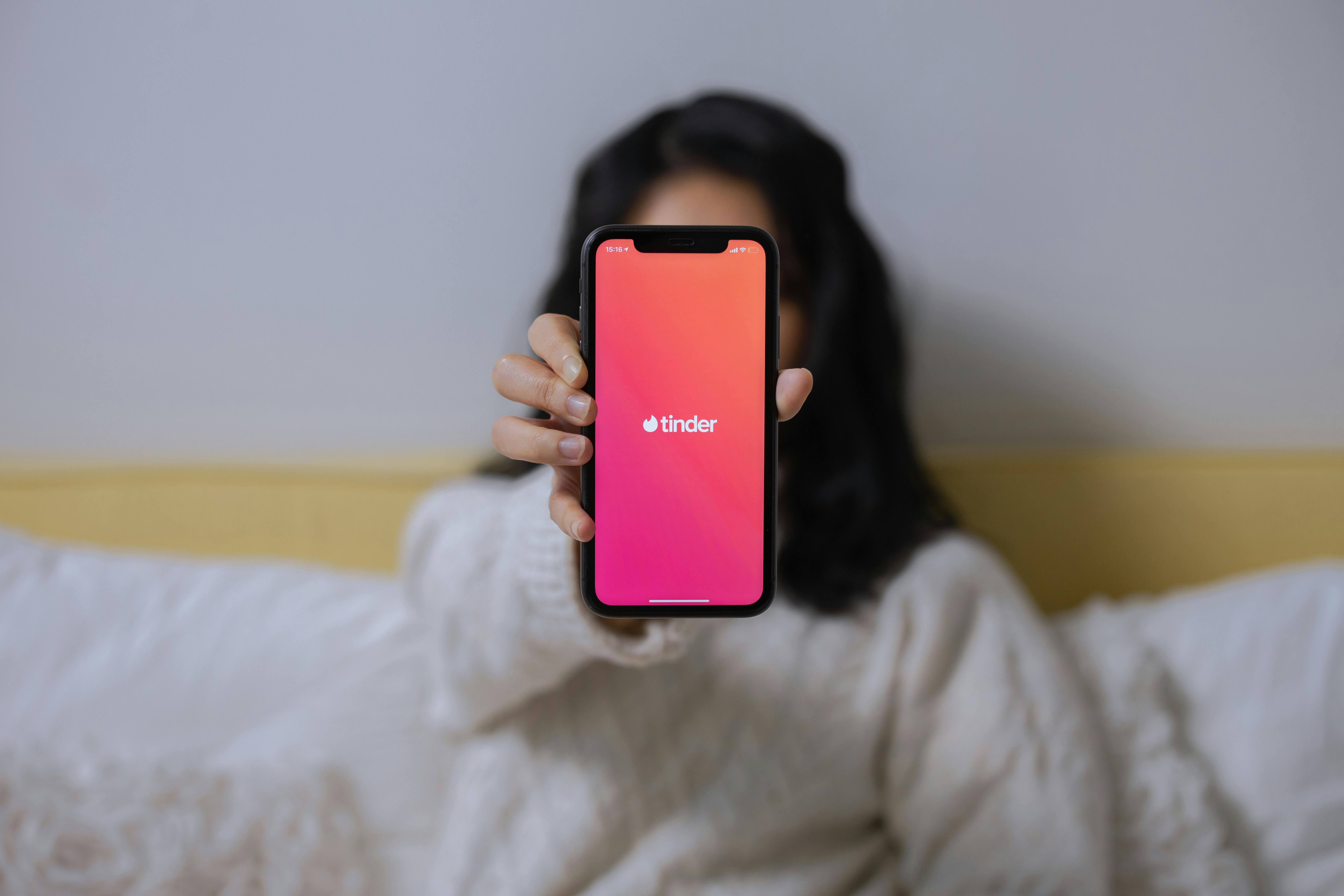
The most successful dating platforms have historically won through network effects and convenience, not scarcity. Tinder reached 50 million users by 2014 because it was frictionless and geographically agnostic. These LA startups are betting that a cohort of users now values the opposite—but that cohort has to be large enough to support venture-scale returns whilst remaining small enough to preserve the premium positioning.
What operators should watch
Whether these platforms survive their own success depends on three factors. First, retention curves: if six-month cohorts show durability, that suggests users genuinely prefer constraint over abundance. Second, geographic expansion: can the model work outside dense urban markets with pre-existing social scenes? Third, exit velocity: if one of these startups gets acquired by an incumbent, it signals validation—or a defensive tuck-in to neutralise competition.
The dating industry has seen this narrative arc before. Niche becomes fashionable, grows quickly, then either gets absorbed or calcifies as a small sustainable business. What's different this time is the incumbents' weakness. Match Group and Bumble don't have the user growth or investor confidence they enjoyed five years ago. That creates space for challengers, but it doesn't change the fundamental economics of dating platforms. Curated, exclusive, and small might be better. Whether it can also be profitable at scale remains the unanswered question.
Key Takeaways
- •Dating app operators must monitor whether artificial scarcity mechanics generate long-term retention or simply increase churn among non-paying users.
- •Investors should evaluate if curated platforms can expand beyond dense urban markets like Los Angeles without diluting their core exclusivity proposition.
- •Incumbents like Match Group and Bumble may pursue defensive acquisitions of curated startups if user dissatisfaction with frictionless swiping continues to grow.
Frequently Asked Questions
Financial Intelligence Desk
The DII Financial Intelligence Desk covers earnings, valuations, funding and the financial performance of the global online dating industry.
Comments
Join the discussion
Industry professionals share insights, challenge assumptions, and connect with peers. Sign in to add your voice.
Your comment is reviewed before publishing. No spam, no self-promotion.