Voice Features Aren't Innovation. They're a Desperation Move.
Key Points
- •United Kingdom engagement with traditional swipe-based dating applications dropped 16 per cent according to recent app analytics data.
- •Chat2Date recorded average call durations of 11 to 23 minutes on its voice-first dating platform, which originally launched in 2008.
- •Research from Dialpad indicates 81 per cent of adults aged 18 to 24 experience phone anxiety when calling people they do not know.
- •DateGuard charges £12.99 monthly for its voice-matching tier, compared to £7.99 for its basic photo-based dating tier.
Voice features are proliferating across dating platforms as operators scramble to address a significant drop in engagement with traditional swipe-based services. With Gen Z users reporting widespread dating app fatigue, voice is being positioned as the antidote to a decade of image-led matching that's left users burnt out and platforms facing stagnant growth. But the more instructive question is why an industry that spent 12 years engineering friction out of dating is now trying to engineer it back in — and whether repositioning exhaustion as a feature gap rather than a design consequence will actually shift user behaviour.

Voice dating isn't innovation. It's reversion dressed up as disruption. Chat2Date launched in 2008, four years before Tinder made swiping the default dating behaviour, and operators are now rebranding what used to be the baseline — having a conversation — as breakthrough product development.
The real story isn't whether voice works better than swiping. It's whether platforms can successfully sell friction to users who've been trained for over a decade to expect instant gratification, and whether adding a phone call genuinely solves emotional burnout or just moves the rejection to a different stage of the funnel.
The sudden urgency around audio
Three major platforms have launched or expanded voice features in the past six months. Hinge introduced Voice Prompts, allowing members to respond to profile questions with 30-second audio clips. Bumble expanded its audio-first Opening Moves feature globally.
Create a free account
Unlock unlimited access and get the weekly briefing delivered to your inbox.
Chat2Date, which has operated a voice-first model since 2008, reported 11–23 minute average call durations and is positioning itself as the mature alternative to swipe fatigue. DateGuard, a newer entrant, is taking a different approach: AI-analysed voice interactions that claim to assess emotional compatibility before users exchange photos. The company describes this as 'AI-enhanced emotional matching', though it hasn't disclosed the methodology or accuracy of such assessments.
The rationale operators are giving investors and users tracks closely: swipe-based matching has become transactional, image-led profiles reward the photogenic over the genuine, and decision fatigue is real. Match Group (MTCH) acknowledged in its Q4 2024 earnings that 'choice overload' was contributing to declining session times across Tinder. Bumble (BMBL) cited similar patterns when justifying its Q1 2025 product roadmap pivot toward 'more intentional interactions'.
Who actually wants to talk to strangers again
Here's where the narrative starts to fray. Gen Z's documented preference for asynchronous communication — texts over calls, DMs over voicemail — sits uncomfortably alongside claims that they're clamouring for voice-first dating. Research from communication analytics firm Dialpad found that 81% of 18–24 year olds experience phone anxiety when calling someone they don't know.
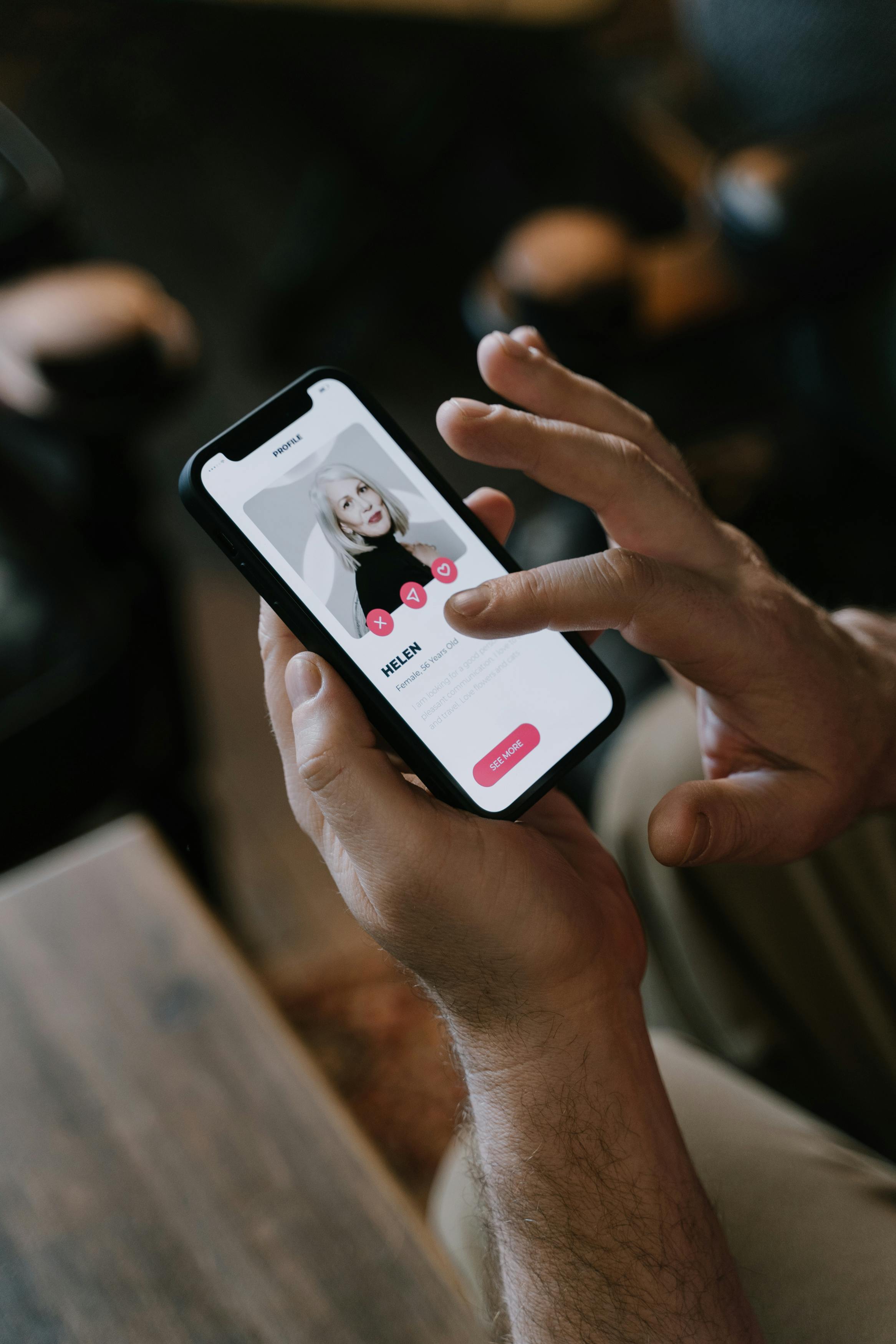
The 79% fatigue figure being cited by platforms comes from a self-reported survey by a dating coaching service, not longitudinal academic research. The methodology matters. Feeling tired of dating apps doesn't automatically translate into wanting more effortful interactions.
What's actually measurable is this: Chat2Date's 11–23 minute average call duration sounds substantial until you compare it to the typical user journey on a traditional platform. Research from the Kinsey Institute found that successful matches on image-based apps average 87 text messages over 12 days before meeting in person. That's significantly more cumulative time investment than a single phone call.
Voice-first models frontload the investment. You speak before you swipe, call before you see photos, invest effort before knowing if basic attraction exists. Swipe-first models backload it. Neither model eliminates rejection. They just move it.
The unit economics of conversation
For operators, voice features create interesting monetisation opportunities that text-based matching doesn't. Audio requires more bandwidth, more moderation resources, and more sophisticated trust and safety infrastructure. That's a cost. But it also creates premium tier justification.
DateGuard charges £12.99 monthly for unlimited voice matching sessions versus £7.99 for its basic photo-based tier. Chat2Date's revenue model relies entirely on per-minute pricing for calls. Hinge and Bumble are using audio as a differentiator within their existing subscription tiers, betting that it increases perceived value without requiring a full pricing restructure.
The moderation challenge is substantial. Text-based harassment is algorithmically detectable at scale. Voice harassment requires either real-time human review — expensive and unscalable — or AI transcription and analysis, which introduces accuracy and privacy concerns. None of the platforms launching voice features have publicly detailed their moderation approach beyond vague references to 'safety protocols' and 'community guidelines enforcement'.
The trust and safety implications become particularly acute for platforms like DateGuard that are using AI to analyse emotional states from voice data. What's the model being trained on? How are false positives handled when an algorithm decides someone's emotional availability is insufficient? The company hasn't disclosed any of this, yet it's central to whether 'AI-enhanced emotional matching' is a legitimate compatibility tool or algorithmic phrenology with a dating licence.
What this actually signals about platform strategy
The proliferation of voice features reveals more about operator desperation than user demand. Engagement is declining, Tinder's revenue growth has slowed to single digits, and Bumble's share price is down 58% from its 2021 IPO peak. When the core product stops working, platforms add features.
The contradiction operators won't address directly is this: if swipe fatigue is real and voice is the solution, why did Chat2Date spend 16 years as a niche service before suddenly becoming relevant? The model existed. Users knew phone calls existed. They chose swiping anyway, not because they were unaware of alternatives, but because the friction reduction was the appeal.
Reintroducing friction only works if the outcome justifiably improves. Early data isn't there yet. Chat2Date claims its voice-first model leads to 'more authentic connections', but hasn't published match-to-relationship conversion rates. Hinge hasn't disclosed whether Voice Prompts increase match rates or just time-on-platform.
What platforms are actually testing is whether they can reframe their design problem — the emotional toll of commodified dating — as a product gap that more features can fill. Voice becomes the latest in a long series of additions meant to address what's fundamentally a structural issue: platforms optimised for engagement rather than outcomes will always generate fatigue, regardless of whether users swipe or speak.
The operators that will profit from this shift aren't necessarily the ones with the best voice features. They're the ones that understand voice is a filtering mechanism, not a solution, and build their monetisation and expectations accordingly. The ones that will struggle are those selling conversation as innovation when it's actually just a return to what dating required before the efficiency optimization began.
Key Takeaways
- •Dating app operators adopting voice features risk added friction and higher operational costs from moderation without proving that audio improves match-to-relationship conversion rates.
- •Compliance and trust teams face expanding liabilities around privacy and algorithmic accuracy as platforms like DateGuard deploy unverified artificial intelligence to evaluate user emotional states.
- •Investors should view audio tools as monetisation experiments to counter slowing revenue growth across Match Group and Bumble rather than structural solutions to user burnout.
Frequently Asked Questions
Technology & AI Desk
The DII Technology Desk reports on product, engineering, AI and platform infrastructure across dating and social discovery apps.
Comments
Join the discussion
Industry professionals share insights, challenge assumptions, and connect with peers. Sign in to add your voice.
Your comment is reviewed before publishing. No spam, no self-promotion.