Harmonizer's AI Claims: New Science or Old Story?
Key Points
- •Harmonizer has launched a U.S. dating platform using a patent-pending Relationship Vitality Assessment algorithm based on data gathered from 20,000 couples.
- •Pew Research Centre surveys indicate that 71% of U.S. dating app users report frustration with current platforms, up from 56% in 2019.
- •Match Group controls approximately 60% of U.S. dating app revenue through properties including Tinder, Hinge, Match, OkCupid, and Plenty of Fish.
- •Customer acquisition costs for new dating app entrants in competitive markets have climbed above $50 per install.
Harmonizer has entered the dating app market with a pitch centred on artificial intelligence and proprietary algorithms that supposedly predict long-term relationship success. The U.S.-based platform claims its approach, built on data from 20,000 couples, moves beyond swipe-based superficiality towards scientifically validated compatibility. The problem is that variations of this exact promise have been circulating for more than two decades, and peer-reviewed research has consistently struggled to demonstrate that compatibility algorithms outperform chance.
The dating industry doesn't need another app claiming algorithmic superiority. It needs one that can prove it. Harmonizer's launch is well-timed—user fatigue with swipe apps has created genuine demand for alternatives—but timing alone won't overcome the credibility gap that has humbled predecessors like eHarmony and OkCupid.

The credibility problem with compatibility science
Harmonizer's core assertion rests on data it has gathered from 20,000 couples, though the company has not disclosed how these couples were identified, surveyed, or qualified as "happy." The distinction matters. Self-reported relationship satisfaction differs considerably from longitudinal relationship stability, and selection bias in survey populations can render findings meaningless for broader application.
Create a free account
Unlock unlimited access and get the weekly briefing delivered to your inbox.
Academic research into algorithmic matchmaking has produced sobering conclusions. A 2012 meta-analysis published in Psychological Science in the Public Interest examined decades of compatibility research and found little evidence that matching algorithms could predict relationship success better than bringing together random individuals who meet basic criteria like proximity and shared interests. The researchers noted that romantic attraction and long-term compatibility depend heavily on factors that emerge through interaction—communication patterns, how couples handle conflict, external stressors—rather than static personality traits or values measurable at the outset.
The gap between "useful screening tool" and "predictive science" remains vast, and marketing materials rarely acknowledge that distinction.
Harmonizer describes its methodology as proprietary and patent-pending, which prevents independent scrutiny. No peer-reviewed publications appear to validate the Relationship Vitality Assessment approach. For an app positioning itself on scientific credibility, the absence of transparent methodology or academic partnership is conspicuous.
Proprietary algorithms are common in the industry—Match Group guards its recommendation systems closely—but companies relying on scientific positioning typically publish at least some research to establish legitimacy. eHarmony, for all its commercial claims, has collaborated with academic researchers and published findings in peer-reviewed journals, even when results proved mixed.

Market context: why science-backed positioning resurfaces now
The timing of Harmonizer's launch reflects broader market dynamics. User satisfaction with mainstream dating apps has deteriorated measurably. Recent surveys from Pew Research Centre show that 71% of U.S. dating app users report at least some frustration with the experience, up from 56% in 2019.
This dissatisfaction has created space for positioning against the swipe-based incumbents. Apps emphasising "intentionality"—Hinge's "designed to be deleted" campaign, Thursday's once-weekly availability, Feels' video-first approach—have gained traction by promising something different. Science-backed compatibility fits this narrative.
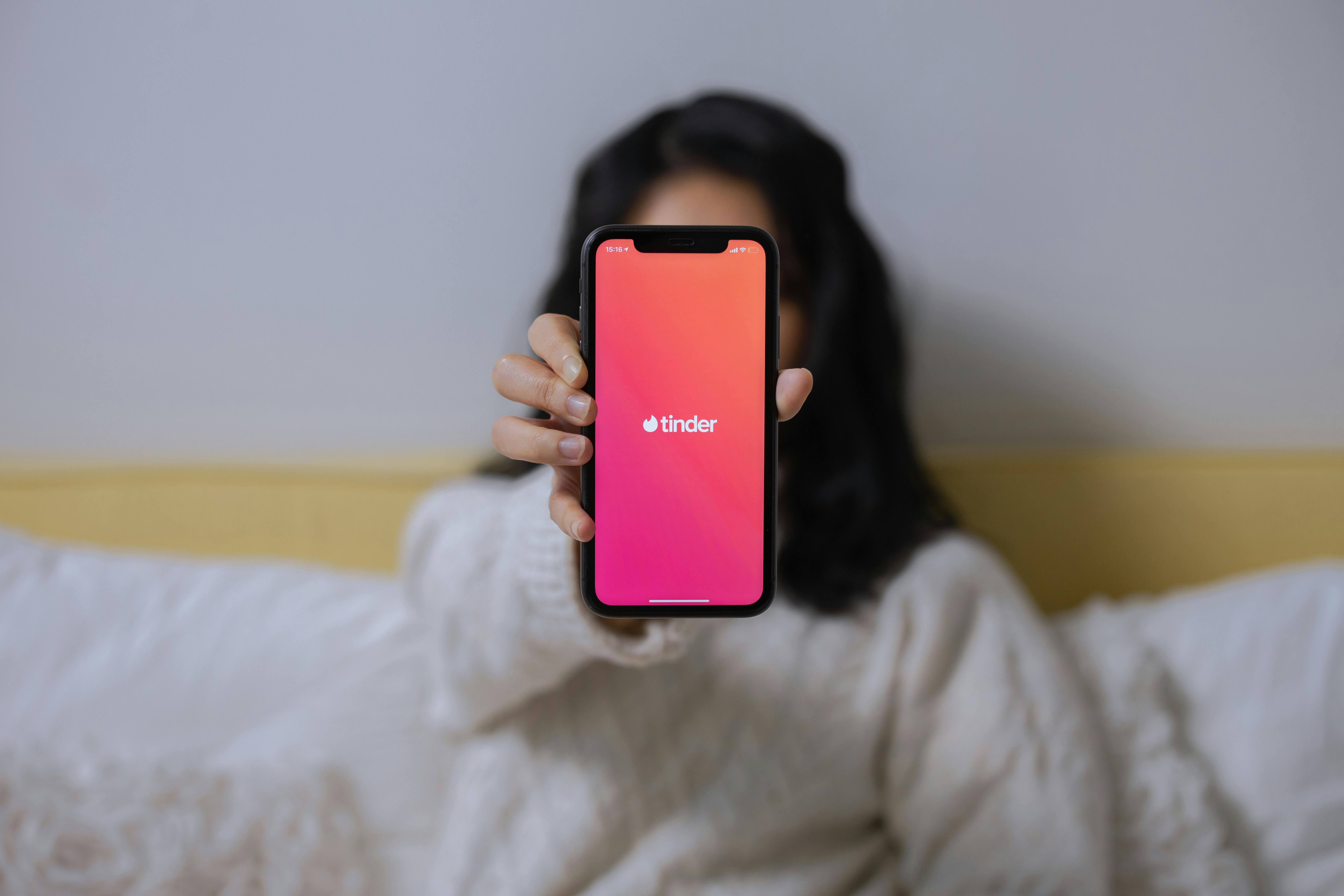
Match Group's dominance complicates market entry for any new app. The company controls Tinder, Hinge, Match, OkCupid, and Plenty of Fish, commanding an estimated 60% of U.S. dating app revenue. Bumble and Grindr hold significant shares of their respective segments.
New entrants face customer acquisition costs that have climbed above $50 per install in competitive markets, and even apps with genuine product differentiation struggle to reach critical mass.
Harmonizer has not disclosed funding, team size, or go-to-market strategy. For context, League, a dating app that launched in 2015 with an exclusivity angle and raised over $10M in venture capital, never achieved meaningful scale relative to incumbents. It ranked outside the top 50 dating apps by downloads throughout its existence before effectively winding down operations.
What operators should actually watch
If Harmonizer is serious about scientific credibility, it will need to demonstrate it through more than press releases. Publishing methodology details, partnering with academic researchers, or sharing longitudinal outcome data would differentiate it from the long list of apps that have claimed algorithmic superiority without evidence.
The company's traction metrics will surface within six months. App intelligence platforms track downloads, retention, and revenue. If Harmonizer gains meaningful adoption—say, breaking into the top 20 grossing dating apps in the U.S.—that would indicate its positioning resonates regardless of scientific validity.
For trust and safety teams at established platforms, Harmonizer's approach offers a reminder: users increasingly want substance over volume. That doesn't require breakthrough algorithms. It requires product decisions that prioritise match quality over engagement metrics, even when those decisions hurt short-term growth.
Match Group has experimented with AI-powered features and limiting daily swipes and surfacing fewer matches to improve perceived quality. Bumble has tested compatibility badges. These incremental changes acknowledge the same user demand that Harmonizer's positioning exploits.
Whether "science-backed" matchmaking can work remains an open question. Whether this particular app has solved it remains significantly more doubtful until evidence suggests otherwise. Meanwhile, other AI matchmaking apps like Amata continue to launch with similar promises, suggesting the competitive landscape for science-backed dating platforms is only intensifying.
Key Takeaways
- •Dating app operators face growing pressure to prioritise match quality over engagement metrics as user fatigue with swipe-based interfaces increases across the market.
- •Investors should scrutinise claims of algorithmic superiority in new matchmaking platforms, given that acquisition costs above $50 per install require proven retention to scale against Match Group.
- •Product teams at established dating services must monitor whether science-backed positioning requires peer-reviewed academic validation to build long-term consumer trust.
Frequently Asked Questions
Technology & AI Desk
The DII Technology Desk reports on product, engineering, AI and platform infrastructure across dating and social discovery apps.
Comments
Join the discussion
Industry professionals share insights, challenge assumptions, and connect with peers. Sign in to add your voice.
Your comment is reviewed before publishing. No spam, no self-promotion.