German Study Exposes Dating Apps' 10:1 Looks Bias. Can Personality Ever Compete?
Key Points
- •German university research involving 445 participants established that photo attractiveness impacts dating app matching ten times more than biography quality.
- •A 1.5-point improvement in photo attractiveness generates a 20 per cent increase in matches, whereas equivalent biography enhancements produce a 2 per cent increase.
- •The study revealed that attractive profile photos create a halo effect, causing users to assume individuals possess superior personality traits and compatibility.
- •Dating platforms including Match Group and Bumble have added personality features over three years despite visual-first product architecture dominating initial matching decisions.
Match Group executives love talking about 'meaningful connections'. Bumble has built an entire rebrand around moving beyond superficiality. But new German research reveals that dating app architecture tells a different story: visual attractiveness outperforms personality by a factor of ten to one when it comes to generating matches.
The study, conducted by researchers at a German university and covering 445 participants evaluating AI-generated dating profiles, represents the first time the attractiveness-to-personality ratio has been measured with this level of precision. That 10:1 multiplier isn't just an inconvenient finding for an industry trying to rehabilitate its reputation—it's a structural verdict on product architecture that every swipe-based platform shares.
This research codifies what operators have always known but rarely acknowledge in investor presentations: the core swiping mechanic is fundamentally incompatible with depth-first matching. Layering personality prompts and voice notes onto a product whose primary sorting mechanism rewards physical attractiveness at a 10:1 ratio isn't a feature strategy—it's theatre. Until a major platform radically restructures how profiles are presented and evaluated at the initial decision point, all the 'meaningful connection' messaging remains marketing copy contradicted by the product itself.
Create a free account
Unlock unlimited access and get the weekly briefing delivered to your inbox.
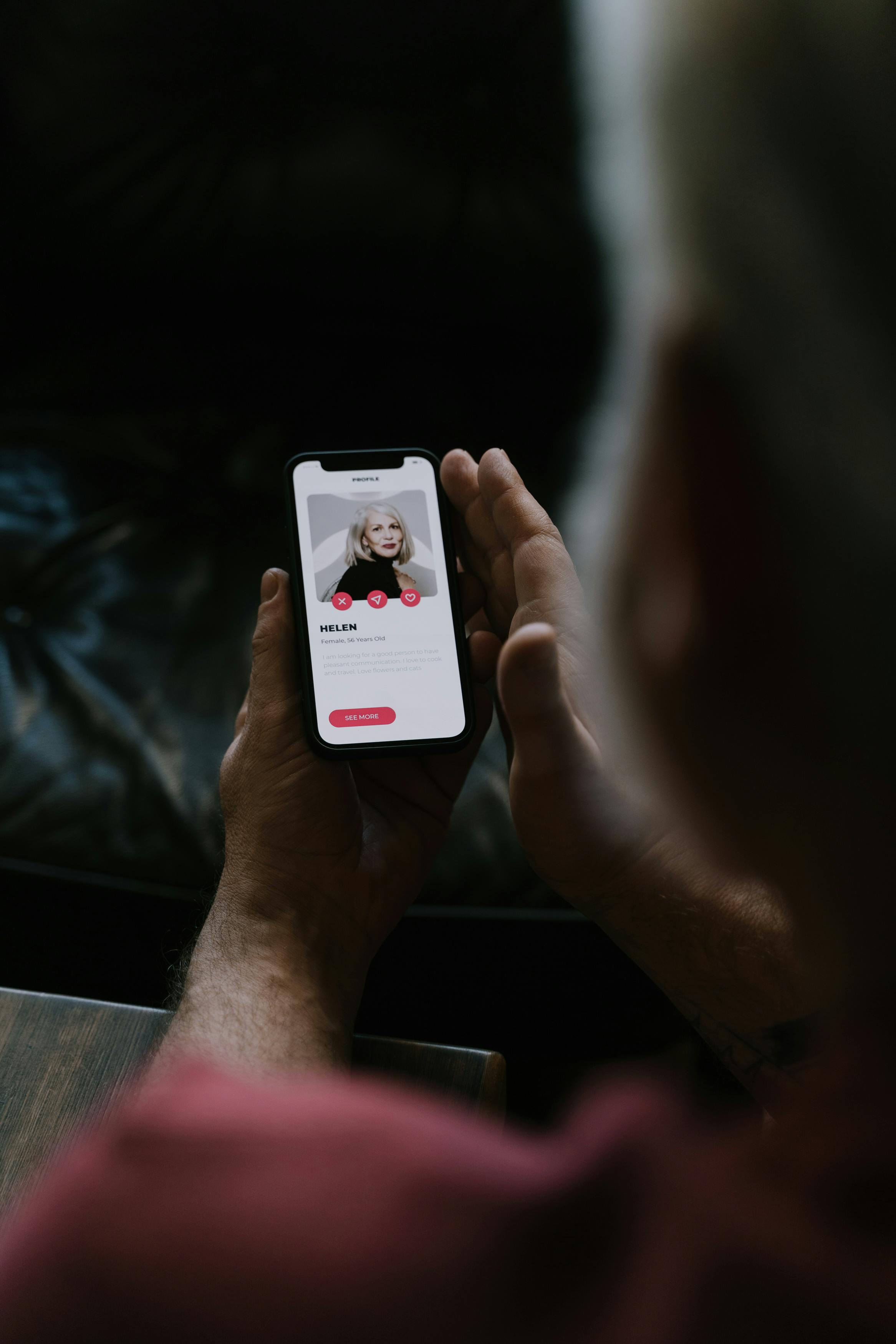
The implications cut across multiple pressure points the industry already faces. Platforms have spent the past three years responding to declining engagement and platform fatigue by introducing features designed to surface personality: Hinge's voice prompts, Bumble's Opening Moves and compliments system, Match's 'Vibe Check' video feature. According to the companies' own product announcements and earnings calls, these additions aim to help users 'show who they really are' and facilitate 'authentic connection'.
Biography improvements delivered one-tenth the matching impact of attractiveness improvements. That's not a feature gap. That's a design problem.
The methodology matters here. Researchers used AI-generated profiles to control variables, ensuring that changes in attractiveness or bio quality could be isolated. Real-world dating app behaviour is obviously messier—experienced users understand that photo selection, sequencing, and even bio-photo interplay form part of a sophisticated self-presentation strategy. A witty bio can reframe how subsequent photos are interpreted.
Still, the core finding is hard to dismiss: at the crucial initial filter stage, where most potential matches are discarded, visual assessment dominates by an order of magnitude. Product teams can add as many personality indicators as they want further down the profile, but they're decorating a house whose foundation was poured for a different purpose.
What the halo effect means for retention
The study surfaced a secondary finding that should concern engagement teams more than the primary attractiveness multiplier: attractive photos created a 'halo effect', leading evaluators to assume those profiles also possessed superior personality traits. This isn't merely a vanity problem. It's a mismatch problem that directly feeds into the industry's persistent issue with early-stage conversation abandonment.
If users swipe right based on physical attraction, then mentally upgrade their expectations about that match's personality, humour, and compatibility—only to encounter someone whose actual traits don't align with the inflated mental model—the chat dies. Dating platforms already struggle with conversation conversion rates. Bumble disclosed in its Q2 2024 earnings that improving 'quality of connections' remained a primary focus after user surveys indicated dissatisfaction with match quality.

The halo effect suggests retention problems may be partly structural, baked into a product design that optimises for visual sorting. You can't fix conversation abandonment with better icebreaker prompts if the fundamental matching mechanic systematically creates misaligned expectations from the first swipe.
The niche dating response
Platforms explicitly designed to deprioritise photos—primarily faith-based apps like Upward or personality-first services like Filteroff—have long positioned themselves as alternatives to swipe-based superficiality. The German research provides the first robust quantification of just how significant that design choice might be. A 10:1 differential isn't a marginal product distinction—it's a different matching philosophy.
Whether that philosophy can scale remains the central question for any alternative-architecture dating service. The swipe mechanic became ubiquitous not because Match Group forced it on the industry, but because it solved a fundamental product problem: how do you help users quickly sort through hundreds of potential matches in a geography? Presenting full personality profiles first is more cognitively demanding and dramatically slower.
Smaller services can afford that trade-off. They're targeting users already frustrated with mainstream platforms and willing to invest more time per profile. The moment a major operator tries to pivot away from visual-first sorting at scale, they're making a bet that enough of their user base wants depth badly enough to accept reduced throughput. No exec team has been willing to make that bet yet, regardless of what their brand marketing says.
What operators can actually do
The study authors suggested that 'dating apps that encourage users to share more about their personalities...may help highlight qualities beyond physical appearance'. That recommendation needs contextualising against their own findings. Encouraging personality sharing is precisely what major platforms have been doing for three years. The data shows it barely moves the matching needle.

Structural changes would require rethinking profile presentation entirely: hiding photos until after bio evaluation, limiting daily swipes to force closer reading, or introducing mandatory text-based filtering before visual profiles appear. Each option introduces friction that most operators consider commercially unacceptable for their core user base.
The more realistic response is segmentation. Platforms could offer parallel experiences within the same app—a 'quick match' visual-first mode alongside a 'depth match' personality-first mode—and let usage data reveal what users actually want versus what they tell researchers they want. Bumble's acquisition of Official in 2023, which brought Geneva-based social discovery features into the portfolio, suggested the company was exploring multiple matching paradigms.
The German research won't change any operator's product roadmap this quarter. But it does put a number on something the industry has spent considerable marketing budget trying to talk around: the core product is a looks-sorting tool with personality features attached, not the reverse. Until someone redesigns the foundation, the 10:1 ratio is the business model.
Key Takeaways
- •Dating app operators cannot solve conversation abandonment rates with icebreaker prompts alone when visual sorting mechanics systematically generate inflated personality expectations.
- •Product teams face structural limits when layering personality prompts onto swipe architecture, as changing user matching behaviour requires fundamental profile redesigns rather than feature additions.
- •Operators may increasingly adopt app segmentation strategies that offer parallel visual-first and depth-first matching modes to evaluate user willingness to accept friction for compatibility.
Frequently Asked Questions
Data & Analytics Desk
The DII Data Team maintains the publication's trackers, market data and analytical reference hubs for the online dating industry.
Comments
Join the discussion
Industry professionals share insights, challenge assumptions, and connect with peers. Sign in to add your voice.
Your comment is reviewed before publishing. No spam, no self-promotion.