Quickmeets' Brutal Honesty: A PR Disaster or Industry Wake-Up Call?
Key Points
- •Vihaan Mehndiratta, a University of Pennsylvania graduate, launched Quickmeets, a dating app using artificial intelligence to match users based on uploaded images of physical ideals.
- •Quickmeets is piloting across seven US universities, claiming retention rates three to four times higher than competing dating platforms during its trial period.
- •Bumble shares fell by 34 per cent in 2024 while Match Group stock stayed stable, amidst both operators emphasising intentional dating over visual matching.
- •Regulatory frameworks including the EU Digital Services Act and the UK Online Safety Act require platforms using visual preference AI to demonstrate algorithmic transparency.
Match Group executives spent much of 2024 insisting their apps prioritise authenticity and meaningful connections. Bumble rebuilt its entire brand around 'intentional dating'. Meanwhile, a Penn graduate has just launched an app that skips the pretence entirely: upload a photo of your celebrity crush or physical ideal, and an algorithm finds you matches who look like them.
Quickmeets, currently piloting across seven US universities, represents the industry's quiet part said out loud. Whilst operators publicly champion personality quizzes and compatibility scores, founder Vihaan Mehndiratta has built a product around what users actually do—judge potential matches on appearance within seconds. The question isn't whether this is superficial. It's whether the rest of the industry has been lying about what dating apps really are.
This is either brutally honest product design or a PR disaster waiting to scale. Quickmeets has productised the exact behaviour that dating apps have spent a decade pretending doesn't drive their entire business model. Whether this approach survives first contact with the trust and safety teams now scrutinising every platform feature for bias is another matter entirely.
Create a free account
Unlock unlimited access and get the weekly briefing delivered to your inbox.
At minimum, it forces the industry to confront an uncomfortable truth: users swipe on photos first and read bios never.

According to Mehndiratta, Quickmeets delivers retention rates 'three to four times higher' than unnamed competitor apps, based on its university pilot data. Without disclosed sample sizes, measurement periods, or specific comparison benchmarks, that claim requires context. Campus-based dating apps benefit from closed networks and built-in social proof—retention naturally runs higher when matches attend the same lectures.
The product itself is straightforward. Users upload images representing their physical preferences—celebrity photos, previous partners, or generic 'types'. The AI analyses facial structure, features, and aesthetic patterns, then surfaces profiles that match those visual criteria. Mehndiratta describes the system as 'as accurate as a real human matchmaker', though no independent verification exists and the comparison conflates two entirely different processes.
What Quickmeets does do is eliminate the friction between stated preferences and revealed preferences. Research on dating app behaviour consistently shows users swipe right based on photos, then retrofit personality justifications afterwards. Profile text gets skimmed at best. By making visual preference the primary input rather than a secondary filter, the app aligns product design with actual user behaviour—even if that behaviour makes operators uncomfortable.
The bias problem nobody wants to discuss
Image recognition AI carries well-documented bias issues. Facial recognition systems perform poorly on darker skin tones. Beauty algorithms trained on Western datasets encode specific racial and aesthetic preferences as universal standards. An app built entirely around analysing and matching facial features will inherit those biases unless explicitly designed against them—a non-trivial engineering challenge that most AI dating features have failed to solve.
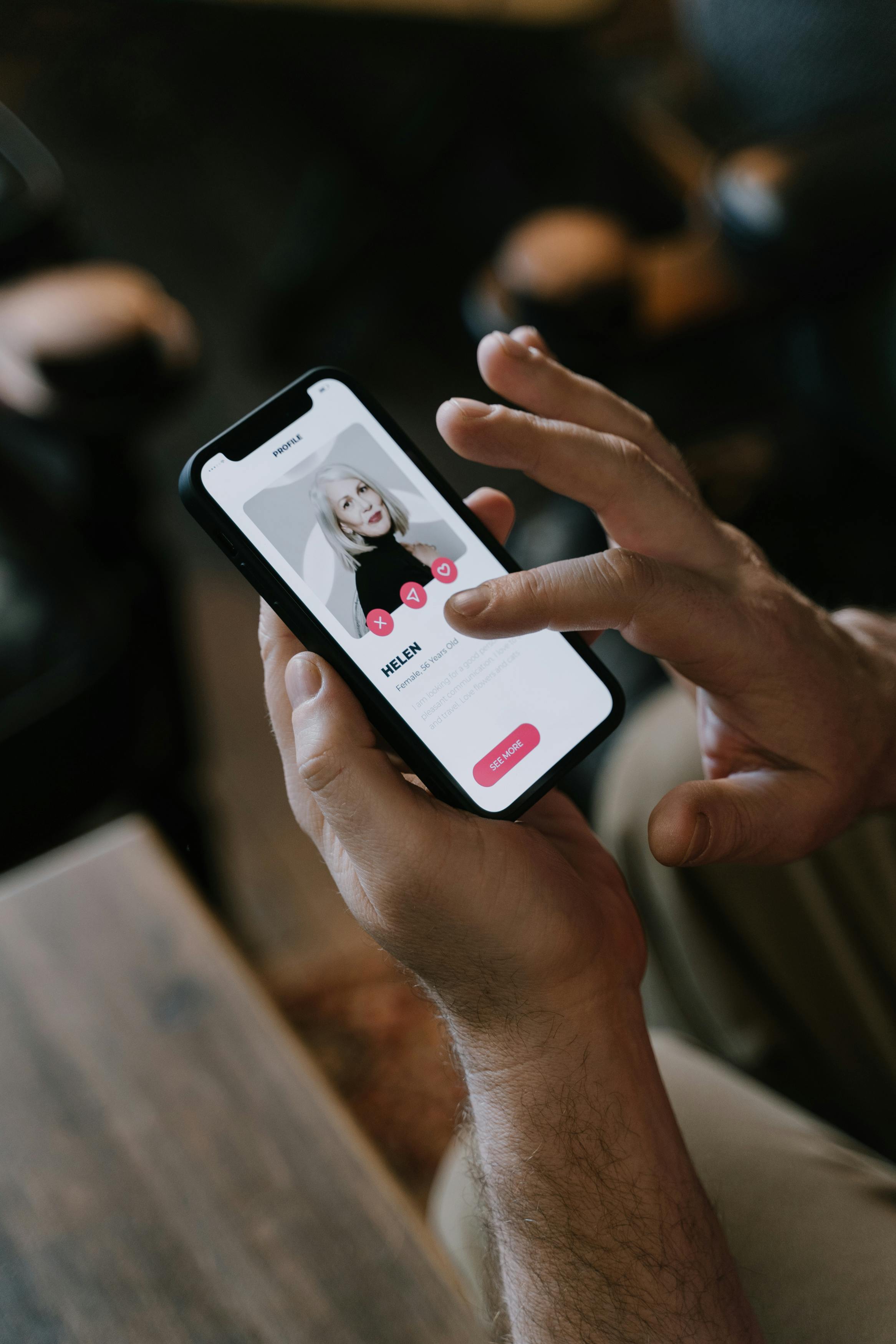
Mehndiratta told student media that the system learns individual preferences rather than imposing algorithmic beauty standards. But 'individual preference' in aggregate often reveals systematic bias. If the AI learns that users disproportionately prefer certain racial features, body types, or facial structures, it optimises for those patterns. The result is algorithmic redlining dressed up as personalisation.
Dating apps already face persistent criticism over racial bias in matching. A 2021 Cornell study found significant racial preferences embedded in swipe patterns across major platforms.
OkCupid's internal data, published then quietly removed, showed clear racial hierarchies in message response rates. Quickmeets makes the matching criteria more explicit, which could either surface bias for correction or encode it more efficiently. Without published methodology or third-party audits, operators considering similar features should proceed cautiously.
The regulatory environment has shifted since Tinder made swipe-based matching mainstream in 2012. The EU Digital Services Act (DSA) requires platforms to explain algorithmic decisions and assess systemic risks. The UK Online Safety Act (OSA) mandates safety by design. An app whose core feature is 'show me people who look like this specific image' will face legitimate questions about discrimination, data protection, and algorithmic transparency—particularly if it scales beyond university pilots.
University launches and the scalability question
Campus-focused dating apps follow a familiar playbook. The League started at elite universities before attempting broader expansion. Hinge's initial traction came from college networks. The strategy offers controlled growth, demographic homogeneity, and network density—all conditions that inflate early metrics before reality intrudes.
Quickmeets is live at seven unnamed US universities. That's enough to generate student press coverage and founder profiles, but insufficient to prove product-market fit beyond early adopters. University populations skew younger, more digitally native, and more willing to experiment with niche platforms. Whether the 'upload your ideal type' concept resonates with the broader 25-40 demographic that drives dating app revenue remains unproven.
Mehndiratta has suggested the underlying AI technology 'could become a major technology for many other dating apps'. Possible, but operators considering visual preference AI face significant implementation barriers. Integrating such features requires robust bias testing, regulatory compliance review, and brand risk assessment. For struggling public companies like Bumble—which saw shares drop 34% in 2024—adopting explicitly looks-based matching would contradict years of brand positioning around meaningful connections.
Match Group has more flexibility. With a portfolio spanning Tinder to Hinge, the company can test controversial features on specific brands without risking the entire operation. But even Match has pulled back from pure swipe mechanics, adding prompts and profile depth to Tinder in response to user fatigue. A feature that makes visual judgment more efficient runs counter to that product direction.
What honest matching actually means
The uncomfortable reality is that Quickmeets isn't introducing superficiality to dating apps—it's admitting it was always there. Every major platform already prioritises photos. Users make split-second judgments based on appearance. The AI simply makes that process more explicit and arguably more efficient.
Whether efficiency is what dating apps need is debatable. The industry's retention crisis stems partly from users burning through matches too quickly, leading to fatigue and churn. An algorithm that accelerates visual filtering might increase short-term engagement whilst worsening long-term satisfaction. That's been Tinder's core problem for years.
For operators watching this pilot, the takeaway isn't whether to copy Quickmeets. It's whether the industry can continue claiming to optimise for personality and compatibility whilst building products that reward attractive photos above all else. Users increasingly see through the disconnect. Products that acknowledge it openly might perform better than those that don't—assuming they can navigate the trust, safety, and regulatory minefields that come with making the algorithm's preferences visible.
The seven-university pilot will reveal whether brutal honesty about looks-based matching is what users want, or just what one Penn graduate thinks they want. The broader industry should pay attention either way. The gap between what dating apps claim to do and what they actually do has never been more visible—or more exploitable by competitors willing to admit the truth.
Key Takeaways
- •Dating app operators face an escalating tension between public branding focused on intentional dating and product architectures that inherently prioritise visual preferences.
- •Implementing visual preference artificial intelligence presents severe compliance and reputational risks for operators due to algorithmic bias in image recognition and strict regulations such as the EU Digital Services Act.
- •Investors should verify whether campus-based retention metrics can replicate across broader adult demographics before treating explicit visual matching as a sustainable growth driver.
Frequently Asked Questions
Financial Intelligence Desk
The DII Financial Intelligence Desk covers earnings, valuations, funding and the financial performance of the global online dating industry.
Comments
Join the discussion
Industry professionals share insights, challenge assumptions, and connect with peers. Sign in to add your voice.
Your comment is reviewed before publishing. No spam, no self-promotion.