

Dateability's Growth Exposes VC Blind Spot in Disability Dating
Key Points
- •Dateability has accumulated 25,000 users across North America with zero marketing spend since launching in 2022 and is now expanding into the UK market.
- •Customer acquisition costs for mainstream dating applications currently exceed 30 US dollars per install according to data published by AppsFlyer.
- •The World Health Organisation estimates that 1.3 billion people experience significant disability, representing 16 percent of the global population and 14.6 million UK citizens.
- •Venture capital investors declined to fund Dateability due to perceived market saturation, forcing founder Michael Cheng to rely on organic discovery.
Match Group and Bumble have spent years promoting accessibility features whilst Dateability, a bootstrapped dating app specifically for disabled and chronically ill singles, has quietly built a 25,000-strong user base and expanded to the UK—all without venture capital. The contrast exposes an uncomfortable truth: major platforms claim to support disability communities, but a Los Angeles startup is the one actually centring them. The question isn't whether there's demand for dedicated disability-focused dating infrastructure, but whether the economics will ever attract institutional capital.
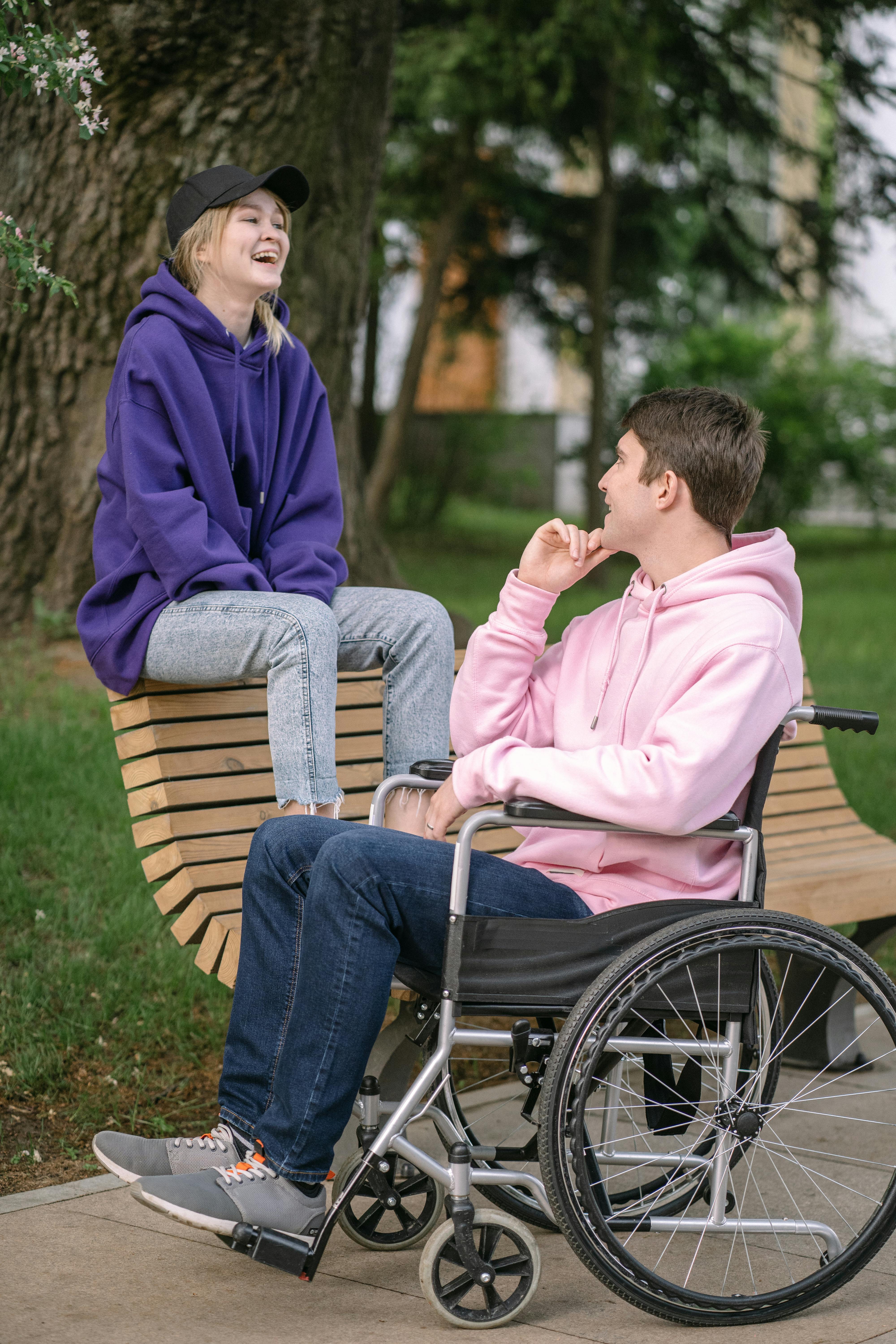
The real story isn't that a niche dating app is expanding internationally. It's that an operator has identified a market of millions, demonstrated product-market fit, and still can't access capital—whilst Match Group burns cash on AI chatbots and Bumble pivots to 'opening moves'. VCs claim the dating market is oversaturated, but what they mean is they're not interested in segments that require patient capital and community-building.
Twenty-five thousand users over two years sounds modest until you consider it was achieved with zero marketing spend in a sector where customer acquisition costs have ballooned to $30-plus per install.
Create a free account
Unlock unlimited access and get the weekly briefing delivered to your inbox.
The inclusion paradox
Major platforms have added accessibility infrastructure in waves. Bumble rolled out photo descriptions for visually impaired users in 2021. Hinge introduced voice prompts. Match Group's portfolio apps support screen readers across most features. These aren't trivial efforts—they required genuine product development investment.
But accessibility features and disability-focused community are different propositions entirely. According to founder Michael Cheng's comments to media outlets, disabled users on mainstream platforms routinely experience ghosting once they disclose their condition. The pattern is familiar to anyone who's followed the trust and safety space: identity-based rejection isn't a technical problem. You can't code your way out of bias.
Identity-based rejection isn't a technical problem. You can't code your way out of bias.

This raises the strategic question the majors would rather not confront. Is a disability filter on Hinge—allowing users to self-identify and connect with others who do the same—a viable product? Almost certainly not, given the optics and potential for fetishisation. Could Match Group launch a dedicated disability-focused brand within its portfolio? Technically yes. Commercially, it's unclear whether that would cannibalise existing users or genuinely expand the addressable market.
Dateability's existence suggests mainstream platforms are leaving revenue on the table. But the economics have to pencil out.
The growth ceiling problem
Twenty-five thousand users across the US and Canada since 2022 is simultaneously impressive and concerning. The World Health Organization estimates roughly 16% of the global population—1.3 billion people—experience significant disability. In North America alone, that's well over 50 million potential users. Dateability has captured 0.05% of that theoretical market.
The bootstrap model explains some of this. Without marketing spend, growth relies entirely on organic discovery and community referral. That's sustainable, but it's slow. It also creates the chicken-and-egg density problem that kills most niche dating apps: not enough users in any given geography to generate sufficient matches, leading to churn, which suppresses growth further.
This is precisely why VCs have cooled on dating investment. The sector's unit economics have deteriorated sharply since 2021. Customer acquisition costs for mainstream apps now routinely exceed $30 per install, according to AppsFlyer data, with paid conversion rates stuck in low single digits. A niche app targeting a dispersed population faces even steeper acquisition challenges—and investors know it.
A bootstrapped, sustainable business serving 100,000 paying subscribers could be perfectly viable as a lifestyle company. It won't return a fund.
Cheng told media outlets that multiple VCs passed on Dateability, citing market saturation. That's cover. What investors actually mean is they don't see a path to the scale required for venture returns. A bootstrapped, sustainable business serving 100,000 paying subscribers could be perfectly viable as a lifestyle company. It won't return a fund.
Regulatory and cultural tailwinds
The UK expansion timing is notable for reasons beyond market size. The Online Safety Act, which came into force in stages throughout 2024, explicitly requires platforms to address abuse targeting protected characteristics, including disability. Dateability's model—creating a space where disability is the norm rather than the disclosure—potentially sidesteps some of the moderation complexity mainstream apps now face under the OSA.

Cultural factors complicate the comparison between markets. According to Scope, a UK disability equality charity, 67% of Britons have never spoken to a disabled person about their condition. That suggests potential headwinds for community growth if the UK market is less comfortable with disability-forward identity. Conversely, it could indicate pent-up demand for a dedicated space.
The competitive landscape in the UK is wide open. No major player operates a disability-focused product. Bumble and Match Group's UK entities offer the same accessibility features as their US counterparts, with the same fundamental limitation: they're designing for inclusion within a mainstream context, not building community around shared experience.
Whether that distinction matters to users—and whether it translates to defensible differentiation—will determine if Dateability's UK launch is expansion or overreach. The company disclosed no UK-specific user targets or marketing plans. Without capital to deploy, growth will again rely on organic discovery.
The broader question for the industry is whether the niche-vs-mainstream debate has a clear answer. Dateability's existence proves demand for dedicated platforms. Its funding struggles prove investors don't believe the economics work. Both can be true. What's harder to defend is the narrative from major operators that they're adequately serving disability communities whilst a bootstrapped competitor quietly builds what they won't.
Key Takeaways
- •Mainstream operators like Match Group and Bumble risk losing disabled users to dedicated platforms because technical accessibility features do not eliminate identity-based social rejection.
- •Venture capital funds risk missing defensible niche opportunities by insisting on immediate venture-scale growth rather than supporting patient capital models with low acquisition costs.
- •Compliance officers in the United Kingdom must evaluate whether dedicated community spaces fulfill Online Safety Act mandates targeting discrimination more effectively than retrofitted moderation features.
Frequently Asked Questions
Financial Intelligence Desk
The DII Financial Intelligence Desk covers earnings, valuations, funding and the financial performance of the global online dating industry.
Comments
Join the discussion
Industry professionals share insights, challenge assumptions, and connect with peers. Sign in to add your voice.
Your comment is reviewed before publishing. No spam, no self-promotion.


