

Tinder's 'Crush Feelings' Campaign: A Credibility Test, Not a Creative One
Key Points
- •Tinder facilitates 16 billion likes or passes weekly and has generated 100 billion matches since its launch.
- •Tinder Chief Marketing Officer Stephanie Danzi launched the global Crush Feelings campaign to target Generation Z users with surrealist marketing visuals.
- •Tinder introduced Swipe Stories, a feature aggregating user-generated content about rejection and vulnerability directly within the mobile application feed.
- •Match Group quarterly disclosures indicate ongoing pressure on Tinder paying subscriber numbers alongside declining monthly active users across dating apps in 2024.
Match Group's flagship app is attempting a radical repositioning, launching 'Crush Feelings'—a global marketing campaign designed to convince Gen Z that Tinder is about authentic emotional connection rather than efficient hookups. The campaign features surreal creative and a new feature called 'Swipe Stories' that showcases member-submitted moments of rejection, vulnerability, and unexpected connection. The question isn't whether the creative is clever—it is—but whether Tinder can credibly reposition itself when its entire reputation was built on gamified casual encounters.

The campaign, overseen by Tinder CMO Stephanie Danzi, features deliberately absurdist visuals: a woman trapped in bed by a metaphorical crush, a man with heart-shaped pupils, people suspended mid-air. According to the company, the aesthetic is designed to mirror Gen Z's 'surreal, meme-driven' communication style. Swipe Stories, meanwhile, aggregates real member experiences submitted via the app—first crushes, brutal rejections, moments of self-discovery—and presents them as short-form content within the product.
This is Tinder admitting it has a Gen Z retention problem and that 'swipe right for casual sex' is no longer a viable positioning for the cohort that will define the next decade of revenue.
The campaign is well-executed, but execution isn't the challenge. The challenge is convincing a generation hyper-aware of commodification and platform fatigue that Tinder—the app that literally gamified dating—now cares about their emotional complexity. That's not a creative problem. It's a credibility problem, and creative alone won't solve it.
Create a free account
Unlock unlimited access and get the weekly briefing delivered to your inbox.
The positioning problem Tinder created for itself
Hinge successfully carved out the 'designed to be deleted' lane and now owns the relationship-intent positioning among younger users. Bumble built a brand around women making the first move and has spent years emphasising intentionality over volume. Tinder, by contrast, became synonymous with efficiency and casual encounters—and that wasn't an accident.
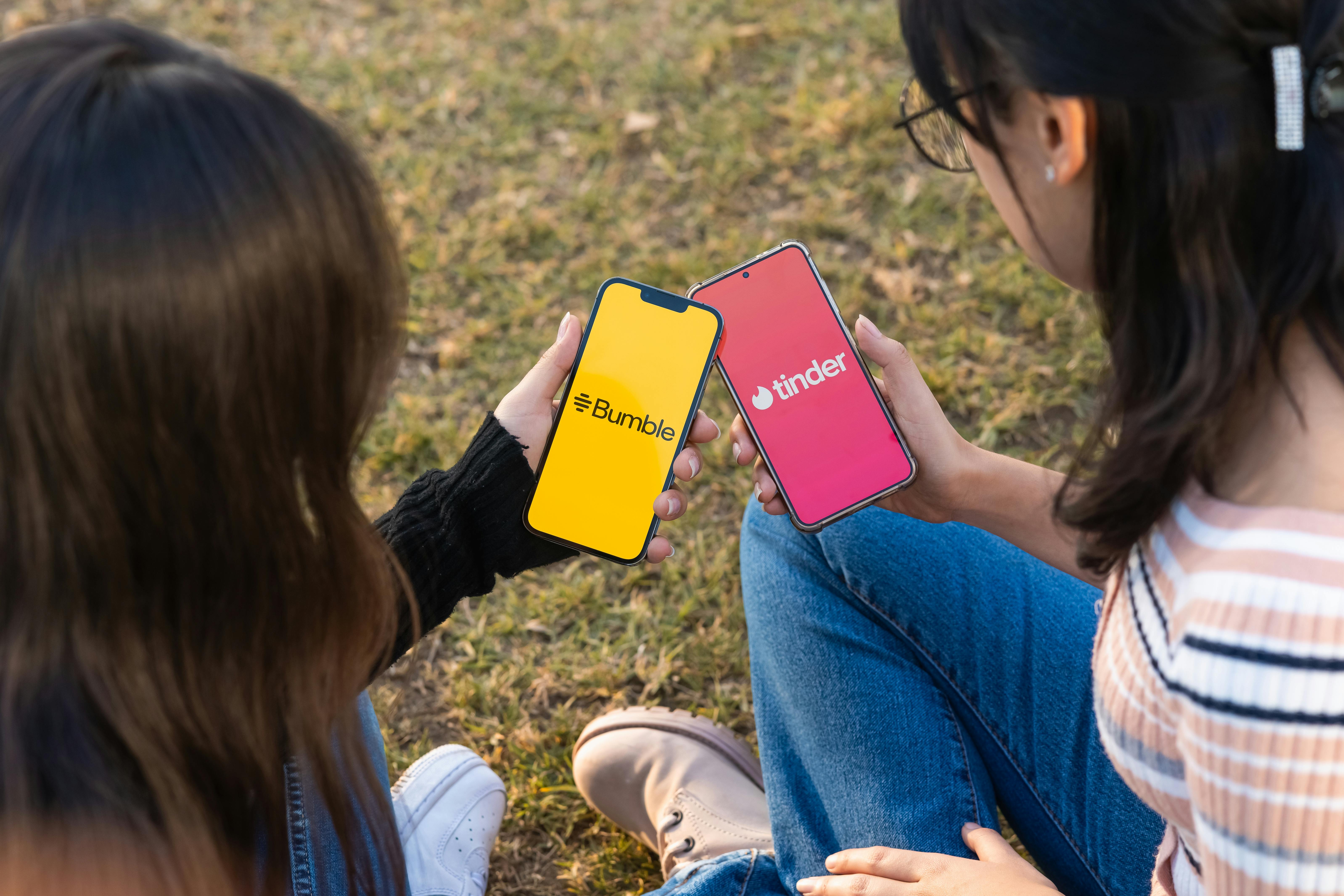
Data from Tinder itself shows Gen Z members update their profiles twice as frequently as millennials, a behaviour the company frames as reflecting 'fluid identity presentation' and 'values-based matching'. That's a generous interpretation. It could also signal that Gen Z users are desperately trying to signal seriousness on a platform where everyone assumes you're not.
The company's messaging around Crush Feelings leans heavily on the idea that Tinder is where 'young daters first experience that rush'. That's marketing positioning, not documented fact, and it glosses over a more uncomfortable reality: many Gen Z users report that dating apps feel transactional, exhausting, and damaging to their mental health.
What Swipe Stories actually does
Swipe Stories is user-generated content packaged as product feature. Members submit their experiences—often messy, funny, or painfully honest—and Tinder surfaces them as short-form stories within the app. The format is familiar: vertical video, text overlays, designed for quick consumption.
Functionally, it serves two purposes. First, it creates a reason to open the app beyond swiping, addressing the problem of single-session utility. Second, it builds narrative around the emotional stakes of using Tinder, which is exactly what the platform needs if it wants to compete on depth rather than scale.
The risk is that Swipe Stories becomes a feed of rejection trauma and performative vulnerability—content that's entertaining but reinforces the very commodification Tinder is trying to move away from.
The competitive context nobody's acknowledging
Tinder's pivot toward emotional authenticity comes as every major platform scrambles to differentiate in a saturated market. Bumble is leaning into AI-powered conversation starters and community features. Hinge has doubled down on prompts and voice notes designed to surface personality. Grindr continues to dominate its niche with feature velocity and hyper-targeted monetisation.

What's striking is that Tinder still has the scale advantage—those 16 billion weekly interactions represent liquidity that competitors can't match. But liquidity alone isn't enough when users no longer trust the platform to deliver what they're actually looking for. If Gen Z wants relationships, they're opening Hinge. If they want efficiency, they're staying on Tinder but complaining about it.
Tinder's internal data showing that Gen Z updates profiles more frequently could be read as engagement. It could also be read as constant optimisation in search of signal that the platform isn't delivering. The difference matters.
Where this leaves Tinder strategically
Crush Feelings is a signal of strategic intent, but intent without product evolution is just brand refresh. If Tinder wants Gen Z to believe it cares about emotional depth, it needs to change the incentives baked into the product, not just the language around it. That means rethinking match mechanics, moderation, onboarding, and how the app surfaces compatibility beyond photos and a 500-character bio.
Competitors who positioned for intentionality early now benefit from selection effects—their user bases skew toward people who want relationships because the brand promise filters for them. Tinder is trying to shift perception on an installed base of hundreds of millions who joined for a different reason. That's not impossible, but it requires more than surreal creative and a content feed.
The campaign will likely perform well with the metrics Tinder can control: impressions, sentiment, maybe even a short-term uptick in new profiles. Whether it changes how Gen Z actually uses the app—and whether they stay—depends on what happens after they swipe.
Key Takeaways
- •Dating app operators attempting to reposition legacy platforms must modify underlying match mechanics and incentives rather than relying exclusively on brand refreshes.
- •Competitors such as Hinge and Bumble maintain a structural advantage in relationship-focused dating because early brand positioning established self-selecting, intentional user bases.
Frequently Asked Questions
Newsroom
The DII Newsroom reports daily breaking news across the global online dating, matchmaking and social discovery industry.
Comments
Join the discussion
Industry professionals share insights, challenge assumptions, and connect with peers. Sign in to add your voice.
Your comment is reviewed before publishing. No spam, no self-promotion.


