Match Group's AI Pivot: Activist Pressure or Genuine Innovation?
Key Points
- •Match Group shares have fallen roughly 80 per cent since February 2021, erasing approximately $40 billion in market capitalisation.
- •Match Group generated $3.42 billion in revenue in 2024, while average paying subscribers fell to 10.5 million in Q3 2024.
- •Activist investors Elliott Management and Starboard Value have accumulated positions in Match Group to push for an AI-led operational transformation.
- •Match Group sold the livestreaming assets of The Meet Group to BlackRock for $670 million as part of an initial portfolio rationalisation.
Match Group has become the dating industry's most visible cautionary tale, with shares plummeting 80% from their 2021 peak and wiping out $40 billion in market value. That collapse has attracted activist investors Elliott Management and Starboard Value, who are now pushing an AI-led transformation narrative. The question is whether this represents genuine product revolution or financial engineering dressed up as innovation.

Activist involvement at this scale tells you everything about where Match Group actually stands. Elliott and Starboard don't take positions to shepherd incremental product improvements—they arrive when there's a valuation gap that requires structural change. The AI narrative is convenient, but the real pressure will be on margins, cost structure, and whether the portfolio still makes sense as a single entity.
If AI matchmaking were the obvious unlock, Bernard Kim wouldn't need activists to tell him that.
The business fundamentals explain why the activists showed up. Match Group generated $3.42 billion in revenue for 2024, but growth has decelerated sharply. Tinder, which still accounts for roughly 40% of group revenue according to company disclosures, has plateaued. Direct revenue at the flagship product declined year-over-year in recent quarters.
Create a free account
Unlock unlimited access and get the weekly briefing delivered to your inbox.
Paying subscriber numbers tell the same story. Match Group disclosed 10.5 million average paying subscribers across its portfolio in Q3 2024, down from 11 million a year earlier. Revenue per payer has increased, but that's classic late-stage monetisation: extracting more from a shrinking base. The company maintains strong cash generation—operating cash flow was $863 million for the nine months ending September 2024—but that cash flow is no longer funding rapid growth.
The 2021 Peak and Pandemic Distortion
The 2021 peak wasn't random timing. Dating apps saw a pandemic surge as the only viable channel for meeting people during lockdowns, followed by a sharp normalisation as venues reopened and singles returned to in-person socialisation. Match Group's share price reflected a temporary acceleration that management arguably mistook for a new baseline. Competitors made the same error—Bumble is down approximately 85% from its 2021 IPO peak.

What the Activists Actually Want
Elliott and Starboard have been notably vocal about AI as the strategic priority, but their involvement historically points to a broader playbook: portfolio rationalisation, cost reduction, and capital allocation discipline. Match Group operates more than a dozen brands, many of which are legacy acquisitions with overlapping audiences and diminishing returns. The company's recent sale of The Meet Group's livestreaming assets to BlackRock for $670 million signals that portfolio pruning has already begun.
What they're likely pushing for is a framework where AI justifies headcount reductions, operational consolidation, and a shift away from human-moderated trust and safety towards automated content moderation. That's where the margin expansion lives.
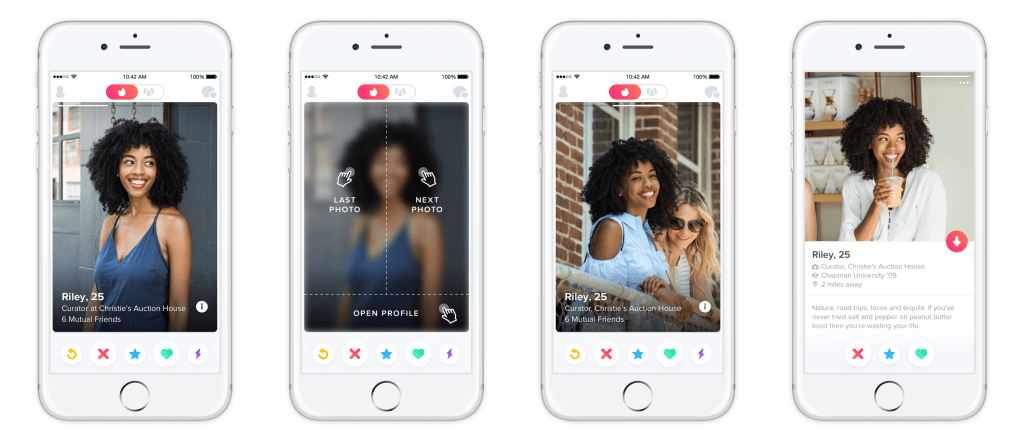
The AI angle isn't theatre—Match Group has deployed algorithmic matchmaking through features like Tinder's Smart Photos and Hinge's Most Compatible—but it's not the structural unlock activists need. Bernard Kim, who took over as CEO in May 2022 from Shar Dubey, has repeatedly emphasised AI in earnings calls and investor presentations. In the Q3 2024 earnings call, he described AI-powered features as central to the product roadmap across the portfolio.
The Competitive Context
Match Group's struggles aren't happening in isolation. The entire dating category faces structural headwinds: user fatigue, declining conversion from free to paid, increasing regulatory scrutiny, and competition from social platforms that blur the line between friendship and dating. Bumble has responded by repositioning around "intentional dating" and overhauling its app experience. Grindr, meanwhile, has maintained stronger growth by focusing on a defined community with higher engagement and willingness to pay.
What Match Group controls—estimates suggest between 30% and 40% of the global online dating market by revenue, though exact figures are difficult to verify given private competitors—means its strategic choices ripple across the industry. If Match decides that AI matchmaking justifies higher price points, expect competitors to follow. If it begins aggressively automating moderation to cut costs, that becomes the new margin benchmark.

The risk is that AI becomes a narrative that distracts from the central challenge: dating apps have a conversion problem. The vast majority of users never pay, and those who do often churn after a few months. AI might improve match quality, but it doesn't solve the fundamental tension that successful matchmaking reduces lifetime value by helping users leave the platform. No algorithm fixes that.
What Happens Next
Match Group's next earnings report, due in early February 2025, will clarify whether activist pressure is translating into operating changes or simply slide deck commitments. Watch for three signals: further portfolio sales, headcount announcements framed around operational efficiency, and pricing experiments on Tinder that test whether AI features can support premium tiers.
The activists will likely push for a clearer segmentation between growth assets (Hinge, BLK) and mature cash generators (Match.com, OkCupid), with different capital allocation strategies for each. If Tinder's decline continues, expect questions about whether the brand still anchors the portfolio or has become a liability that suppresses the group multiple.
For the rest of the industry, Match Group's trajectory is the bellwether. If AI-driven features can demonstrably improve retention and monetisation at scale, every operator will deploy similar capabilities within 18 months. If they can't—if this is just the latest iteration of feature theatre—then the dating category's growth problem is more existential than a product roadmap can solve.
Key Takeaways
- •Dating app operators must address structural monetisation challenges because artificial intelligence features fail to resolve the issue of successful matchmaking reducing customer lifetime value.
- •Investors in online dating portfolios should expect activist pressure on Match Group to drive headcount reductions, increased automated content moderation, and further non-core asset sales.
Frequently Asked Questions
Financial Intelligence Desk
The DII Financial Intelligence Desk covers earnings, valuations, funding and the financial performance of the global online dating industry.
Comments
Join the discussion
Industry professionals share insights, challenge assumptions, and connect with peers. Sign in to add your voice.
Your comment is reviewed before publishing. No spam, no self-promotion.