

Dua.com Ditches Swipes: A Bold Bet Against Dating's Slot Machine Model
Key Points
- •Dating app Dua.com is removing its left-right swipe interface in its Version 5.0 update to appeal to marriage-minded users in the Albanian diaspora.
- •Founded by Hamit Shala, Dua.com serves approximately 10 million Albanian diaspora members across regions including Kosovo, Albania, Switzerland, Germany, the UK, and the US.
- •Alongside the removal of swiping, Dua.com is introducing mandatory liveness verification and regular purges of inactive profiles to combat fake accounts.
- •Competitors Match Group and Bumble continue to rely on swipe-based mechanics, whereas Dua.com is completely eliminating the gesture from its interface.
Dua.com has done what no dating app of scale has dared: it's killed the swipe. The platform serving the global Albanian community is rolling out Version 5.0 over the coming months, stripping out the left-right gesture that's defined online dating for over a decade. According to founder Hamit Shala, this isn't a feature tweak — it's a deliberate statement positioning the app as anti-casual and built for marriage-minded users.
For a diaspora platform connecting culturally aligned users across continents, it's a calculated risk. Dua.com is betting that slower, more intentional browsing will deliver better relationship outcomes than the rapid-fire judgement model that powers Tinder and its descendants. The question is whether users will tolerate the friction — or flee to faster alternatives.

This is the first dating app of meaningful scale to remove swiping entirely, not just de-emphasise it through marketing copy. Whether it works or crashes spectacularly, dua.com has handed the industry a live experiment on whether interface design drives behaviour or merely reflects it. If engagement holds or improves, every product lead at Match Group (MTCH) and Bumble (BMBL) will need to explain why their apps still look like slot machines. If it collapses, we'll have our answer on swipe fatigue: it's real, but users hate the alternatives more.
Create a free account
Unlock unlimited access and get the weekly briefing delivered to your inbox.
If engagement holds or improves, every product lead at Match Group and Bumble will need to explain why their apps still look like slot machines.
Why diaspora apps make ideal testing grounds
Dua.com occupies a revealing position in the market. It's not a hyperlocal matchmaker with thousands of users in a single city, nor is it a mainstream app trying to be everything to everyone. The Albanian diaspora numbers roughly 10 million globally, with significant populations in Switzerland, Germany, the UK, and the US. Users arrive with shared cultural context — language, family expectations around marriage, often religion — which reduces the need for extensive filtering that makes swiping feel efficient.
That cultural specificity matters for product design. When users trust that everyone on the platform shares baseline values, the case for rapid-fire judgement weakens. You're not sifting through thousands of profiles to find someone who wants children and doesn't smoke. You're choosing between a smaller set of culturally compatible matches, where the distinction lies in personality and chemistry rather than fundamental life goals.
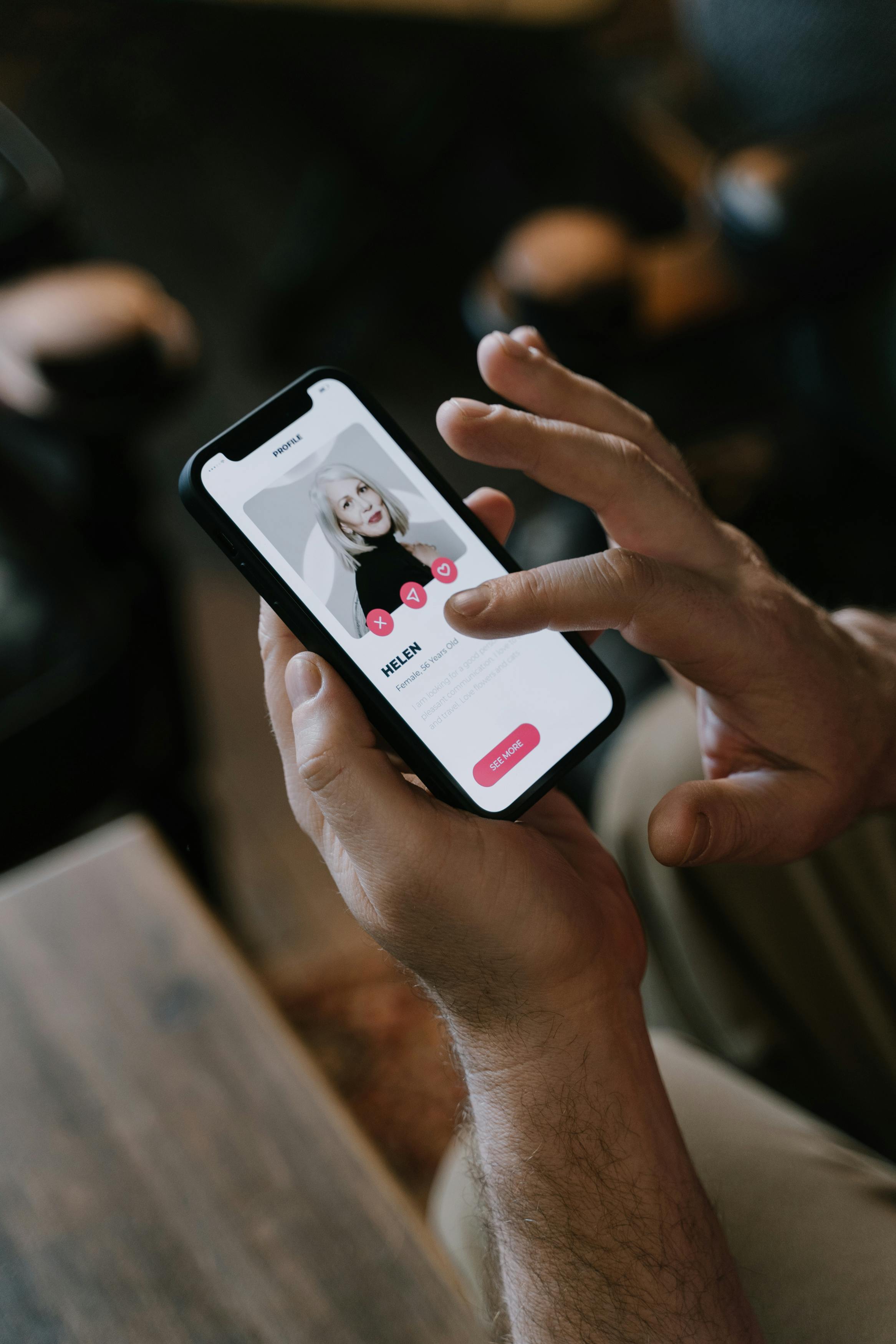
Removing swipes in that context becomes less radical — it's a feature cut that aligns with how users already thought about the platform. Compare that to Hinge, which has spent years positioning itself as 'designed to be deleted' whilst retaining the same core mechanic as Tinder. Hinge users still swipe — or tap X and heart icons, which amounts to the same cognitive behaviour.
What's actually changing
Details on the replacement interface remain thin. According to founder Hamit Shala's LinkedIn announcement, the emphasis falls on what's been removed — swiping, the 'hookup culture' it supposedly encourages — rather than what users do instead. That's either confident product design or a sign the replacement isn't fully baked yet. The gradual rollout suggests the company is watching retention and engagement metrics closely before committing fully.
The liveness verification and inactive account purges are more concrete. Mandatory selfie-based checks to confirm users are real people address a persistent problem for niche apps: low liquidity makes every fake profile more damaging. If 15% of your visible profiles are bots or inactive accounts, the platform feels dead even if the absolute number of real users is stable.
For a diaspora app where users might already question whether enough people are active in their region, verification and purges are table stakes, not differentiators. What's interesting is the packaging. Dua.com is presenting anti-swipe, anti-casual, and anti-fake as a unified stance — a deliberate contrast to the 'fast, fun, gamified' positioning that defined the last decade of dating apps.
Dua.com is presenting anti-swipe, anti-casual, and anti-fake as a unified stance — a deliberate contrast to the 'fast, fun, gamified' positioning that defined the last decade of dating apps.
Can smaller players force product rethinks?
Dua.com's user base is modest by dating app standards, likely in the low hundreds of thousands at most. The Albanian diaspora simply isn't large enough to support Tinder-scale usage. But niche apps have influenced mainstream platforms before — just slowly and selectively. Bumble's women-message-first mechanic, once unique, is now a toggle option on several apps. Hinge's prompt-based profiles were novel in 2015; now every serious dating app has some version of structured prompts.
The question is whether removing swipes could follow that path. The answer depends entirely on whether dua.com can demonstrate improved outcomes: lower churn, higher message response rates, more relationships that progress beyond the app. If those metrics improve, the industry will pay attention. If they don't, or if user growth stalls, the experiment will be dismissed as a niche play that doesn't translate.
Regulation adds another dimension. The UK Online Safety Act (OSA) and the EU Digital Services Act (DSA) both place new duties of care on platforms, including dating apps. Swipe mechanics don't violate those frameworks directly, but the rapid-browsing model they enable makes moderation harder. High-volume, low-friction interactions generate more reports, more harassment, more content that requires review.
An interface that slows users down and forces more intentional engagement could reduce safety incidents — which also reduces compliance costs. That's a business case that doesn't rely on users loving the change. Dua.com won't release meaningful data for months. Even when it does, the results will be hard to generalise.
A diaspora app with users seeking marriage-minded partners from a specific cultural background isn't a proxy for Tinder's 75 million users. But if engagement holds and relationship outcomes improve, the industry will have its first real evidence that the swipe isn't inevitable — it's a choice. And choices can be revisited.
Key Takeaways
- •Slower browsing models may lower high-volume harassment and moderation costs, offering a potential compliance strategy under the UK Online Safety Act and EU Digital Services Act.
- •Culturally aligned niche platforms serve as effective testing grounds for deliberate friction because high baseline trust among users reduces the necessity for rapid filtering mechanics.
- •If Dua.com demonstrates improved retention and higher response rates, major operators such as Match Group and Bumble may face pressure to re-evaluate gamified swipe interfaces.
Frequently Asked Questions
Technology & AI Desk
The DII Technology Desk reports on product, engineering, AI and platform infrastructure across dating and social discovery apps.
Comments
Join the discussion
Industry professionals share insights, challenge assumptions, and connect with peers. Sign in to add your voice.
Your comment is reviewed before publishing. No spam, no self-promotion.


