

Gen Z's Ironic Profiles: A Retention Crisis in Disguise
Key Points
- •Match Group reported that Tinder direct revenue declined 9 percent year-over-year in Q3 2024, driven partly by user weakness in younger demographics.
- •Research by sociologist Maren Harwood-Hooper reveals Gen Z dating app users under 30 practice identity demobilisation through ironic profiles, reducing overall match quality.
- •Bumble has experienced stagnation in its paying user base due to engagement headwinds among users under 30 who present themselves with strategic vagueness.
- •Lower quality matches resulting from self-deprecating profile choices directly lead to reduced session frequency and weaker retention across online dating platforms.
Gen Z singles are sabotaging their own matches, and it's starting to show up in the metrics that matter. According to recent research by sociologist Maren Harwood-Hooper, dating app users under 30 are increasingly resorting to what she terms 'identity demobilisation'—strategic vagueness, ironic deflection, and deliberate understatement in their profiles—because earnest self-presentation feels too embarrassing to stomach. For operators watching conversion rates and time-to-match data, it's a business problem.
The pattern is straightforward enough: Gen Z users create profiles laden with self-deprecating jokes, intentionally unflattering photos, and prompts answered with studied flippancy rather than genuine information. They're protecting themselves from the perceived humiliation of trying. But dating platforms don't monetise irony.

This isn't a trend piece about youth culture—it's a structural threat to engagement economics. Dating apps are already fighting swipe fatigue, message decay, and declining match-to-conversation ratios. If users now arrive pre-handicapped by their own emotional defensiveness, platforms face a compounding retention problem they didn't design for.
Create a free account
Unlock unlimited access and get the weekly briefing delivered to your inbox.
The question isn't whether Gen Z finds earnestness cringe. It's whether apps can architect around that reluctance before it erodes the success rates that keep subscribers renewing.
Where the safety of irony becomes a liability
Harwood-Hooper's research, conducted through ethnographic interviews with university-age users, identifies a clear pattern: singles describe creating profiles as 'mortifying', and they mitigate that discomfort by refusing to be sincere. One participant told her they'd rather be seen as 'not really trying' than risk appearing desperate or deluded about their own appeal. Another said earnest profiles feel 'tragic'.
This behaviour didn't originate on dating platforms. It's the product of communication norms forged on TikTok, Twitter, and Instagram, where sincerity is routinely weaponised and ironic detachment provides social cover. Gen Z grew up in environments where vulnerability invites mockery, and where the safest stance is always to seem unbothered.
The mechanics are measurable. If users present themselves in ways designed to deflect rather than attract, they generate fewer quality matches. Fewer matches mean fewer conversations. Fewer conversations mean lower session frequency and weaker retention.
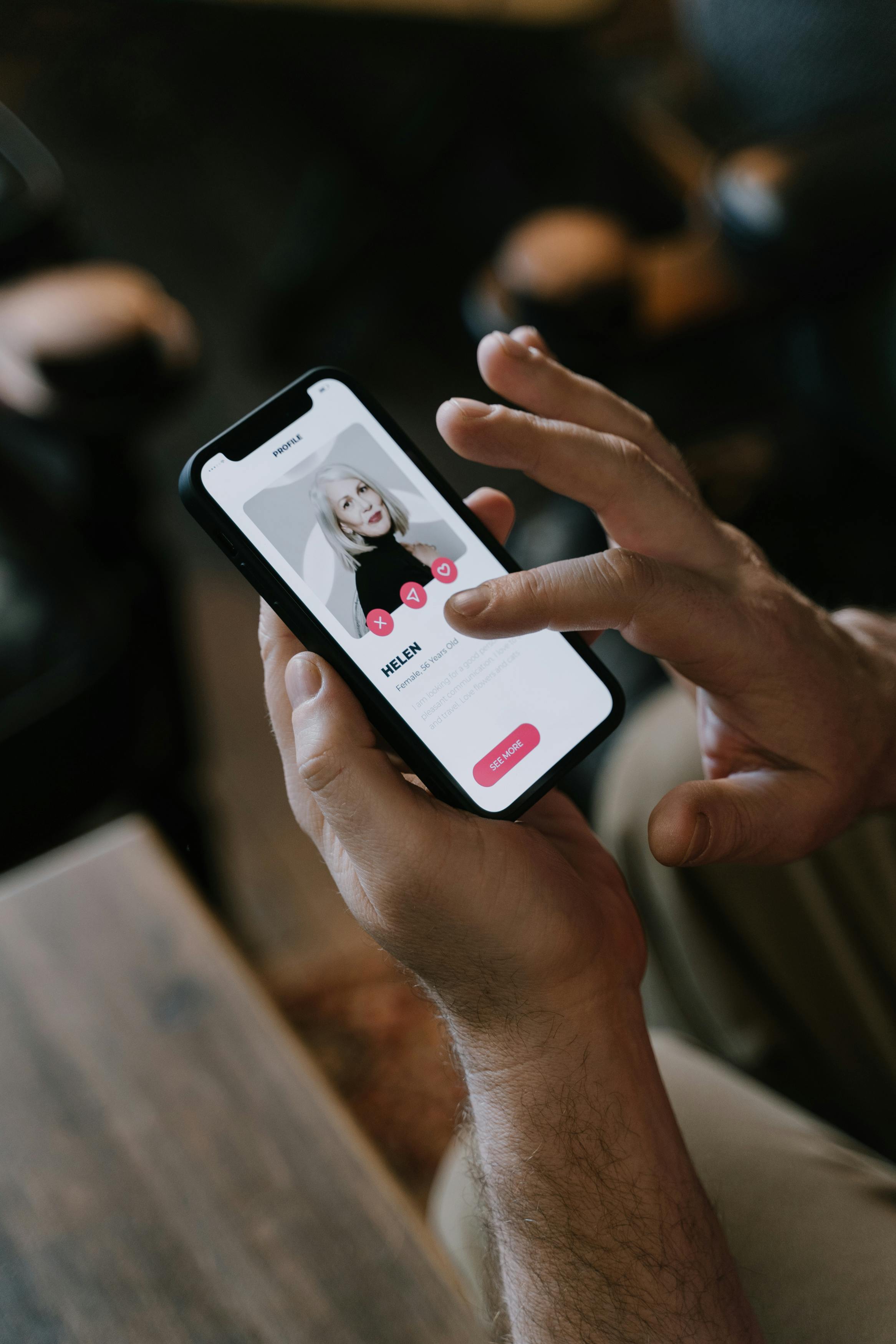
Some observers, including psychotherapist Josh Meisel, suggest the problem may self-correct. His argument: users will eventually realise their ironic approach isn't working, adjust their behaviour, and become more genuine. That's optimistic. It assumes singles recognise the link between their presentation choices and poor outcomes, and that they're willing to override deeply ingrained communication habits.
What platforms have tried, and what they haven't
Hinge built its entire brand repositioning around reducing dating app stigma. The 'designed to be deleted' tagline explicitly reframes app usage as a means to an end rather than something to be embarrassed about. Thursday's time-limited format creates urgency that theoretically short-circuits overthinking.
Neither tackles the vulnerability problem at the UX level. Prompts still require users to self-describe, photos still demand self-curation, and the entire interface still asks singles to put themselves forward for judgement. For a cohort conditioned to avoid earnestness, these design patterns remain fundamentally uncomfortable—no matter how the brand positions itself.
Profile feedback systems that surface when deflection is harming match quality aren't theoretical. They're design choices platforms could test tomorrow.
What would architectural intervention actually look like? Prompts that bypass direct self-description in favour of scenario-based or third-party framing. Photo requirements that emphasise activity over posed self-presentation. Matching mechanics that reward specificity and penalise vagueness in ways users can see.
The challenge is that such changes require admitting the current UX inadvertently enables self-sabotage. That's a harder conversation than launching another AI feature or tweaking the subscription bundle. It means acknowledging that the psychological contract between platform and user has frayed, and that Gen Z's relationship with self-presentation is fundamentally different from the Millennial cohort that built these products' initial growth.
The retention risk nobody's quantifying yet
Match Group (MTCH) disclosed in its Q3 2024 earnings that Tinder's direct revenue declined 9% year-over-year, driven partly by user weakness in younger demographics. Bumble (BMBL) has seen its paying user base stagnate, and the company has attributed some of that pressure to engagement headwinds among users under 30. Neither operator has publicly connected those trends to the authenticity problem Harwood-Hooper describes.
If Gen Z users are systematically presenting themselves in ways that reduce match quality, platforms are caught in a trap. They can't force users to be sincere. They can't redesign profiles to eliminate self-expression without sacrificing the personalisation that drives initial engagement.
The cohort effect matters here. Gen Z represents the next decade of subscriber growth. If this demographic adopts dating apps with built-in ambivalence and a communication style that undermines the product's core function, operators face a long-term retention problem that no amount of feature iteration will solve.
What happens next depends on whether operators recognise this as a design challenge rather than a marketing one. Repositioning the brand won't fix a behavioural pattern rooted in how an entire generation communicates. Structural changes to prompts, photo requirements, and feedback loops might. The window to test those interventions is narrowing, because the cohort currently arriving on platforms brings the problem with them as a default setting.
Key Takeaways
- •Dating app operators must address Gen Z self-presentation barriers through user experience design changes, such as scenario-based prompts, rather than relying on brand repositioning.
- •Investors should monitor whether Match Group and Bumble adapt matching mechanics to penalise profile vagueness, as Gen Z represents crucial long-term subscriber growth.
Frequently Asked Questions
Data & Analytics Desk
The DII Data Team maintains the publication's trackers, market data and analytical reference hubs for the online dating industry.
Comments
Join the discussion
Industry professionals share insights, challenge assumptions, and connect with peers. Sign in to add your voice.
Your comment is reviewed before publishing. No spam, no self-promotion.


