

After5.pm's Radical Bet: Ditching Matches for Real-World Meetups
Key Points
- •Self-funded by Ring4 co-founder Alex Botteri, dating application After5.pm has launched in San Francisco, replacing profile matching with daily real-world group meetups.
- •Competitors Bumble introduced events features in 2023 and Hinge introduced HingeX experiences, but both maintained swiping as their primary product mechanic.
- •After5.pm faces significant scaling challenges against incumbent operator Match Group, which reported 19.6 million paying subscribers globally in Q4 2024.
- •After5.pm plans a city-by-city rollout across the United States and Canada, relying on local venue partnerships and critical user density.
San Francisco is becoming the test market for a proposition that should terrify Match Group (MTCH) and fascinate trust and safety teams in equal measure: what if you deleted the match entirely? After5.pm, a new iOS app launched this month, has jettisoned swiping, matching, and the pre-date messaging gauntlet in favour of something considerably more radical—small-group meetups at local venues every evening from 5 p.m. onwards. One tap, show up, meet people.
The app arrives at a moment when every major operator acknowledges that converting matches into dates remains the industry's biggest product failure. Bumble (BMBL) added events features in 2023. Hinge introduced HingeX experiences in select markets. But both platforms kept matching as the core mechanic and layered events on top.
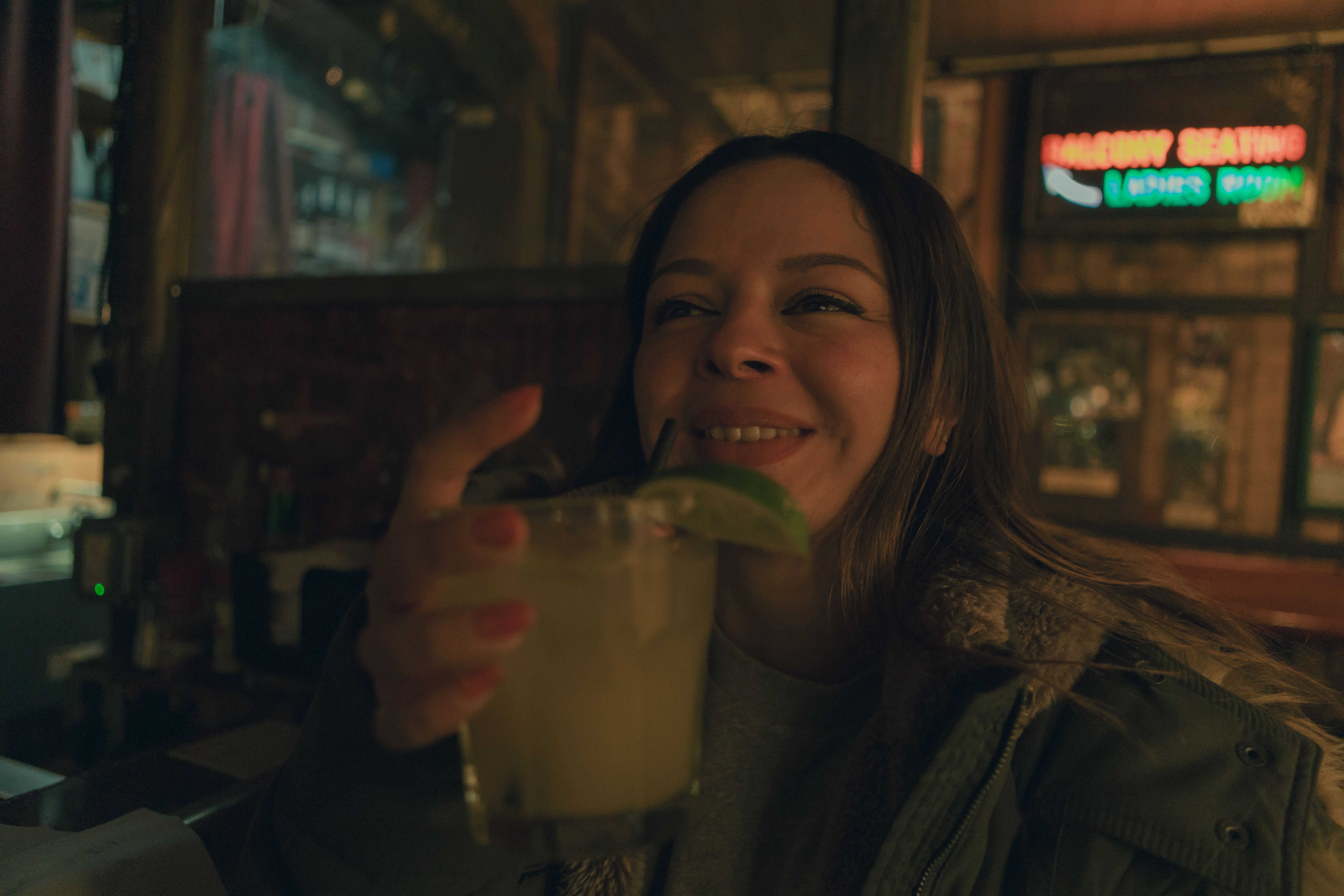
After5.pm inverts the entire model: the meetup is the product. There's no profile optimisation, no conversation decay, no 'hey' followed by silence. You simply join a drinks gathering or trivia session in your neighbourhood and talk to humans in real time.
Create a free account
Unlock unlimited access and get the weekly briefing delivered to your inbox.
This is either the solution to dating app fatigue or a logistics nightmare that collapses under its own operational weight within six months.
The concept is sound—members want to meet, not text—but executing daily group meetups at scale requires density most apps take years to build, venue partnerships that haven't been disclosed, and safety protocols that make Tinder Social's 2017 failure look straightforward by comparison. If After5.pm can crack the trust piece and achieve critical mass quickly in SF, this model will force every incumbent to rethink their product roadmap. If it can't, expect another case study in why 'just meet in person' is easier said than coordinated.
The density problem nobody's solving
The city-by-city rollout strategy sounds familiar—Tinder and Bumble both seeded college campuses and urban centres before expanding—but the operational reality here is fundamentally different. A swipe app with 500 active users in a city can function. Members still see profiles, still get matches, still extract value. An events-first platform with 500 users trying to organise nightly meetups across a metro area falls apart immediately.
You need dozens of people available at the same time, in the same neighbourhood, willing to commit to showing up. Every single evening. After5.pm hasn't disclosed user numbers, but San Francisco is the logical test market for a reason.

The city has density, a culture of tech adoption, and a singles population familiar with dating app dysfunction. According to data from the DII Company Directory, SF also hosts active bases for every major platform—if After5.pm starts pulling conversion-frustrated Hinge and Bumble members away from their apps and into functioning social experiences, the competitive threat becomes real quickly.
The venture is self-funded by Alex Botteri, who previously co-founded Ring4, a cloud communications firm acquired by Inturact Capital in 2021. That background suggests he understands telco infrastructure and operational complexity, but events coordination is a different beast entirely. Grouper, which organised group dates in 2012, folded despite early traction. Timeleft has built a similar meetup model internationally with modest success but positioned itself as social discovery, not dating.
After5.pm's positioning is telling: the app markets itself for 'dates, new friends or simply a reason to go out'. That's either smart product-market fit or a dilution of intent that will confuse expectations at meetups and drive churn.
What's missing: the trust infrastructure
Notably absent from After5.pm's launch materials is any detail on safety measures, identity verification, or how the company plans to manage the inherent risks of coordinating real-world gatherings between strangers. This isn't optional. Trust and safety teams at incumbent operators know that IRL events introduce liability exposure that dwarfs profile moderation.
You're not just responsible for what members say in chat—you're now coordinating where they physically go and who they meet in person.
Bumble's events operate with significant safety architecture: optional attendance, pre-event vetting, and crucially, no expectation that attendees are there exclusively to date. After5.pm's daily cadence and 'one tap to join' frictionlessness sound appealing from a UX perspective, but they raise operational questions. Who's curating these groups? How are bad actors identified before they show up at a bar? What happens when someone feels unsafe mid-event?
The app's minimalist design philosophy—no profiles, no messaging—removes signal that trust teams normally rely on to assess risk. Venue partnerships present another unanswered question. Running nightly meetups requires cooperative bars, cafes, and activity spaces that can accommodate groups on short notice and potentially offer After5.pm preferential booking or space.

That's a B2B sales operation layered beneath what appears to be a consumer app, and it needs to scale city by city as the platform expands. Operators tracking this should note: if After5.pm has cracked venue partnerships at scale, that's potentially more defensible than the app itself.
Whether this model escapes San Francisco
The plan is to expand across the US and Canada city by city, which is the only sensible approach but also the slowest possible growth trajectory in an industry where investors have spent the past 18 months punishing anything that isn't immediately profitable. Match Group operates globally with 19.6 million paying subscribers as of Q4 2024, according to figures tracked in the DII Stock Tracker. After5.pm will need years to achieve that kind of scale—if the unit economics even allow it.
Running daily events infrastructure in dozens of cities is expensive. Charging members enough to cover those costs without killing adoption is the central tension. What's interesting is the timing.
Dating app incumbents are all experimenting with IRL, but none have committed fully because the operational complexity frightens off product teams used to scaling software, not logistics. If After5.pm demonstrates that members will actually show up consistently and convert social time into relationships—romantic or otherwise—expect acquisition interest from operators looking to buy rather than build this capability. If the model works in SF but fails to export to secondary markets, it joins the long list of urban dating experiments that couldn't escape their first city.
The platform's success hinges on a deceptively simple question: can it achieve density quickly enough to make nightly meetups feel abundant rather than sparse? Everything else—trust, venues, revenue—flows from that answer. Compliance teams should be watching how After5.pm handles real-world safety at scale. Product leaders should be asking whether their own members would abandon matching entirely if a viable alternative emerged. And Match Group's strategy team should probably be monitoring San Francisco rather closely over the next six months.
Key Takeaways
- •If After5.pm successfully builds real-world density and safety protocols in San Francisco, major dating operators may pursue acquisitions rather than developing complex in-person event logistics.
- •Dating app compliance teams must monitor After5.pm's minimal profile model, as real-world group dates increase physical safety liability compared to standard digital moderation.
- •Organising daily physical meetups requires substantial operational expenditure, making expansion outside high-density urban markets challenging for After5.pm.
Frequently Asked Questions
Technology & AI Desk
The DII Technology Desk reports on product, engineering, AI and platform infrastructure across dating and social discovery apps.
Comments
Join the discussion
Industry professionals share insights, challenge assumptions, and connect with peers. Sign in to add your voice.
Your comment is reviewed before publishing. No spam, no self-promotion.


