
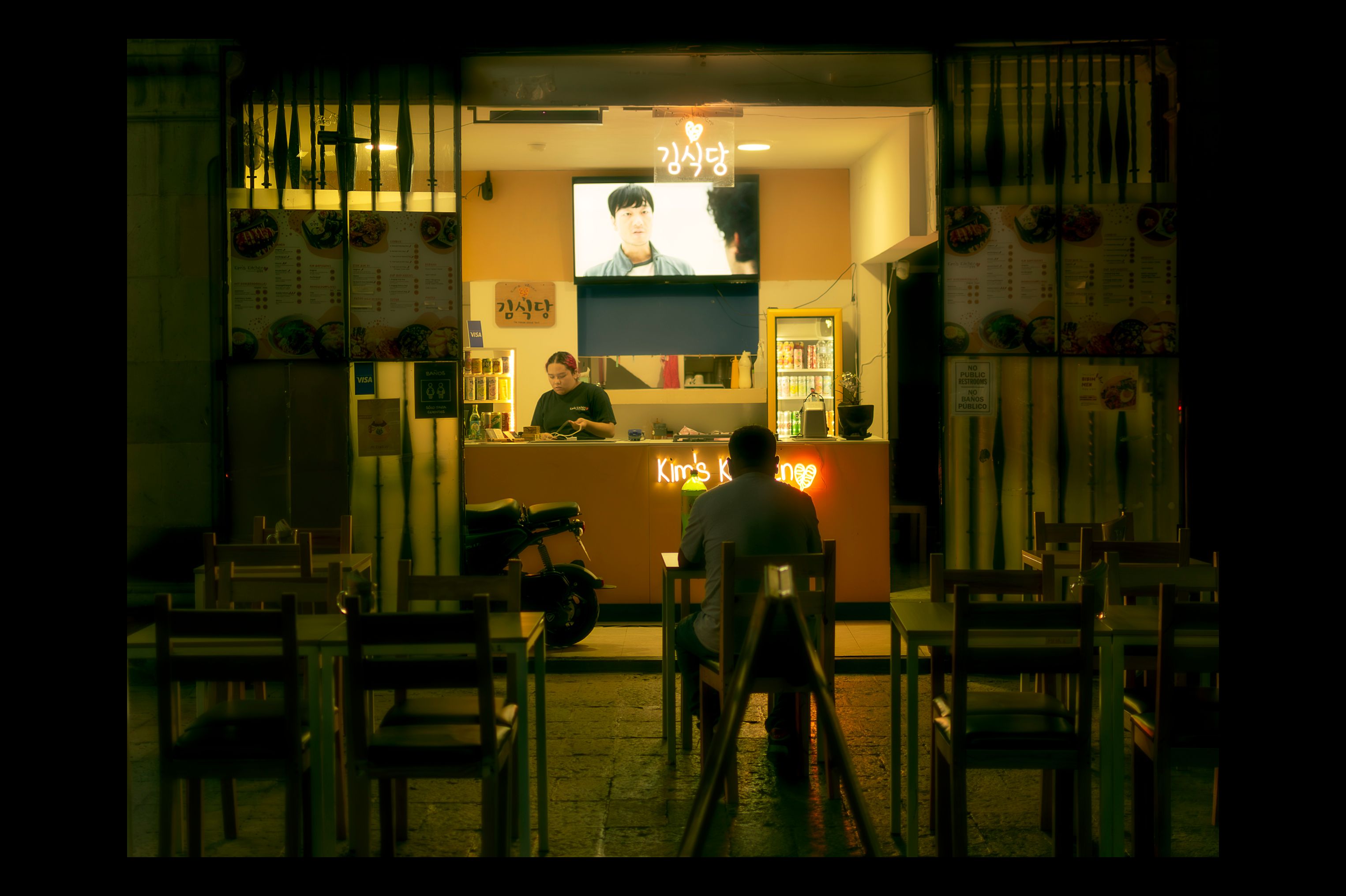
Solo Dining's $269B Market: A Missed Opportunity for Dating Apps
In this article
Research Report
This report examines the rapid expansion of the solo dining economy, which grew to $268.7 billion globally in 2024 and is projected to reach $371.4 billion by 2032. It analyses how restaurants are adapting to serve individual diners who now spend 48% more per person than larger parties, and explores the significant commercial opportunities this shift presents for dating platforms. The convergence of solo dining growth and dating industry infrastructure represents an untapped market intersection with clear strategic potential.
- Solo dining reservations increased 22% year-on-year in Q3 2025
- 21% of Americans now typically dine alone, up from 18% the previous year
- Solo diners spend an average of $84 per visit, 48% more per person than any other party size
- 49% of Millennials and 46% of Gen Z dine solo at least weekly
- Global solo dining market valued at $268.7 billion in 2024, projected to reach $371.4 billion by 2032 (5.2% CAGR)
- China's one-person dining market reached approximately $110 billion in 2024, serving 240 million single adults
The DII Take
The solo dining economy is the clearest proof point that the singles economy is not an abstraction - it reshapes physical spaces, menu design, packaging, and service models. For the dating industry, the connection is direct. Dining is the most common first-date activity, and solo dining is a weekly habit for nearly half of under-35s. A dating platform that integrates dining recommendations, facilitates social eating experiences for singles, or partners with restaurants adapting to solo diners would occupy a natural intersection of two growing markets. The fact that no major dating company has built a credible dining partnership speaks to the industry's persistent tunnel vision.
How Restaurants Are Adapting to the Party of One
Japan has long been the global leader in solo dining infrastructure. Counter seating, single-portion menus, and partitioned booths are standard across Japanese food service, reflecting a market where single-person households represent 34% of all households. Ichiran Ramen, the Fukuoka-based chain, built its entire format around individual booths with privacy screens - a model that has expanded to New York and beyond. Haidilao, China's dominant hot pot chain, has adapted its communal dining format with half-sized portions and dedicated solo sections, reportedly even offering large stuffed toys as dining companions for individual customers.
In China, the one-person dining market reached an estimated 800 billion yuan (approximately $110 billion) in 2024, according to industry analysis cited by TIME, driven by 240 million single adults and 125 million single-person households. The shift from traditional shared-meal formats toward counter seating, narrow two-tops, and single-serving options represents a fundamental restructuring of Chinese food service.
Western markets are catching up. In Germany, solo dining numbers rose 18% year on year in the period from August 2023 to July 2024, according to OpenTable data. German restaurateurs have responded by offering more wines by the glass, flexible seating arrangements, and menus designed for individual portions. In the UK and U.S., the adaptation is most visible in fast-casual and counter-service formats, where solo dining has always been less stigmatised.
South Korea presents perhaps the most extreme case. Single-person households surpassed 10 million for the first time in August 2024, accounting for 42% of all households, according to the Ministry of the Interior and Safety. South Koreans have the highest frequency of eating dinner alone among all G20 nations, per the United Nations' World Happiness Report. The 'honbap' (eating alone) culture has spawned dedicated solo restaurants, single-serve grocery aisles, and a convenience store sector that effectively functions as a solo dining ecosystem.
| Solo Dining Metric | Figure | Source |
|---|---|---|
| Global solo dining market (2024) | $268.7B | Intel Market Research |
| Americans who typically dine alone | 21% | TouchBistro, 2025 |
| Solo diner spend premium (per person) | +48% ($84 avg) | OpenTable, 2024 |
| Solo dining reservation growth (Q3 2025) | +22% YoY | Toast |
| Gen Z dining solo weekly | 46% | TouchBistro, 2025 |
| China one-person dining market (2024) | 800B yuan (~$110B) | Industry estimates via TIME |
| South Korea single-person households | 42% of all households | Ministry of Interior and Safety, 2024 |
The Meal Kit and Delivery Dimension
Food delivery platforms have seen transformative growth in single-serve orders. Industry data suggests that solo diners now constitute 40-50% of digital food orders at major chains. This shift has implications for packaging, portion sizing, and delivery economics. A single-serve meal delivery generates lower absolute revenue than a family order but higher margins per item when pricing reflects the convenience premium solo consumers are willing to pay.
The meal kit sector has been slower to adapt. Most meal kit services were designed around the assumption of two-person or four-person households. Operators that have introduced single-serve options - including some newer entrants focused specifically on cooking for one - have found a receptive market. The challenge is unit economics: single-serve kits have higher per-unit packaging and logistics costs, but command higher per-serving prices.
For dating industry operators, the meal kit and food delivery intersection offers a tangible partnership opportunity. A dating app that offers curated 'cook together' meal kits for first dates, or that partners with delivery platforms to offer solo dining discounts to subscribers, creates a touchpoint that extends the relationship beyond the match.
The Social Dimension of Solo Dining
The motivations behind solo dining mirror those driving the broader singles economy. According to OpenTable's 2024 research, 34% of solo diners cited 'me time' as their primary motivation. Twenty per cent said eating on their own schedule was the main driver. Women in particular use solo meals as intentional pauses - time to reset, explore new restaurants, or scout venues for future social occasions.
This is important context for dating operators. Solo dining is not primarily driven by loneliness. It is driven by autonomy, convenience, and self-care. Products that frame dining alone as a deficit to be solved will miss the market. Products that enhance the solo dining experience - better restaurant discovery, social options for those who want them, seamless booking and payment - will find willing users.
The stigma around eating alone is fading rapidly among younger consumers. The 65% of Gen Z and 63% of Millennials who plan to dine solo this year do not view it as unusual. For them, dining is an individual consumption decision as much as a social one.
Restaurants that recognise this - with counter seating, chef's-table-for-one experiences, and curated tasting menus sized for individuals - are capturing higher per-cover revenue from a growing demographic.
The Dating Industry Opportunity at the Table
Dining is already the default first-date activity for the majority of dating app users. Yet dating platforms do almost nothing to facilitate the dining experience beyond the match. A subscriber who arranges a dinner date through Hinge navigates the entire restaurant selection, booking, and logistics process independently. The platform captures none of the commercial value of that dinner.
The integration opportunities are numerous and commercially viable. Restaurant recommendation engines powered by dating platform data - matching venue atmosphere, price point, and location to user preferences and date context - would improve user experience while generating affiliate revenue from restaurant partners. OpenTable, TheFork, and Resy all operate commission-based models that a dating platform could replicate or partner with.
Social dining events for singles represent another pathway. Supper clubs, group cooking classes, and curated dining experiences designed for single people blend the social motivation of dating with the experiential appeal of food culture. Thursday's events model, before its app shutdown in January 2025, demonstrated that singles will pay £15-25 for a social experience built around food and drink. The operational playbook exists; dating companies have the audience.
The meal-for-two delivery concept - a date-night meal kit ordered through a dating app after a match - remains surprisingly unexploited. The logistics are straightforward. The emotional resonance is high. The brand alignment between a dating platform and a curated culinary experience is natural. The unit economics, given that solo diners already pay 48% premiums per person, suggest willingness to pay for premium food experiences.
The solo dining economy will continue expanding in lockstep with single-person household growth. For food service operators, the strategic implication is to design for the individual diner from the outset rather than treating them as an afterthought.
For dating industry operators, dining represents one of the most accessible adjacent verticals - high frequency, high emotional resonance, and directly connected to the social and romantic behaviours that dating platforms exist to facilitate. The restaurant table for one is a $269 billion market waiting for the dating industry to pull up a chair.
Methodology Note
Solo dining market sizing draws on Intel Market Research (2024). Restaurant trend data uses Toast's Q3 2025 Restaurant Trends Report, TouchBistro's 2025 Diner Trends Report, and OpenTable's 2024 dining analysis. China market estimates reference industry data as reported by TIME (November 2025). South Korea household data cites the Ministry of the Interior and Safety. Per-person spend comparisons use OpenTable's methodology, which examines average guest checks for parties of one versus larger party sizes over a 12-month period.
What This Means
The solo dining market represents a structural shift in consumer behaviour that dating platforms are uniquely positioned to monetise but have largely ignored. The combination of high solo diner spending power, frequent dining habits among under-35s, and the central role of dining in dating creates a clear commercial opportunity for platform integration. Dating companies that build dining partnerships or recommendation features now will establish first-mover advantage in a rapidly growing vertical where user intent and commercial opportunity naturally align.
What To Watch
Monitor whether major dating platforms begin testing restaurant recommendation features, booking integrations, or dining event formats in 2025-2026. Track the expansion of solo-dining-optimised restaurant formats beyond Asia into Western markets, particularly in cities with high single-person household concentrations. Watch for meal kit or food delivery companies launching dating-adjacent products, which would signal competitive pressure on dating platforms to occupy this space before others claim it.
Create a free account
Unlock unlimited access and get the weekly briefing delivered to your inbox.