

Dating Apps' Photo Obsession: Ignoring Science's Attraction Signals
In this article
Research Report
This research examines the scientific evidence on romantic attraction and reveals a fundamental misalignment between what drives real-world attraction and how dating platforms are designed. While the industry has built products around physical appearance, peer-reviewed research demonstrates that voice, humour, conversational responsiveness, and repeated exposure are stronger predictors of sustained romantic interest. The analysis identifies specific product opportunities for platforms willing to surface non-visual attraction signals.
- Physical attractiveness dominates zero-acquaintance contexts but diminishes in influence as interaction time increases, with personality becoming the stronger predictor
- Lower male voices and higher female voices rated as more attractive across cultures in vocal pitch studies
- Shared laughter during initial interactions is one of the strongest predictors of romantic interest in Jeffrey Hall's research
- Question-asking in initial conversations strongly predicts liking according to Huang et al. (2017)
- Expansive, open body postures during speed-dating significantly increased romantic interest above physical attractiveness in PNAS study
- The dating industry generates $10 billion annually from predominantly photo-centric platform designs
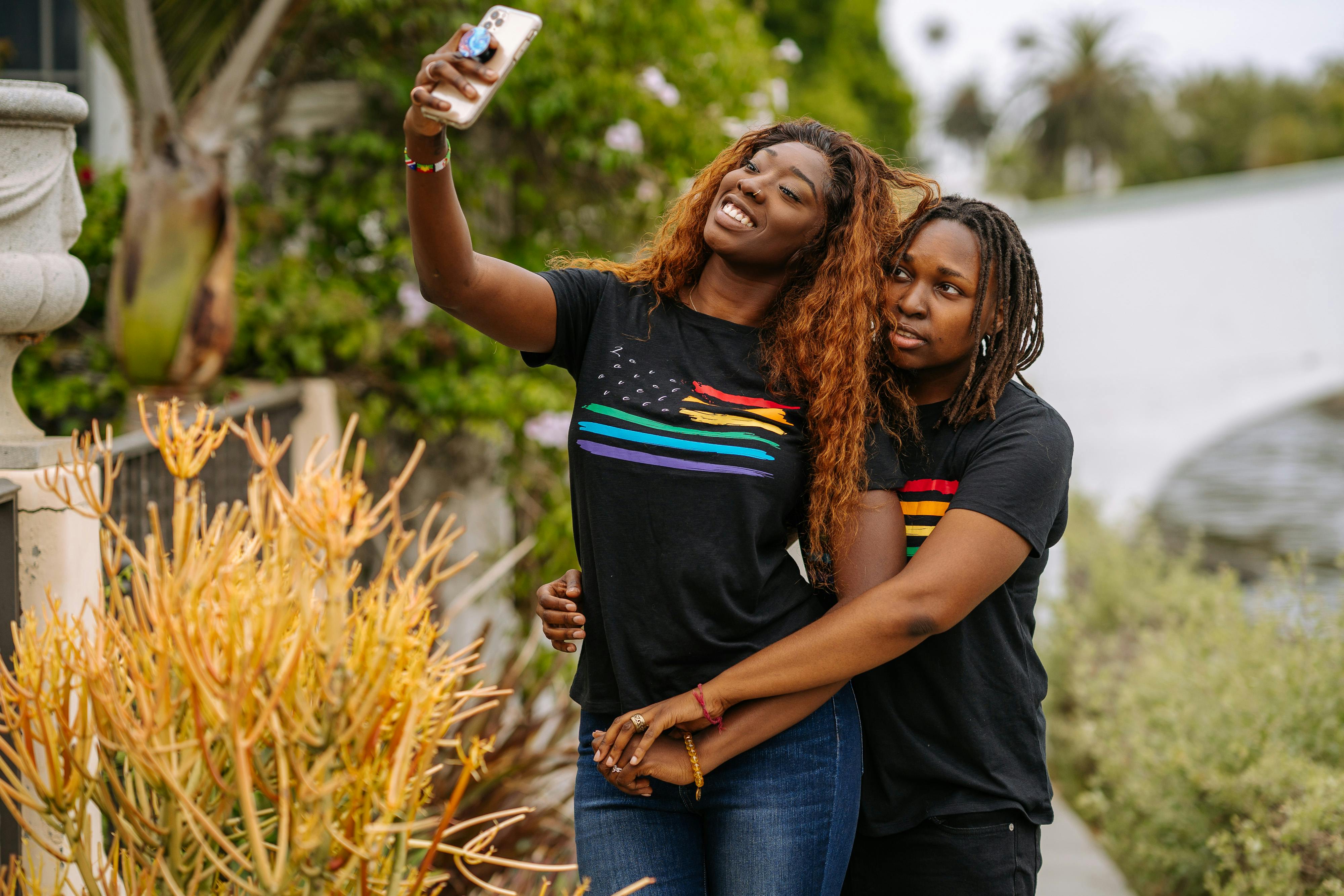
Physical attractiveness dominates dating app design. Photo-first profiles, swipe mechanics based on visual snap judgements, and the premium placed on profile photos all reflect the assumption that physical appearance is the primary driver of romantic attraction. Research supports this to a degree: meta-analyses by Feingold (1990) and Langlois et al. (2000) confirmed that physical attractiveness is one of the strongest predictors of initial attraction, and its effect operates within milliseconds of first exposure.
But the academic literature on attraction reveals a far richer picture than the dating industry's photo-centric design implies. Non-physical factors - humour, vocal quality, proximity, familiarity, body language, and perceived responsiveness - all exert substantial influence on attraction, and many of these factors are poorly captured or entirely absent from current dating platform designs.
The commercial implications of this evidence gap are significant. If the dating industry is building its primary user interface around the least predictive dimension of attraction (appearance) while neglecting the most predictive dimensions (voice, humour, responsiveness, familiarity), then the industry is systematically underperforming relative to what the science says is possible.
The platforms that find ways to surface non-visual attraction signals will not only produce better matches but will differentiate themselves in a market where every competitor's product looks functionally identical.
The DII Take
The dating industry has built a $10 billion business around the least interesting dimension of attraction. Physical attractiveness predicts who gets swiped on. It is a poor predictor of who gets asked on a second date, who enters a relationship, and who stays in one. Voice, humour, conversational chemistry, and perceived warmth are all strong attraction drivers that dating apps systematically exclude from the matching process. The platforms that find ways to surface these non-visual signals - through voice features, video introductions, conversation quality metrics, and behavioural compatibility data - will produce better matches and differentiate themselves in a market where every competitor looks the same.
Voice as an Attraction Signal
Vocal quality is one of the most powerful non-visual attraction cues, and one of the most underexploited by dating platforms. Research by David Puts and colleagues has demonstrated that vocal pitch influences perceived attractiveness across cultures, with lower male voices and higher female voices rated as more attractive in most contexts. Beyond pitch, vocal qualities like warmth, clarity, and animation convey personality information that photos cannot.
Hinge's promotion of voice notes as a profile and messaging feature represents the most significant move toward voice-based attraction signalling in mainstream dating. The research supports this direction: studies on 'thin-slice' judgements show that brief voice samples allow listeners to form surprisingly accurate impressions of personality traits including extraversion, agreeableness, and emotional stability.

Humour, Responsiveness, and Conversational Chemistry
Research by Jeffrey Hall, published across multiple studies, has found that shared laughter during initial interactions is one of the strongest predictors of romantic interest. The key finding is that it is not humour production alone that drives attraction but reciprocal humour appreciation - when both people find each other funny, attraction increases substantially.
Harry Reis's body of research on perceived responsiveness demonstrates that feeling understood, validated, and cared for is a fundamental driver of intimacy and attraction. In dating contexts, responsiveness manifests through question-asking, active listening, and thoughtful follow-up in conversation. Research by Huang et al. (2017) confirmed that question-asking in initial conversations strongly predicts liking - a finding with direct implications for messaging feature design.
Proximity and the Mere Exposure Effect
Robert Zajonc's mere exposure effect - the finding that repeated exposure to a stimulus increases liking for it - has been replicated extensively and has profound implications for dating. Research by Reis et al. (2011) demonstrated that familiarity does indeed breed attraction in live interactions. People become more attracted to individuals they encounter repeatedly, even without direct interaction.
This finding explains why workplace romances, neighbourhood connections, and social circle introductions historically produced the majority of partnerships - and why the dating app model, which presents strangers without prior exposure, faces a fundamental attraction deficit. Experience-led dating models that create repeated encounters (weekly events, community groups, recurring social activities) leverage the mere exposure effect in ways that algorithmic matching cannot.
Body Language and Non-Verbal Communication
Research by Vacharkulksemsuk et al. (2016), published in the Proceedings of the National Academy of Sciences, found that expansive, open body postures during speed-dating interactions significantly increased romantic interest from partners. Non-verbal communication accounts for a substantial proportion of attraction signalling, and it is entirely absent from profile-based matching.
Video dating features, while not widely adopted, offer the only current mechanism for incorporating non-verbal communication into the pre-meeting evaluation. The research suggests that even brief video exchanges would convey attraction-relevant information that photos and text cannot capture.
For dating operators, the implication is clear: the platforms that move beyond photo-centric design and incorporate voice, conversation quality, repeated exposure, and non-verbal signalling into their matching and interaction features will produce stronger attraction outcomes than those that continue to optimise for visual first impressions.
Implications for Profile Design
The non-visual attraction research has direct implications for how dating profiles should be structured. Current photo-first designs maximise the influence of physical attractiveness while minimising every other attraction dimension. A profile design that led with voice (an audio introduction), followed by personality signals (responses to revealing prompts), and placed photos third would better align with the multidimensional nature of attraction. No major platform has tested this radical reordering, though Hinge's prompt-centric design moves toward it by interspersing photos with textual personality signals.
The proximity research suggests that platforms should invest heavily in facilitating repeated, low-pressure encounters rather than one-off matches. Features that create regular interaction between the same users leverage the mere exposure effect that single-match models cannot access. Hinge's One More Hour community grants programme, which funds recurring social events, implicitly applies this research principle.
Voice-based matching represents perhaps the largest untapped product opportunity. A dating platform that matched users based on voice compatibility - vocal quality, conversational style, humour delivery - would surface attraction signals that photo-based matching misses entirely. The technology to analyse vocal characteristics at scale exists. The research supports the premise that voice carries significant attraction information. The barrier is user willingness to record and share voice samples, which remains lower than photo sharing but is growing as Hinge's voice note adoption demonstrates.
The Familiarity Advantage
The mere exposure effect has particular relevance for the dating app model. Research by Reis, Maniaci, Caprariello, Eastwick, and Finkel (2011) directly tested whether familiarity breeds attraction or contempt in live interaction. The results were unambiguous: repeated interaction increased liking. This finding, published in the Journal of Personality and Social Psychology, directly contradicts the dating app model's implicit assumption that novelty drives attraction.
Consider the implications. Dating apps present users with a continuous stream of novel faces - new profiles, new matches, new conversations. The research suggests that this novelty-maximising approach may actually work against attraction formation. A user who sees the same person at a weekly running club develops attraction through the mere exposure effect. A user who swipes past that same person's profile once has no such opportunity.
This is why the experience-led dating models discussed in DII's analysis of Thursday and Hinge's initiatives may prove more effective than algorithmic matching for generating genuine attraction. Recurring events, community groups, and activity-based social gatherings all create the conditions for repeated exposure that laboratory research identifies as a reliable attraction mechanism.
The personality dimension of attraction deserves emphasis. Research consistently finds that personality characteristics become stronger predictors of attraction as interaction length increases. Physical attractiveness dominates in zero-acquaintance contexts (the swipe decision), but its influence diminishes relative to personality as people spend more time together. This time-dependent shift explains why couples who met through extended social contexts (work, university, community groups) often report being attracted to personality rather than appearance, while dating app users report the reverse.

Scent and Chemical Attraction
Research on olfactory attraction represents one of the most intriguing but commercially challenging dimensions of non-visual attraction. Studies on the major histocompatibility complex (MHC) have suggested that humans may be attracted to the scent of individuals with dissimilar immune system genes, a mechanism that would theoretically produce offspring with broader immune protection.
The evidence is mixed. Claus Wedekind's original 'sweaty T-shirt' studies (1995) found that women preferred the scent of MHC-dissimilar men, but subsequent replications have produced inconsistent results. The effect, if it exists, appears to be weak and moderated by hormonal status, cultural context, and individual variation. No dating platform has successfully commercialised scent-based matching, and the scientific foundation does not currently justify such a product.
What the scent research does illustrate, however, is that attraction operates through multiple sensory channels simultaneously, and that reducing the matching process to a single channel (visual) necessarily sacrifices information that influences real-world attraction. The dating platforms that incorporate the richest multi-sensory information - photos, voice, video, personality signals, and eventually perhaps scent or biometric data - will produce the most accurate initial attraction assessments.
The Warmth-Competence Framework
Social psychology's warmth-competence model, developed by Susan Fiske and colleagues, provides a framework for understanding how dating profiles communicate attractiveness beyond physical appearance. Research shows that people evaluate others primarily on two dimensions: warmth (friendliness, trustworthiness, kindness) and competence (capability, intelligence, effectiveness). Both dimensions independently predict social evaluation outcomes.
In dating profiles, warmth is communicated through smiling photos, inclusive language, references to caring activities (volunteering, pet ownership, family closeness), and responsive messaging behaviour. Competence is communicated through career achievement references, travel photos suggesting capability, articulate writing, and confidence signals. The most attractive profiles, the research predicts, are those that communicate both warmth and competence simultaneously.
Most dating platform design inadvertently emphasises competence over warmth. Photos of travel, achievement, and lifestyle signal competence effectively but may not communicate warmth. Prompts that ask about ambitions and accomplishments elicit competence signals. Features that elicit warmth signals - how users treat service workers, their relationship with family, their response to vulnerability in others - are largely absent from current profile designs. A platform that balanced warmth and competence cues in its profile architecture would produce profiles that better predict real-world attraction.
The Confidence Signal
Research on postural and behavioural confidence signals reveals that confident demeanour is one of the strongest non-physical attraction predictors across genders and orientations. Vacharkulksemsuk et al.'s PNAS study specifically tested whether expansive (open, space-claiming) body postures during speed-dating predicted partner interest. The results showed that postural expansiveness predicted romantic interest above and beyond physical attractiveness, suggesting that how someone occupies space communicates confidence and social status in ways that influence attraction independently of appearance.
This finding has a specific dating platform implication: video profiles and video date features capture confidence signals that photos cannot. A static photo conveys physical appearance. A brief video conveys movement, energy, vocal quality, confidence, and interpersonal warmth. The informational richness of video, relative to photos, is enormous - and the specific information that video adds (dynamic non-verbal behaviour) is precisely the information that predicts attraction beyond physical appearance.
The counter-argument - that users dislike creating video content and prefer the control that curated photos provide - is empirically valid but may reflect habituation rather than genuine preference. Early resistance to voice notes on dating platforms has given way to growing adoption as users experience the richer communication that audio enables. Video profiles may follow a similar adoption curve, particularly among younger users whose comfort with video content creation (through TikTok and Instagram Reels) exceeds that of older cohorts.
The dating industry's opportunity is to build products that capture the full spectrum of attraction, not just the visual fraction that current designs prioritise. The research provides the roadmap. Voice features, conversation quality metrics, repeated-encounter models, and non-verbal communication tools all address scientifically documented attraction mechanisms that photo-centric platforms miss.
The first platform to integrate these dimensions comprehensively will redefine what a dating profile is and what a match means.
This analysis draws on Feingold (1990) and Langlois et al. (2000) meta-analyses on physical attractiveness; Puts et al. vocal attractiveness research; Hall's humour and attraction studies; Reis et al. (2011) familiarity and attraction research; Zajonc's mere exposure effect; Vacharkulksemsuk et al. (2016) PNAS body language study; and Huang et al. (2017) question-asking research. Applications to dating platform design represent DII's interpretation of the science of attraction.
What This Means
Dating platforms face a fundamental design challenge: their photo-centric interfaces optimise for the weakest long-term predictor of romantic compatibility whilst systematically excluding voice, conversational responsiveness, and repeated-encounter effects that drive sustained attraction. The competitive advantage belongs to platforms willing to redesign core product experiences around multi-sensory signals, particularly voice and video, which convey personality, warmth, and confidence dimensions that static photos cannot capture.
What To Watch
Monitor adoption rates of voice notes and video profiles across major platforms, particularly among users under 30 whose content creation habits may overcome historical resistance to non-photo formats. Watch for platforms experimenting with familiarity-building features such as recurring group events, neighbourhood-based matching, or mechanisms that create multiple low-stakes exposures between the same users. The first platform to successfully shift user behaviour away from photo-first evaluation toward voice-first or video-first matching will establish a defensible differentiation in an otherwise commoditised market.
Create a free account
Unlock unlimited access and get the weekly briefing delivered to your inbox.