

Hybrid Dating Models: The Future of Matchmaking or Just a Passing Trend?
In this article
Research Report
This report examines the emergence of hybrid dating models that integrate digital platforms with in-person experiences, representing the industry's most significant structural innovation. It analyses how companies like Three Day Rule, Thursday, Hinge, and Bumble are bridging online and offline dating through distinct operational architectures. The research identifies why hybrid models offer superior economics and strategic positioning compared to pure-play digital or offline approaches.
- Three Day Rule clients paid $5,000-10,000 for curated matchmaking services before its acquisition by Match Group
- Hybrid operators can generate £340 annually per engaged user through combined subscription, event, matchmaking, and partnership revenue streams
- Hinge invested $1 million in physical social events through its One More Hour programme, expanding to London in 2025
- Thursday completed a full pivot from digital-only app to events-only operation in January 2025
- Event tickets priced at £15-50 per attendee can generate £50,000-500,000 annually depending on scale and geography
- Healthy hybrid communities show 30%+ of digital members attending at least one event per quarter
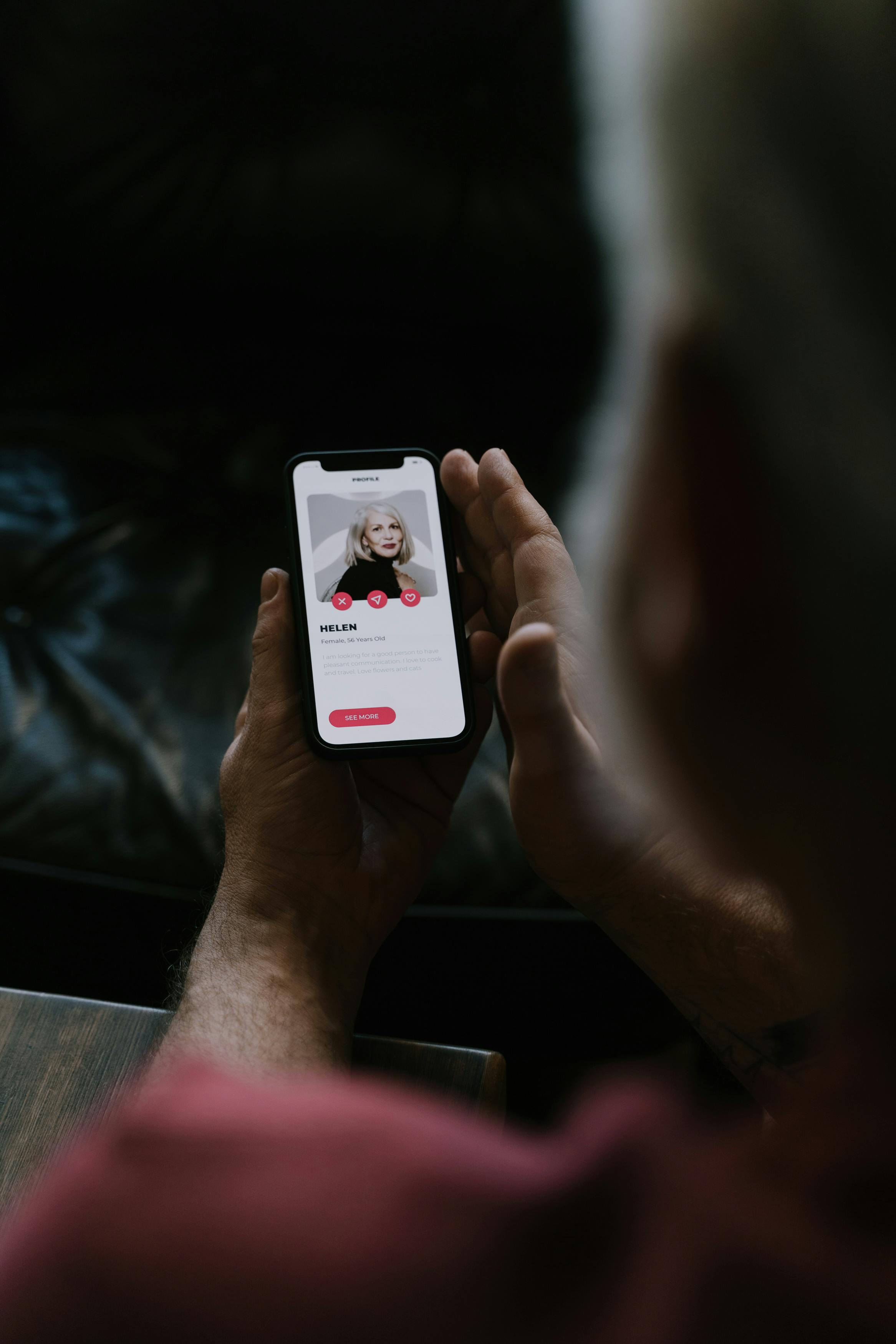
The boundary between digital dating and offline matchmaking is dissolving. Match Group's acquisition of Three Day Rule, Hinge's $1 million investment in physical social events, Thursday's pivot from app to events company, and Bumble IRL's expansion all signal the same strategic conclusion: the future of dating is not online or offline but a seamless integration of both.
Hybrid models—businesses that combine digital tools with in-person facilitation—represent the dating industry's most promising structural innovation. They capture the efficiency of technology (broad reach, data-driven screening, 24/7 accessibility) while preserving the human elements that apps struggle to replicate (physical chemistry assessment, social accountability, curated experience, and the trust that comes from face-to-face interaction).
Hybrid models are not a compromise between digital and offline dating. They are a superior product category that addresses the specific limitations of each. Apps excel at introduction volume but fail at interaction quality. Matchmaking excels at curation but fails at scale.
The hybrid model that uses technology for discovery and screening, and human facilitation for introduction and experience, combines the strengths of both while mitigating their weaknesses. The operators who master this integration will define the dating industry's next decade.
How Hybrid Models Work
Several operational architectures exist for hybrid dating businesses.
The digitally-facilitated matchmaking model uses an app or platform for client onboarding, preference collection, and initial screening, then transitions to human matchmakers for curated introductions. Three Day Rule pioneered this approach before its Match Group acquisition: clients completed detailed digital profiles, which matchmakers used to identify compatible introductions from a curated database.
The event-augmented app model uses a dating app as the primary matching mechanism but supplements it with in-person events where matches can meet in structured, low-pressure settings. Hinge's One More Hour programme and Bumble IRL both follow this pattern. The app drives the initial connection; the event provides the physical context for genuine chemistry assessment.
The community-first model builds a physical community of singles through events, activities, and shared spaces, then layers digital tools on top for matching, communication, and coordination. Thursday's post-pivot model exemplifies this: events are the primary product, and digital tools serve to facilitate event discovery, registration, and post-event connection.
Each architecture has distinct economics. The digitally-facilitated matchmaking model commands the highest per-client revenue but is most operationally complex. The event-augmented app model generates the most total revenue (combining subscription and event income) but requires both technology and event infrastructure. The community-first model has the lowest technology cost but the highest operational cost per interaction.
Case Studies in Hybrid Execution
Several companies demonstrate different approaches to hybrid dating.
Three Day Rule (now owned by Match Group) built its model around personal matchmakers supported by a technology-driven client database. Clients paid $5,000-10,000 for curated introductions in major U.S. cities. The acquisition by Match Group signalled the industry's largest recognition that human matchmaking could complement algorithmic matching.
Thursday began as a digital-only dating app with a distinctive weekly activation mechanic. Its January 2025 pivot to events-only operation represents the most dramatic digital-to-physical transition in the industry. The company now hosts ticketed singles events globally and has introduced travel experiences, demonstrating that a digital dating brand can successfully translate to physical experiences.
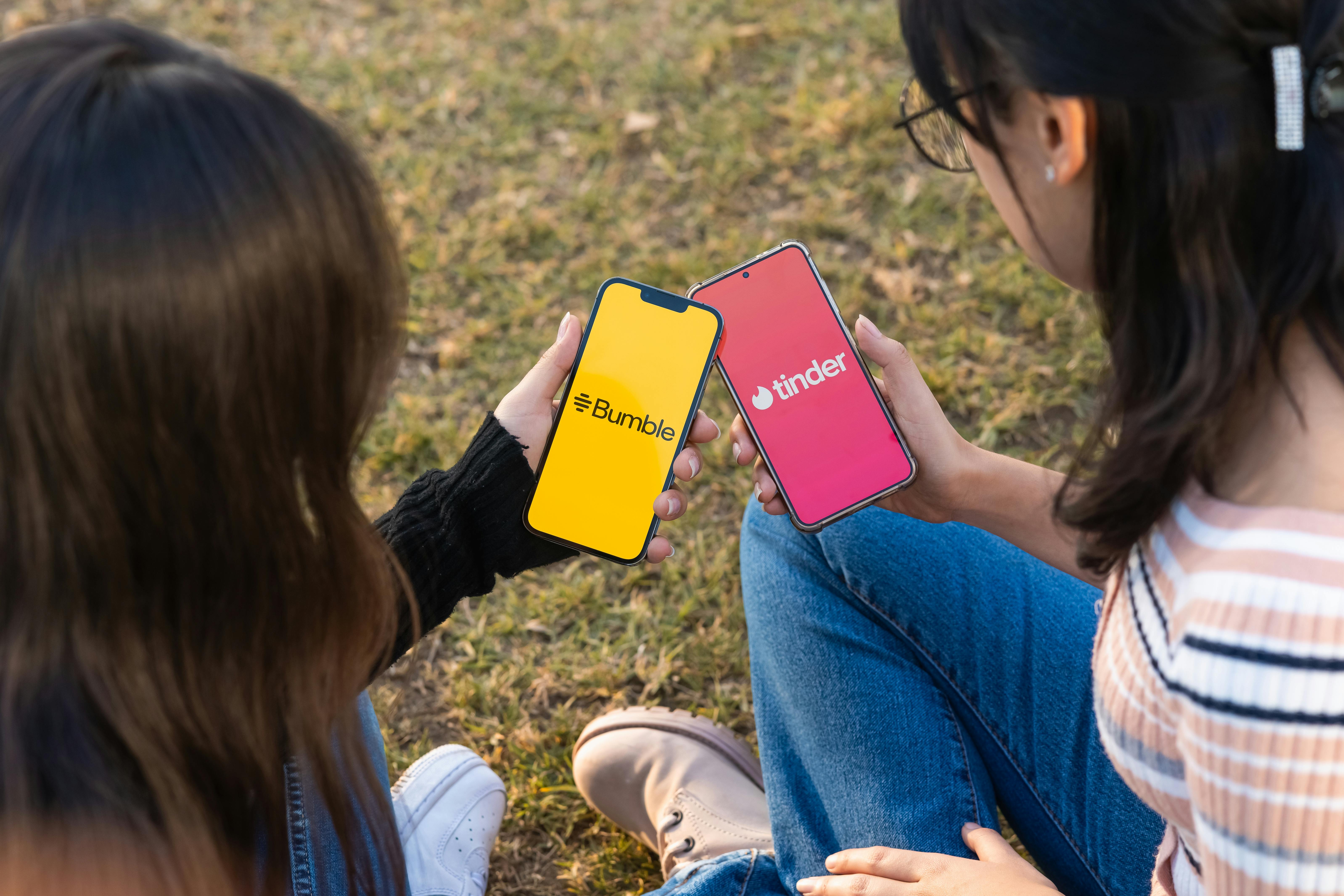
Hinge occupies the least disruptive position on the hybrid spectrum: its core product remains an app, but its investment in social events, voice features, and Esther Perel's conversation prompts all move toward deeper, more human interaction. The 2025 One More Hour expansion to London signals intent to build physical social infrastructure alongside the digital platform.
For operators evaluating hybrid models, the key strategic question is where to anchor: start digital and add offline (the Hinge path), start offline and add digital (the speed dating operator path), or build both simultaneously (the most capital-intensive but potentially most defensible approach).
The Economics of Hybrid
Hybrid dating models generate revenue from multiple streams, creating more diversified and resilient businesses than either pure digital or pure offline models.
Subscription revenue from the digital platform provides the recurring base. Even if the app component is simple (profile browsing, preference matching, event discovery), a monthly subscription of £10-30 creates predictable revenue that covers technology costs and provides operating margin.
Event ticket revenue supplements subscriptions with per-transaction income. Events priced at £15-50 per attendee, run weekly or bi-weekly across multiple venues, generate £50,000-500,000 annually depending on scale and geography.
Matchmaking fees capture the premium segment willing to pay £500-5,000+ for curated introductions. The human matchmaking component can be offered as a premium tier within the hybrid platform, accessible to subscribers who want more than self-service digital matching.
Partnership and sponsorship revenue flows from the access to a verified, engaged singles audience. Venue partners, drinks brands, lifestyle companies, and experience providers all benefit from exposure to the hybrid platform's community.
The combined revenue from these four streams can produce per-user economics substantially higher than either a pure app or a pure matchmaking business. A hybrid operator generating £15 per month in subscription revenue, £40 per quarter in event ticket revenue, and £100 per year in partnership revenue per active user captures £340 annually from each engaged community member, well above the ARPU of mainstream dating apps.
Implementation Challenges
Hybrid models face operational challenges that pure-play models avoid.
Dual capability requirements mean the operator must be competent at both technology (app development, data management, digital marketing) and events (venue management, hosting, logistics, physical community building). These are distinct skill sets that rarely coexist in a single founding team. Successful hybrid operators either start with one competency and hire for the other, or partner with complementary businesses.
Brand coherence across digital and physical experiences is essential but difficult. The tone, quality, and personality of the app must match the tone, quality, and personality of the events. A slick, premium app experience paired with poorly organised events in unappealing venues destroys brand coherence. Conversely, excellent events paired with a clunky, poorly designed app create friction that prevents digital-to-physical conversion.
Geographic constraint is more pronounced for hybrid models than for pure digital. An app can launch globally; events can only happen where the operator has venue relationships and local community. This means hybrid models grow city by city rather than market by market, which is slower but produces deeper community engagement in each location.
Data integration between digital and physical touchpoints requires operational infrastructure that most early-stage operators underestimate. Knowing which app users attended which events, which event connections led to digital conversations, and which conversations led to dates requires integrated data systems that connect the app database with the events management platform.
Despite these challenges, hybrid models represent the most promising structural innovation in the dating industry because they address the fundamental limitation of both pure models: apps lack the physical chemistry dimension that offline provides, and offline events lack the scale and convenience that apps provide. The operators who solve the integration challenge will build the most complete dating products on the market.
The Strategic Value of Owning Both Layers
The most compelling argument for hybrid models is strategic rather than operational. A company that owns both the digital introduction layer and the physical experience layer controls the entire dating value chain, from discovery to relationship formation.
A pure-play dating app controls discovery and initial matching. Once a user meets someone in person, the app's relevance diminishes. If the date goes well, the user may delete the app. If it goes poorly, the user returns to swipe again, but with diminished enthusiasm. The app's commercial relationship with the user is inherently time-limited.
A hybrid operator that facilitates both the digital match and the physical meeting maintains relevance throughout the dating journey. If a user meets someone at a branded event and the connection develops, the platform retains credit and ongoing engagement (through couple features, community membership, or event participation). If the connection does not develop, the user returns to both the app and the events calendar with reinforced trust in the brand.
This full-value-chain control also generates superior data. A hybrid platform that tracks which digital matches attend which events, which event encounters lead to relationships, and which relationship characteristics predict durability possesses the most complete dataset in the dating industry. This data enables progressively better matching, event design, and community curation—creating a compounding competitive advantage that pure-play models cannot access.
Match Group's portfolio approach (owning Tinder, Hinge, The League, and Three Day Rule) approximates a hybrid strategy through brand diversification rather than product integration. A single brand that integrates digital and physical seamlessly would be more powerful than a portfolio of separate brands, because the user experience would be continuous rather than fragmented across multiple apps and services.
This analysis draws on publicly available information from Three Day Rule, Thursday, Hinge, and Bumble IRL. Match Group's acquisition of Three Day Rule is documented in public filings. Thursday's pivot is reported by Global Dating Insights (January 2025). Hinge's One More Hour programme is documented by CNBC and other sources (March 2025). Hybrid model economics are based on DII's assessment of publicly available pricing and operational information.
The Community Metric
The most important metric for hybrid dating businesses is not user count or revenue per user but community health: the proportion of members who are actively engaged across both digital and physical touchpoints.
A healthy hybrid community exhibits several characteristics. High event attendance relative to digital membership (30%+ of digital members attending at least one event per quarter) indicates that the physical experience is compelling enough to convert digital users to in-person participants. High digital engagement between events (daily active users comprising 20%+ of total members) indicates that the digital platform provides value beyond event logistics. High cross-pollination (event attendees who subsequently engage digitally, and digital users who convert to event attendees) indicates that the two layers are reinforcing each other rather than operating independently.
Operators should track these community health metrics weekly and design interventions when any metric declines. A drop in event attendance suggests that event quality or programming needs attention. A drop in digital engagement suggests that the platform lacks compelling features or content between events. A drop in cross-pollination suggests that the integration between digital and physical touchpoints is weakening.
Hybrid Model Variants by Geography
The optimal hybrid model varies by market characteristics, and operators should adapt their approach to local conditions.
Dense urban markets (London, New York, Tokyo) support the highest-frequency hybrid models because the concentration of singles enables daily events and high-engagement digital platforms. An operator in central London can host events five nights per week across multiple venues while maintaining a digital platform with tens of thousands of active users.
Mid-size cities (Bristol, Austin, Melbourne) support weekly or bi-weekly events with digital platforms that maintain community engagement between gatherings. The event frequency is lower, but the community can be deeper because the same attendees interact more regularly in a smaller pool.
Regional and suburban markets may not support standalone hybrid operations but can be served through franchise models, pop-up events, and regional digital communities. A matchmaker who hosts monthly events in three suburban locations while maintaining a regional digital platform serves a distributed market that no single-location model could address.
International markets present both opportunity and complexity. A hybrid dating brand that operates in London, New York, and Sydney serves the globally mobile professional demographic that is one of the most attractive matchmaking markets. But maintaining consistent quality across international markets requires local operational capability, cultural adaptation, and significant coordination investment.
The Technology Architecture
The technology architecture for a hybrid dating platform must integrate three functional layers: events management, member management, and matching.
The events layer handles event creation, ticketing, registration, check-in, and post-event analytics. This layer must support multiple event formats, variable pricing, capacity management, and waitlist functionality. Integration with the member management layer ensures that event attendance is recorded in member profiles, enabling personalised event recommendations and attendance-based community segmentation.
The member management layer handles profile creation, preference tracking, communication between members, and community engagement features. This layer must support rich profiles (photos, text, preferences, event history, match history), messaging (text, and optionally video), and notification management. Integration with the matching layer enables compatibility-informed member discovery and curated introductions.
The matching layer uses preference data, behavioural data (including event attendance and interaction patterns), and optionally AI-powered compatibility scoring to facilitate connections between members. This layer supports both self-service discovery (members browse and initiate contact) and facilitated introductions (the platform or a human matchmaker suggests specific connections).
A fully integrated architecture that connects these three layers is the technology goal. In practice, most hybrid operators begin with separate tools (Eventbrite for events, a CRM for members, manual matching) and progressively integrate them as the business scales and the technology investment becomes justified. The phased approach described in DII's events-to-platform analysis provides a practical implementation pathway.
What This Means
Hybrid dating models represent a fundamental shift in how the industry creates value, moving from pure digital or offline approaches to integrated experiences that control the entire relationship formation journey. Companies that successfully combine technology-enabled discovery with human-facilitated experiences will capture superior economics through diversified revenue streams whilst building defensible competitive advantages through proprietary behavioural data. The operators who solve the integration challenge between digital and physical touchpoints will define the next decade of the dating industry.
What To Watch
Monitor whether major dating apps continue investing in physical events infrastructure or retreat to pure digital models, as this will signal whether hybrid approaches achieve sustainable unit economics at scale. Track community health metrics from hybrid operators, particularly cross-pollination rates between digital and physical touchpoints, as leading indicators of model viability. Observe international expansion patterns to determine whether hybrid brands can maintain quality and brand coherence across geographies, or whether the model remains fundamentally local despite digital components.
Create a free account
Unlock unlimited access and get the weekly briefing delivered to your inbox.