

Video Dating's Pandemic Boom: A Lesson in Solving Permanent Problems
In this article
Research Report
This report examines the dramatic rise and fall of video dating technology during and after the pandemic, analyzing which video features succeeded and which failed as users returned to in-person dating. It provides a framework for dating platform product teams to evaluate video investments, distinguishing between features that solve permanent user problems versus temporary pandemic-specific needs. The analysis reveals that video has settled into a supplementary role focused on identity verification and profile enhancement rather than replacing face-to-face interaction.
- Live video dating features experienced a spike during pandemic lockdowns followed by a collapse when in-person meetings became possible again
- Verified profiles receive more matches and messages than unverified ones in markets where verification is available
- Video features require WebRTC or equivalent technology, AI-powered or human content moderation, and bandwidth costs that scale linearly with usage
- Tinder's Face Check launched in California in July 2025 as the most prominent video verification deployment
- Meta shut down its experimental video speed-dating service Sparked after testing throughout 2021
- Asynchronous video profiles add dimensionality through 15-second clips that provide vocal and expressive data photos cannot convey

The DII Take
Video dating technology solved a pandemic-specific problem (inability to meet in person) rather than a permanent dating problem. Once in-person meetings became possible again, users overwhelmingly returned to text-based messaging followed by physical dates, bypassing the video intermediate step. The formats that survived, including Hinge's video prompts, brief video introductions, and live video events, share a common characteristic: they add information to the matching process (letting users see and hear each other before committing to a date) without replacing the in-person meeting that users ultimately want. Video is a useful tool for pre-date screening, not a substitute for face-to-face interaction.
What Worked and What Failed
Live video date features, where two matched users conduct a video call within the app, were the pandemic's signature dating innovation. Bumble, Hinge, and several smaller platforms launched video date features in 2020. Usage spiked during lockdowns and collapsed afterward. The format's failure in the post-pandemic environment reflects several user objections: video calls feel formal and awkward for initial romantic interaction, the small-talk dynamic of a video call lacks the environmental cues and physical proximity that make in-person dates feel natural, and scheduling a video call adds friction rather than reducing it compared to simply meeting in person.
Video profiles and prompts, where users record short clips that are displayed alongside their photos and text, have persisted and grown. Hinge's voice prompts and Bumble's video verification features use brief recordings to add dimensionality to profiles without requiring real-time interaction. These features work because they add information at minimal effort cost: recording a 15-second clip is low-friction and provides matches with vocal and expressive data that photos cannot convey.
Live video events, where groups of singles participate in video-based speed dating or social gatherings, experienced a brief boom in 2020-2021 and have largely disappeared. The format combined the scheduling friction of in-person events with the limited social richness of video calls, offering the worst of both worlds for most users. A few operators maintain video event programming for long-distance or niche audiences, but the format has not achieved mainstream adoption.
The Technology Stack
Video dating features require specific infrastructure that adds cost and complexity to dating platform operations. Real-time video communication requires WebRTC or equivalent technology for low-latency, browser-compatible video calls. Content moderation for live video requires either AI-powered real-time monitoring or human moderation staff, both of which add significant cost. Recording and storage of video content requires compliant data management under GDPR and equivalent regulations. Bandwidth and server costs scale linearly with video usage, making video features more expensive to operate than text-based features.
These costs explain why video features remain supplementary rather than central to most platforms' offerings: the operational cost of video exceeds the incremental revenue it generates, unless the feature drives sufficient user retention to justify the investment.
This analysis draws on platform feature announcements, published user engagement data for video dating features, and DII's assessment of video technology adoption in dating. Pandemic-era usage data references published reports from Bumble, Hinge, and other platforms.
The Formats That Survived
Despite the general retreat from video dating after the pandemic, several specific video applications have maintained or grown their adoption. Asynchronous video profiles, where users record short clips that are displayed alongside their photos, have proven durable. Hinge's voice prompts (audio rather than video, but the same principle) and Bumble's video verification both use brief recordings to add dimensionality to profiles. The key distinction is that these are asynchronous (recorded once, viewed many times) rather than synchronous (live, real-time interaction). Asynchronous video avoids the scheduling friction and social anxiety of live video calls while still providing the vocal and expressive data that text and photos cannot convey.
Video verification, where users complete a brief video task to confirm their identity, has become standard across major platforms. Tinder's Face Check, Bumble's photo verification, and similar systems use video not for dating interaction but for identity confirmation. Users accept video verification because it serves their interest in safety, as videos are harder to fake and allow users a better gauge of mutual attraction, even if they reject video as a dating interaction modality.
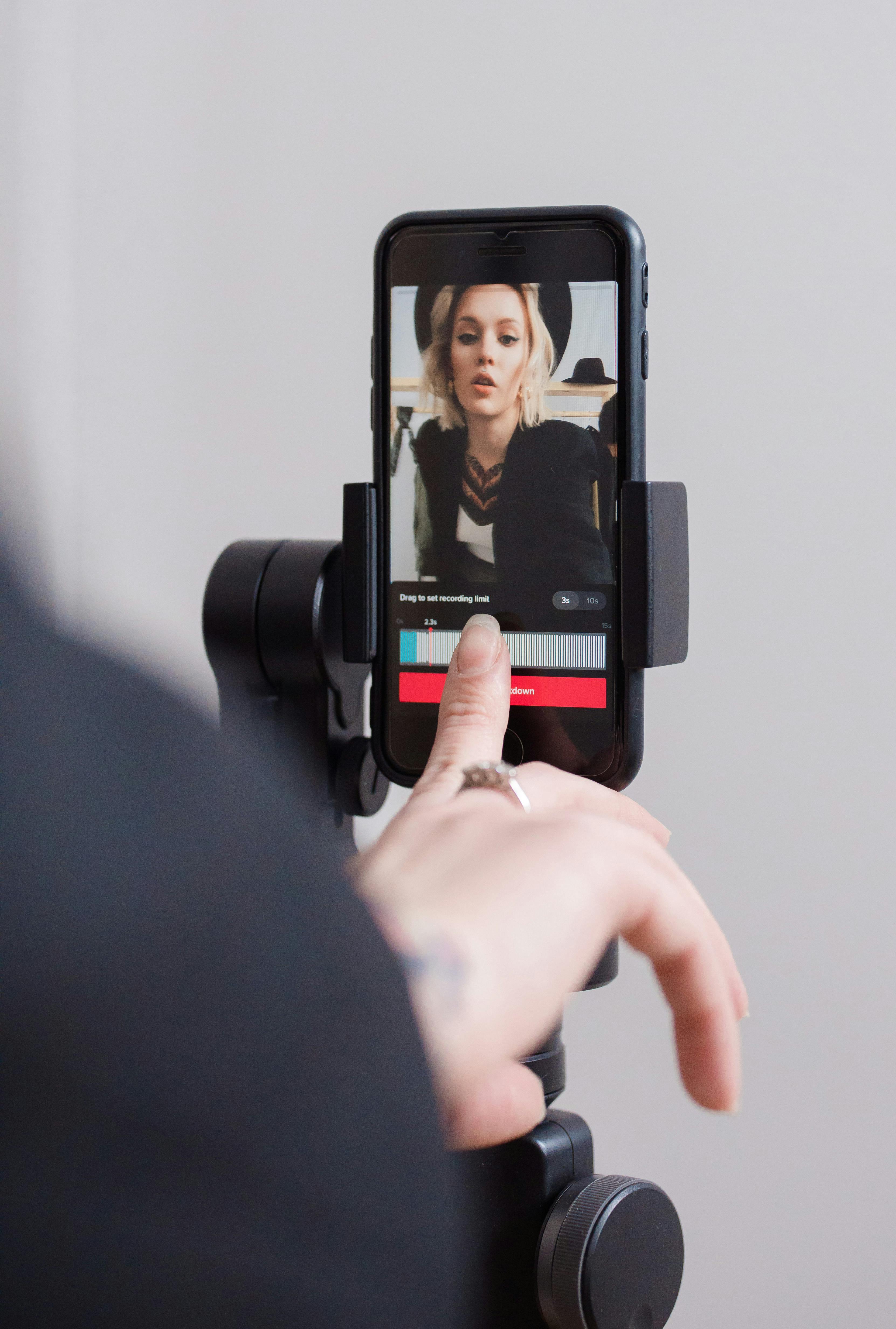
Short-form video content, influenced by TikTok's format, is beginning to appear in dating contexts. Profiles that include short video clips (similar to Instagram Stories or TikTok videos) provide a richer self-presentation than photos alone. These clips show personality, sense of humour, lifestyle, and social context in ways that static photos cannot.
The Live Video Niche
Live video dating has not disappeared entirely. It has contracted into a niche serving specific use cases where the format's advantages outweigh its disadvantages. Long-distance dating, where physical proximity is not possible, requires video as the primary interaction modality. Users in long-distance relationships or those exploring connections in different cities rely on video calls as a substitute for in-person meetings. For this use case, video is not optional but essential.
Safety-conscious screening, where users want to verify that a match is a real person before committing to an in-person meeting, uses video as a pre-date safety check. A brief video call confirms identity, assesses basic chemistry, and reduces the risk of catfishing or misrepresentation. For users whose primary concern is safety, a 5-minute video call before a first date is a reasonable investment.
Structured video events, including virtual speed dating and themed video socials, maintain a small but dedicated audience of users who value the convenience of participating from home. These events serve users with mobility limitations, those in geographically sparse dating markets, and introverts who prefer the controlled environment of a video call to the unpredictability of in-person socialising.
Lessons for Dating Platform Product Teams
The video dating experience offers several lessons for dating platform product teams considering feature development:
- Solve a permanent problem, not a temporary one: Video dating solved the pandemic-specific problem of inability to meet in person, which is why it lost relevance when the problem disappeared. Features that solve permanent problems (trust verification, personality expression, meeting facilitation) will have durable adoption.
- Match the format to the user's emotional state: Live video dating failed partly because it imposed the formal, scheduled energy of a video call on the early-stage romantic context where users prefer casual, low-commitment interaction. Features that match the emotional register of the dating stage they serve will be more readily adopted.
- Reduce friction rather than adding it: Video calls add friction (scheduling, preparation, technology setup) to the dating process. Features that reduce friction (one-tap messaging, automatic scheduling, seamless venue suggestions) align with user preferences for convenience and will be adopted more readily than features that add complexity.
- Asynchronous beats synchronous for early-stage interaction: Users prefer to present themselves on their own schedule and evaluate potential matches at their own pace. Asynchronous features (recorded prompts, profile clips, voice notes) respect this preference while still providing richer data than text and photos alone.
The Video Verification Success Story
While live video dating failed to achieve mainstream adoption, video verification emerged from the pandemic as a permanent and growing feature of dating platforms. The distinction is instructive: video used for identity confirmation (does this person match their photos?) succeeded because it serves the user's safety interest, while video used for dating interaction (have a video date instead of a coffee date) failed because it serves the platform's engagement interest rather than the user's connection interest.
Tinder's Face Check, launched in California in July 2025, represents the most prominent video verification deployment. Users record a short video selfie that is compared against their profile photos using facial recognition. Successful verification earns a visible badge that signals authenticity to potential matches. Bumble's photo verification, which asks users to replicate a specific pose shown in a demonstration photo, uses a lighter-touch approach that confirms the user is a real person matching their photos without requiring the full facial recognition processing that Face Check employs.
The verification badge creates a trust differential between verified and unverified users. In markets where verification is available, verified profiles receive more matches and messages than unverified ones, creating a self-reinforcing incentive for verification adoption.
This dynamic suggests that voluntary verification with strong incentivisation is more effective than mandatory verification for driving adoption while maintaining user choice.
Emerging Video Technologies
Several video technologies currently in development may change the dating landscape over the next 3-5 years. AI-enhanced video quality could improve the user experience of video calls by optimising lighting, framing, and audio quality in real-time. A video call where both participants look and sound their best reduces the anxiety that deters many users from video interaction. Apple's Centre Stage and similar technologies that keep users framed and well-lit during video calls provide a preview of how AI-enhanced video could serve dating.
Real-time translation could enable cross-language video dating, expanding the potential matching pool for multilingual dating platforms. A system that translates conversation in real-time during a video call would enable connections between users who speak different languages, serving the growing international and multicultural dating market.
Avatar-based video dating, where users interact through animated avatars rather than live video, could reduce the appearance-based evaluation that dominates photo-first dating while still providing real-time interaction. The avatar transmits the user's voice, expressions, and gestures without revealing their physical appearance, testing conversational compatibility before visual evaluation.
Spatial video and augmented reality, enabled by devices like Apple Vision Pro, could create dating experiences that combine the convenience of digital with the spatial awareness of in-person. A virtual date where two people feel present in the same space, able to make eye contact and gauge body language, would be qualitatively closer to an in-person meeting than a flat video call.

The Platform Decision Framework
For dating platform product teams deciding whether and how to invest in video features, DII recommends evaluating each video application against three criteria:
- Does it solve a permanent user problem? Features that address permanent needs (identity verification, personality expression, meeting facilitation) will sustain adoption. Features that address temporary needs (pandemic-era inability to meet) will not.
- Does it reduce or add friction? Features that simplify the dating process (one-tap video verification, asynchronous voice clips) will be adopted more readily than features that add steps (scheduling a video call, preparing for a video date).
- Does it serve user interests or platform interests? Features that serve the user (safety verification, richer self-expression) build trust. Features that serve the platform (keeping users in-app longer through video calls) risk user resentment.
Video technology will play a growing role in dating platforms, but as a supporting feature rather than a primary modality. The platforms that use video for verification, expression, and meeting facilitation, rather than as a substitute for in-person interaction, will integrate video most successfully into their dating products.
The dating industry's investment in this area is not discretionary. It is essential infrastructure for maintaining the trust and quality that users demand and that regulators increasingly require. The operators who invest most effectively, combining AI capability with human oversight and user education, will build the strongest platforms in the market. DII will continue to track developments in this area through quarterly updates and annual comprehensive reviews.
Video dating technology's post-pandemic trajectory offers a clear lesson for the dating industry: solve permanent problems, not temporary ones. The video features that survived serve permanent needs, identity verification, personality expression, and pre-date screening, while those that failed served the temporary need of pandemic-era physical separation.
Dating platform product teams should apply this lesson to every feature investment: will this serve users when circumstances change, or is it a response to today's conditions that tomorrow may render irrelevant? Even major tech companies struggled with the video dating format; Meta shut down its experimental video speed-dating service Sparked after testing it throughout 2021, demonstrating that even platforms with vast resources couldn't make live video dating work at scale. This failure, alongside YouTube's origins as a failed video-dating website before pivoting to general video sharing, suggests that video technology serves dating best when it supplements rather than replaces traditional interaction patterns.
Video dating technology will continue to evolve as a supplementary feature rather than a primary dating modality. The formats that survive and grow, including brief video profiles, asynchronous voice and video messages, and pre-date video screening, all share the characteristic of adding information to the matching process without replacing the in-person meeting that remains the goal of dating.
What This Means
Dating platforms should prioritise video features that reduce friction and solve permanent user needs rather than attempting to replace in-person meetings with video interaction. The market has demonstrated that users view video as a valuable screening and verification tool but not as a substitute for physical dates. Platforms that invest in asynchronous video profiles, identity verification, and pre-date screening features will achieve better adoption and retention than those that attempt to keep users in extended video interactions within the app.
What To Watch
Monitor adoption rates of AI-enhanced video quality features and real-time translation capabilities, as these technologies could overcome some of the friction that currently limits video dating adoption. Track the emergence of spatial video and augmented reality dating experiences, particularly following the proliferation of devices like Apple Vision Pro, as these could bridge the gap between digital convenience and in-person spatial awareness. Watch for regulatory developments around video verification requirements, as government mandates for identity confirmation could accelerate adoption of video verification infrastructure across the industry.
Create a free account
Unlock unlimited access and get the weekly briefing delivered to your inbox.