Meet Me at The Bar: Can Venue-Based Dating Solve Messaging Fatigue?
Key Points
- •Eight bars in Riga, Latvia, are testing Meet Me at The Bar, a location-based dating application developed by founder Normunds Petrovs.
- •Meet Me at The Bar displays checked-in users at participating venues in real time to eliminate messaging and encourage immediate in-person dates.
- •Internal data disclosed by Hinge in 2021 revealed that approximately 30 per cent of dating matches never exchanged a single message.
- •Participating Riga venues for the Meet Me at The Bar trial include Angārs, Labietis, Kaņepes Kultūras centrs, and Sapņi un kokteiļi.
A Latvian dating app is attempting to solve the industry's most persistent problem: matches that never leave the chat window. Eight bars in Riga are now running live tests of Meet Me at The Bar, a platform that displays in real time who's actually at each venue and open to meeting, eliminating the week-long message threads that typically fizzle into nothing.
Developed by Latvian founder Normunds Petrovs, the platform is essentially a wager on proximity. The logic is straightforward: if both parties are already standing in the same room—or committed to showing up—the friction between match and meetup collapses. According to Petrovs, the app is designed to bypass what he calls the messaging limbo problem, where conversations drag on indefinitely without converting into dates.
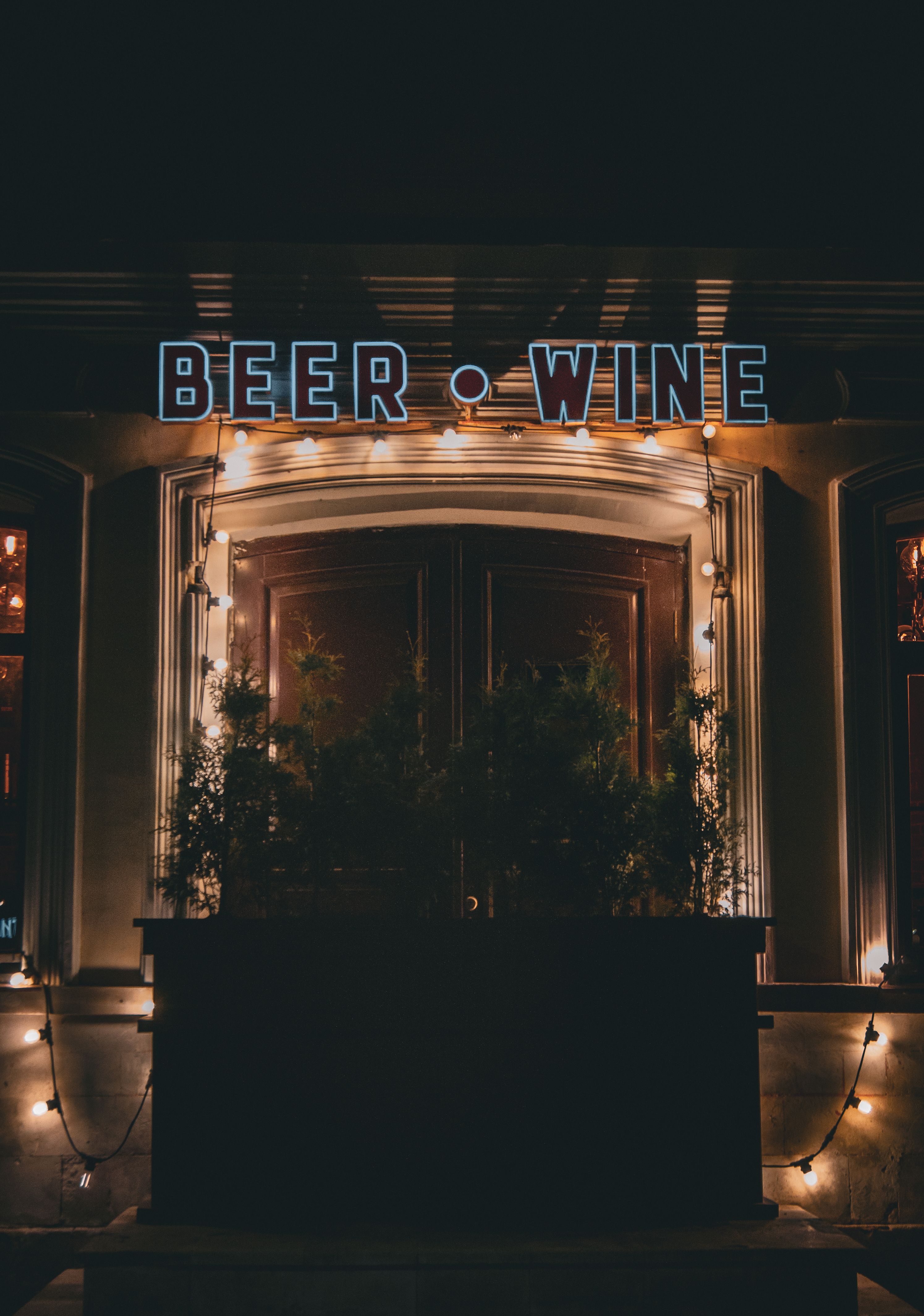
This isn't new thinking, but the execution model is smarter than most previous attempts. By partnering with specific venues and using check-ins rather than continuous background location tracking, Meet Me at The Bar sidesteps some of the creepier privacy issues that killed earlier "who's nearby" dating apps. The real question is whether bars can sustain the footfall density required to make this feel like a feature rather than a ghost town with a QR code.
Create a free account
Unlock unlimited access and get the weekly briefing delivered to your inbox.
If Petrovs can prove the model works commercially for venues—guaranteed singles nights without event overhead—this could scale.
Whether this actually works—and whether operators outside Latvia should care—depends on three things: sustained user density at participating venues, credible safety architecture, and commercial viability for the bars themselves.
Messaging fatigue is real, but so is commercial gravity
The industry has been wrestling with the conversion problem for years. Match Group's (MTCH) Hinge repositioned itself as "designed to be deleted" precisely because endless chatting without meetups was tanking engagement. Thursday, the UK-based app that only operates on Thursdays, built its entire model around forcing temporal scarcity and in-person dates.
Meet Me at The Bar is the logical extension: spatial scarcity rather than temporal. Instead of limiting when you can match, it limits where you can meet—and makes that limitation a feature. The commercial structure here is interesting: bars become dating infrastructure, not just date venues.
If the app can prove it drives measurable footfall, venue partnerships become a genuine revenue stream, particularly for mid-tier bars struggling to differentiate in competitive urban markets. Riga is a useful test case—dense enough to support concentrated venue trials but small enough that eight bars could plausibly reach critical mass within a single social graph.
The safety problem nobody's solved yet
Real-time location sharing and immediate in-person meetups remain the trust and safety nightmare that's sunk nearly every proximity-based dating app since Grindr proved the model works for a specific, risk-tolerant demographic. Blendr, Skout, Down—the graveyard is full of apps that promised "people near you right now" and failed to build adequate safeguards against harassment, stalking, and assault.
The developers have acknowledged safety as an immediate priority, but the disclosure is thin on specifics. What verification exists? How does the platform handle bad actors who use real-time location data to target individuals across multiple venues? How does moderation work when the entire interaction is designed to happen offline, outside the app's visibility?
Mainstream dating apps have historically struggled with real-time location features because the liability exposure is significant and the safety tooling required to mitigate it is expensive.
Grindr (GRND) has managed this in part because its user base has developed cultural norms around risk management and because its monetisation model funds a substantial trust and safety operation. Meet Me at The Bar's financial model—venue partnerships and presumably freemium subscriptions—will need to support that infrastructure if it intends to scale beyond Riga's nightlife scene.
Does this actually solve a user problem?
Yes, but only for a subset of users. The messaging limbo problem is real. Data disclosed by Hinge in 2021 showed that roughly 30% of matches never exchanged a single message, and a significant portion of those that did never converted to dates.
But the assumption embedded in Meet Me at The Bar—that singles are ready to commit to showing up at a specific venue, alone, on the chance someone interesting might also be there—is a much bigger behavioural ask than swiping from the sofa. The platform works if density is high enough that checking in guarantees at least a few viable options.

If users open the app and see two people checked into their nearest participating bar, neither of whom they fancy, the model collapses. This is why the claim that "many singles are already shifting to apps that can easily facilitate in-person dates" should be treated with caution. There is appetite for better conversion mechanisms, but evidence of a mass migration toward location-first models remains speculative.
The Riga trial will matter if it proves the unit economics work: that bars see measurable revenue uplift, that users show up repeatedly, and that matches convert at rates high enough to justify the effort. The concept isn't entirely unprecedented; Heineken has experimented with bar-focused dating apps in Brazil and Italy, and platforms like Breeze have built networks of over 1,500 partnered bars designed to facilitate real-world dates.
If Petrovs can demonstrate that venue-based dating infrastructure drives commercial results, this becomes a viable wedge into markets where swipe fatigue is highest—university towns, dense urban centres, cities with strong nightlife cultures. If not, this remains a clever idea with a fatal density problem.
Key Takeaways
- •Venue-based check-in models like Meet Me at The Bar offer dating app operators a monetisation path by turning hospitality venues into commercial dating infrastructure.
- •Proximity-based dating applications require significant trust and safety infrastructure to mitigate harassment risks associated with sharing real-time location data.
- •Sustaining critical user density at partner venues remains the central operational challenge for spatial-focused dating platforms attempting to expand beyond localized pilot testing.
Frequently Asked Questions
Technology & AI Desk
The DII Technology Desk reports on product, engineering, AI and platform infrastructure across dating and social discovery apps.
Comments
Join the discussion
Industry professionals share insights, challenge assumptions, and connect with peers. Sign in to add your voice.
Your comment is reviewed before publishing. No spam, no self-promotion.