Match and Bumble's Commitment Gap: A Product-Market Fit Paradox
·6 min read
A 6,600-person study across 50 countries found app-formed couples report lower relationship satisfaction than those who met offline across intimacy, passion, and commitment
Online meetings rose from 16% pre-2010 to 21% afterwards, with regional variation from 33% in Poland to 7% in Ghana
Match Group's Tinder reported average revenue per paying user of $18.23 in Q4 2024, up 8% year-on-year
The commitment gap was most pronounced among men and users over 33, persisting across all markets regardless of app penetration rates
Match Group and Bumble have built multi-billion dollar businesses on the premise that algorithmically-mediated romance represents the future of relationship formation. New research spanning 50 countries and 6,600 participants now suggests those relationships, once formed, may be structurally weaker than offline partnerships—particularly when measured against long-term commitment. For an industry already grappling with platform fatigue and monetisation pressures, the findings present an uncomfortable question about whether the product itself undermines the outcome it promises.
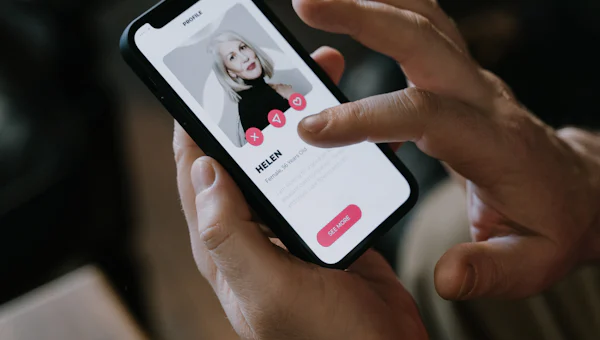
Couple using dating app on mobile phone
Research published in Telematics and Informatics by academics from the Australian National University and the University of Wroclaw found that couples who met face-to-face consistently report higher relationship satisfaction than app-formed pairs across all three dimensions of the Triangular Love Scale: intimacy, passion, and commitment. But it's the commitment gap that should concern operators most. Even after controlling for age, income, and relationship duration, app-met couples showed measurably lower dedication to long-term partnership—a difference most pronounced among men and users over 33.
The figures tell a familiar adoption story: online meetings rose from 16% of relationships pre-2010 to 21% afterwards, according to the survey data. Regional variation remains stark—33% in Poland versus 7% in Ghana—but the satisfaction differential appears regardless of market penetration. The implication is uncomfortable: apps aren't just attracting commitment-averse users. They may be producing them.
Enjoying this article?
Join DII Weekly — the dating industry briefing, delivered free.
The DII Take
This isn't a user behaviour problem that better matching algorithms can solve. The study points to something more fundamental: that algorithmically-mediated stranger connections lack the trust infrastructure and social accountability of network-embedded relationships.
If the researchers are right, the dating industry faces a Product-Market Fit paradox—platforms optimised for efficiency at creating matches may be systematically undermining the quality of what they produce. That's not a messaging problem. That's a business model question.
Why the commitment gap matters now
Timing matters here. Match Group disclosed in its Q4 2024 earnings that Tinder's average revenue per paying user grew 8% year-on-year to $18.23, driven partly by features designed to accelerate "meaningful connections"—à la carte boosts, priority messaging, profile verification. Bumble has spent the past eighteen months repositioning around "intentionality" and launching an opening moves feature meant to signal seriousness. Hinge's entire brand proposition since 2019 has been "designed to be deleted."
The industry's answer to platform fatigue has been to optimise harder for relationship outcomes. But if the medium itself—not just the matching logic or feature set—creates a commitment deficit, that presents a more intractable problem than product teams are currently scoped to solve.
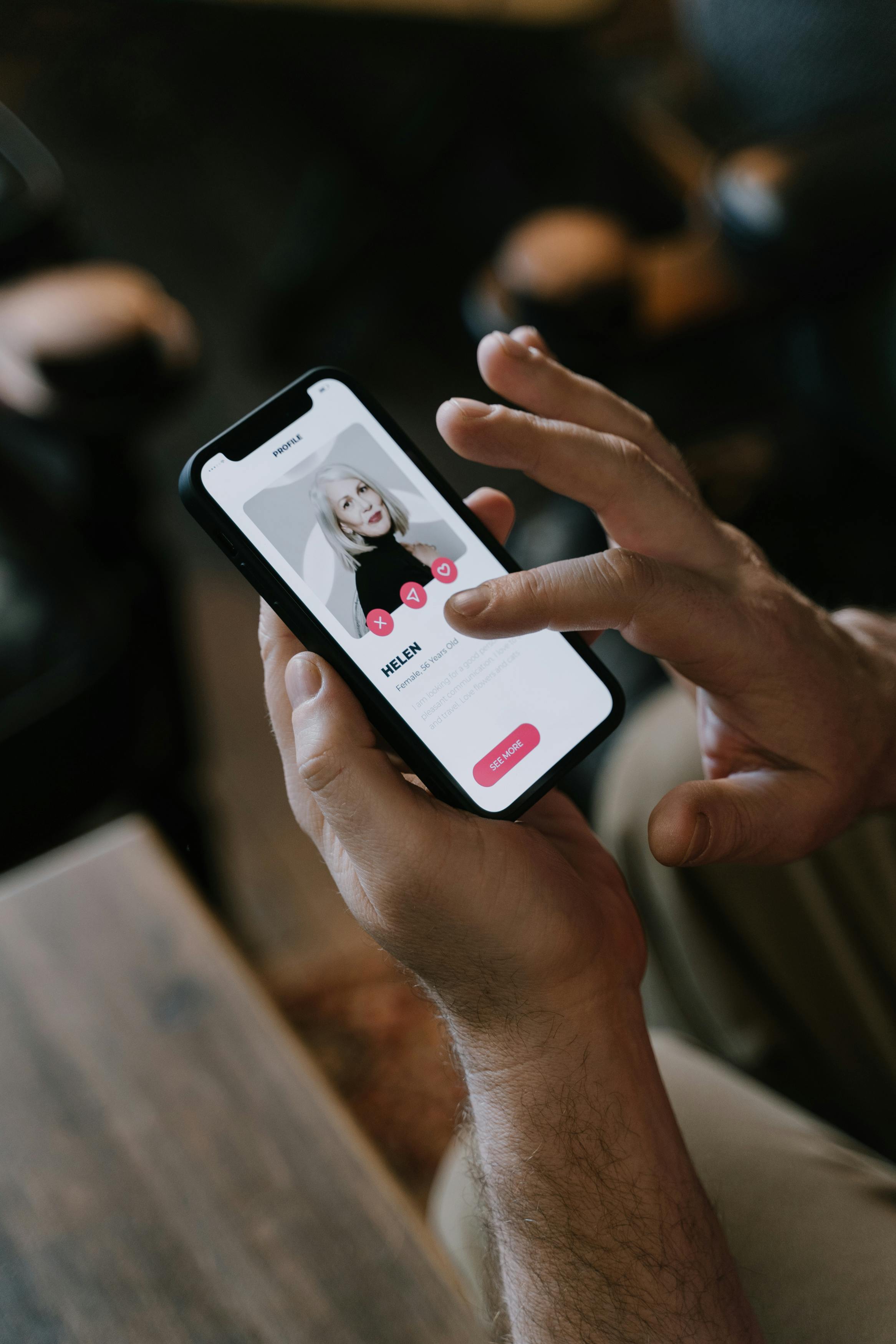
Person reviewing dating app profiles on smartphone
The structural explanation the researchers offer is straightforward. Offline-formed relationships emerge from shared contexts: workplaces, universities, mutual friends. These environments provide repeated exposure, shared accountability, and embedded social validation. An introduction through a friend carries reputational weight on both sides. A workplace romance exists within a web of mutual colleagues who implicitly monitor and reinforce the relationship's seriousness.
App-based connections have none of this. Two strangers with no mutual network, no overlapping social infrastructure, and no one who vouches for either party must manufacture trust and commitment from scratch. The platform provides algorithmic compatibility signals—shared interests, geographic proximity, perhaps some lifestyle preferences—but no social architecture to anchor the relationship once formed.
The researchers also flag "choice overload" and design patterns prioritising speed over depth. Platforms reward rapid decisioning: swipe, match, message, meet. The entire funnel is optimised to reduce friction and accelerate the path to a date. That's good for engagement metrics. It may be terrible for relationship durability.
Dating app executives would likely argue their platforms now serve populations who lack access to those offline networks—people who've moved cities, work remotely, or exist outside dense social structures. Fair enough. But the study's findings suggest that apps aren't neutral facilitators replicating offline dynamics in digital form. They're creating a distinct category of relationship with measurably different satisfaction outcomes.
What operators could do, and what they won't
Could product changes mitigate the commitment gap? In theory, yes. Platforms could slow down the matching process, require more substantive interaction before revealing full profiles, or build features that simulate social accountability—mutual friend networks, community validation signals, relationship milestone tracking visible to both parties.
None of this is likely to happen at scale. Slowing down the funnel would damage top-of-funnel conversion and monthly active user figures, metrics investors still scrutinise despite Match Group's pivot to paying user growth. Features that increase friction might improve long-term relationship quality but would almost certainly depress short-term engagement, which remains the lifeblood of freemium dating products.
The revenue model doesn't reward relationship durability. It rewards continued platform usage. A subscriber who meets someone, commits, and deletes the app within three months is worth less than a subscriber who remains active for two years across multiple situationships.
This misalignment isn't new, but the research suggests it may have second-order effects operators haven't fully priced in.
Hinge's "designed to be deleted" positioning is an attempt to square this circle—signalling relationship seriousness whilst monetising the journey. Whether that messaging translates into product design that materially shifts commitment outcomes remains unclear. The app still operates on the same swipe-match-message architecture as its competitors, with comparable incentives to maximise time on platform.
The cultural and demographic wrinkles
Dating app interface on mobile device screen
The study's finding that commitment gaps were most pronounced among men and users over 33 deserves attention. Older users—particularly those who experienced offline dating norms before app ubiquity—may be more attuned to what's missing from digital-first relationships. They have a basis for comparison.
Men showing lower commitment in app-formed relationships aligns with existing research on gender dynamics within dating platforms, where men typically outnumber women and face lower match rates, potentially reinforcing a scarcity-driven mindset that undermines relationship investment even after a match converts to a partnership.
The regional variation—33% in Poland versus 7% in Ghana—suggests cultural factors mediate adoption but, crucially, don't appear to eliminate the satisfaction differential once apps are used. That's the more telling datapoint. Even in markets where apps are heavily normalised, the commitment gap persists.
For operators expanding into emerging markets, this presents a strategic tension. Growth narratives depend on penetrating underdeveloped geographies where offline networks remain strong. But if people who meet their romantic partners online tend to report lower levels of marital satisfaction, platforms may face higher churn and lower lifetime relationship value even as they achieve market penetration.
The question isn't whether apps will continue growing—they will. It's whether the relationships they produce will prove durable enough to sustain user belief in the category, or whether a growing cohort of app-fatigued singles will increasingly view platforms as tactically useful but structurally incapable of delivering what they claim to offer. The study suggests the latter risk is more than theoretical.
Dating platforms face a fundamental business model tension: revenue depends on sustained engagement, but relationship quality appears to require the social infrastructure and accountability mechanisms that apps systematically lack
Product optimisation won't solve what appears to be a medium-level problem—app-formed relationships exist outside the network effects and social validation that anchor offline partnerships
Watch whether platform fatigue accelerates among older demographics and emerging markets as users gain comparative experience, potentially creating a belief crisis in the category's core value proposition