Singles Events Surge: A Symptom of App Fatigue, Not a Disruption
·5 min read
Match Group reported a 6% year-on-year decline in paying subscribers in Q3 2024, falling to 10.3 million users
Bumble's revenue growth slowed to just 7% in Q3 2024, missing analyst expectations
Singles event organisers are charging $30–60 per person for structured in-person dating experiences this February
Eventbrite reported paid ticket volume up 8% year-on-year to 72.6 million in Q3 2024, though dating events are not separately disclosed
Event organisers across Connecticut and New York are reporting packed calendars for singles mixers and speed dating nights this February, raising questions about whether dating apps are facing genuine real-world competition. Match Group and Bumble have both reported declining engagement and slowing growth whilst operators fill hotel conference rooms with singles willing to pay for structured face-to-face interaction. The timing matters: is this a seasonal Valentine's blip, or evidence that the swipe-based model is finally exhausted?
People socialising at an indoor event
The DII Take
This isn't disruption yet—it's a symptom of the same problem eating away at app engagement. Dating platforms trained a generation to think of matching as frictionless and abundant, then delivered burnout and diminishing returns. Events offer what apps can't: forced commitment, social proof, and the immediate feedback loop of face-to-face attraction.
If event organisers can prove unit economics at scale beyond February and major metros, MTCH and BMBL have a real problem. More likely, they're already eyeing acquisitions.
Enjoying this article?
Join DII Weekly — the dating industry briefing, delivered free.
What the Numbers Actually Show
The February spike in event listings is real but needs context. CT Insider's reporting highlights renewed interest without quantifying it against pre-pandemic baselines or providing booking conversion data. February has always been a high-water mark for singles events—Valentine's Day creates both urgency and convenient marketing hooks.
Event platforms don't break out dating-specific verticals in their reporting, which makes it difficult to track genuine momentum. Eventbrite's Q3 2024 earnings showed paid ticket volume up 8% year-on-year to 72.6 million, but lumps everything from corporate conferences to pub quizzes into that figure. Meetup, now owned by private equity firm AlleyCorp, doesn't report public financials at all.
One organiser claimed to run events for 100–200 singles at a time, which would generate $3,000–$12,000 in gross revenue per event before venue and staffing costs.
The anecdotal evidence is compelling, though. Operators interviewed by CT Insider describe packed venues and repeat attendees—indicators that something beyond novelty is at work. Compare that to a Tinder Gold subscription at £12.49 per month, and the unit economics start looking interesting—if you can fill rooms consistently.
Where Apps Are Vulnerable
Dating platforms optimised for scale at the expense of outcomes. The infinite scroll model maximises time-on-app but creates paradox-of-choice fatigue. Match Group's 2024 pivot to 'relationship-focused features' across its portfolio acknowledges this: Hinge added video prompts, Tinder tested 'exclusive' access tiers, and Match itself launched a revamped concierge service for high-intent users.
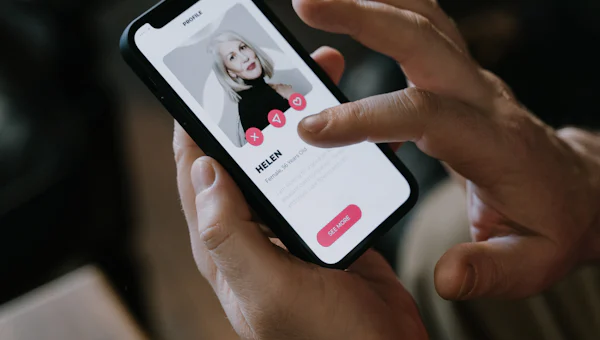
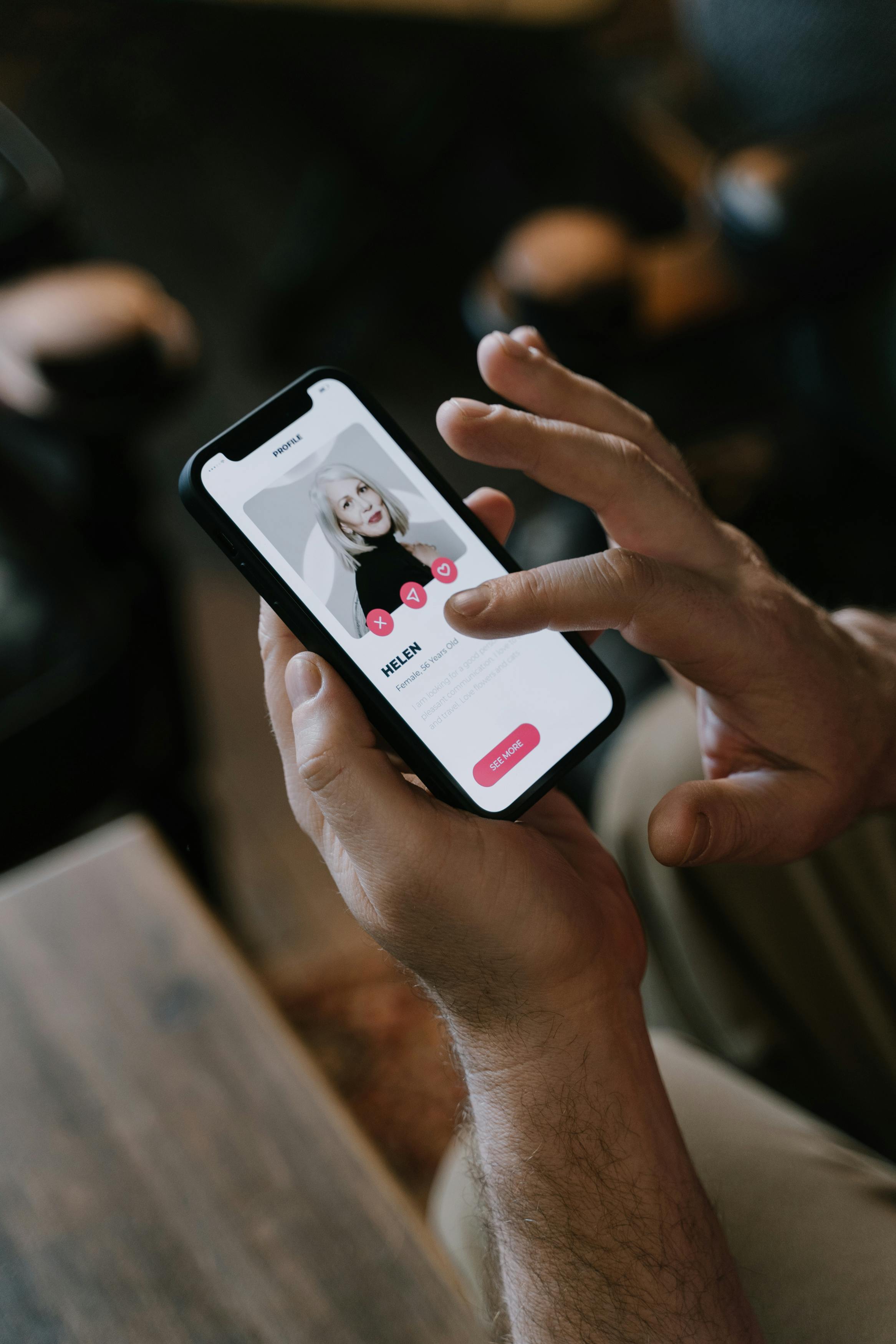
Person using smartphone with dating app interface
Events also solve for demographic blind spots. Apps struggle with age verification and meaningful age-based segmentation beyond crude filters. A 'singles over 40' speed dating night self-selects in ways that no algorithm can replicate. Same for interest-based and LGBTQ+ niche events, which offer community and context that swipe-based platforms flatten out.
The risk for app operators isn't that events replace digital matching wholesale. It's that events capture the highest-intent, highest-value users—the ones most likely to convert to paid subscriptions and stick around.
Grindr has maintained stronger engagement metrics partly because it never fully abandoned location-based, real-world hookup culture—it augments it rather than replaces it. If someone attends three speed dating nights and meets someone, they're gone from the app ecosystem entirely. If they swipe for three months and meet no one, they churn anyway, but Match Group at least collected subscription revenue in the interim.
Why This Probably Isn't the Disruption It Looks Like
Event-based dating has structural limitations that apps solved. Geographic density matters—these models work in Stamford and Brooklyn, less so in rural Kansas. Frequency is capped by venue availability and organiser capacity. And crucially, events require commitment: showing up at 7pm on a Thursday is a higher bar than swiping from your sofa.
Dating apps will do what they always do when faced with competition: acquire or integrate. Match Group has form here—it owns a portfolio of 45+ brands precisely because it prefers to own the category rather than compete within it. If event-based dating proves durable, expect MTCH or BMBL to either buy successful operators or launch their own IRL event arms.
That's where the real displacement is happening, and it's far harder to acquire your way out of a cultural shift than a competitor with a venue booking system. February's packed event calendars in Connecticut and New York tell us app fatigue is real and monetisable. Whether it's a business model that scales beyond Valentine's season and major metros is the question investors should be asking.
For now, it's a release valve for app burnout, not a replacement for the swipe. But release valves have a way of becoming permanent fixtures when the pressure doesn't let up.
Watch March booking data to determine whether in-person dating events represent sustained demand or seasonal Valentine's activity
Monitor Match Group and Bumble for potential acquisitions of event operators or launches of proprietary IRL dating experiences
The greater long-term threat to dating apps comes from TikTok's cultural shift in how Gen Z meets partners, not from venue-based events with geographic and scalability constraints