TikTok's Vegas Bet: Can LIVE Finally Crack the Western Market?
·5 min read
TikTok Live Fest scheduled for 12 February 2026 at Planet Hollywood, Las Vegas, headlined by Demi Lovato and hosted by Emmy winner Keke Palmer
Douyin's live commerce generated $272 billion in gross merchandise value in 2023, whilst Western adoption of TikTok LIVE remains anaemic
TikTok reports over 200 million U.S. users and 7.5 million businesses on the platform following January 2026 restructuring into joint venture
Event spotlights winners from in-app competitions across gaming, music, dance, and education categories
TikTok is flying its top live-streamers to Las Vegas next February for a creator showcase headlined by Demi Lovato—a high-production bet that the platform can finally persuade Western audiences to embrace a monetisation format that prints money in China but has consistently underperformed everywhere else. The event, dubbed TikTok Live Fest and scheduled for 12 February 2026 at Planet Hollywood, will spotlight winners from the platform's recent in-app competitions across gaming, music, dance, and education categories, all hosted by Emmy winner Keke Palmer. The timing is deliberate, arriving just weeks after TikTok secured its U.S. future through corporate restructuring designed to demonstrate commitment to the market.
Live streaming content creator recording video
The DII Take
This is less about creator celebration and more about cultural arbitrage. TikTok has watched Douyin generate billions annually from live-streaming—primarily through virtual gifting and live commerce—whilst Western users have largely ignored the feature. A Vegas showcase won't solve that on its own, but it could crack open a revenue stream that dating and relationship creators are already exploiting on Instagram and YouTube Live.
If TikTok can persuade even a fraction of its audience to embrace real-time parasocial engagement, the implications for dating-adjacent content are substantial.
The platform needs this to work. The cultural transplant hasn't taken yet.
Enjoying this article?
Join DII Weekly — the dating industry briefing, delivered free.
Live-streaming's West problem
Live-streaming works in China. Douyin's live commerce alone generated $272 billion in gross merchandise value in 2023, according to Statista figures, driven by a culture of real-time shopping and gifting that has no Western equivalent. Users routinely spend hours watching creators sell products, answer questions, and accept virtual gifts that convert to real revenue.
TikTok LIVE has attempted to replicate this model in Europe and North America since 2020, but adoption remains anaemic compared to the platform's core short-form video product. The resistance isn't about technology. Western audiences simply don't engage with live-streaming commerce in the same way.
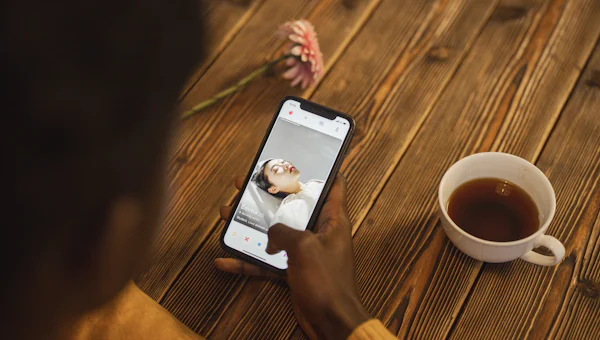
Mobile phone displaying social media live streaming interface
Instagram Live and YouTube Live exist, but they function primarily as Q&A sessions, behind-the-scenes glimpses, or appointment viewing for established celebrities—not as sustained, gift-driven monetisation engines. TikTok has thrown incentives at creators, launched competitions, and promoted LIVE content algorithmically. None of it has moved the needle the way ByteDance hoped.
Dating and relationship creators represent one of the few bright spots. Advice sessions, compatibility readings, and real-time coaching have proven sticky on other platforms, with creators monetising through Super Chats, memberships, and direct bookings. These formats thrive on parasocial intimacy—the sense that a creator is speaking directly to you, in the moment.
What Live Fest actually signals
The event itself is classic platform theatre: celebrities, spectacle, and a controlled environment designed to generate press and social clips. TikTok has staged similar showcases before—creator summits, brand partnerships, advertiser events—with mixed results. The difference here is the explicit focus on LIVE as a format, not just TikTok as a platform.
TikTok is effectively creating a separate creator tier for LIVE, complete with its own recognition structure and monetary incentives.
Live Fest winners come from TikTok's recent in-app competitions: Power League, Crossover League, Fandom League, and several talent-specific tracks. These contests reward creators who've built audiences through live-streaming, not short-form video. That's a departure from TikTok's usual approach, which treats all content equally in the algorithm.
For dating operators and investors tracking Match Group (MTCH), Bumble (BMBL), and Grindr (GRND), the relevant question is whether TikTok's renewed LIVE push accelerates the shift towards real-time interaction as a dating product feature. Video dating has struggled to gain traction across the industry—Bumble scaled back its video chat prominence, Match has never seriously invested in it, and only Grindr has seen sustained usage of live features. If TikTok manages to normalise live-streaming amongst younger cohorts, that could lower friction for video-first dating products.
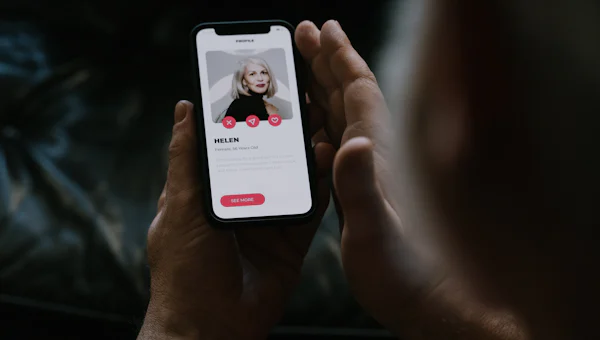
Person using smartphone for video content
The January restructuring context
Live Fest follows TikTok's January 2026 corporate restructuring, which separated U.S. operations into a joint venture to satisfy federal requirements. The move was designed to keep TikTok operational in its largest Western market after years of regulatory pressure. A Vegas creator showcase three weeks later reads like brand rehabilitation—a signal that TikTok isn't retreating, but doubling down.
That context matters for interpreting Live Fest's true purpose. This isn't just about elevating creators or experimenting with format. It's about demonstrating that TikTok is embedded in American entertainment infrastructure, that it creates economic value for creators and businesses, and that it's betting on the U.S. market long-term.
LIVE is the vehicle for that message because it's the one part of TikTok's product suite that hasn't worked yet in the West. If the platform can make live-streaming culturally legible to American audiences, it solves both a monetisation problem and a legitimacy problem. Dating creators are incidental beneficiaries if this gamble pays off.
They've already demonstrated that real-time advice, compatibility content, and relationship coaching can monetise on other platforms. TikTok LIVE offers a younger, more engaged audience—but only if that audience can be persuaded to treat live-streaming as something other than an occasionally interesting novelty. A single event won't achieve that, but it might signal whether TikTok is willing to resource the problem seriously.
Watch whether TikTok backs Live Fest with sustained algorithmic promotion and creator incentives—a one-off event means nothing without structural support for live-streaming content
Monitor dating and relationship creators' adoption patterns on TikTok LIVE as an early signal of whether real-time parasocial engagement can gain traction with Western audiences
Track whether dating platforms respond by investing in video features—if TikTok normalises live interaction amongst younger users, video-first dating products may finally find their moment