Match Group's Her Campaign: Authenticity Test or Portfolio Play?
·6 min read
Match Group acquired Her in 2025, marking its entry into dedicated sapphic dating
68% of Her users surveyed are slowly returning to dating this winter, with 67% citing healing and emotional depth as primary motivations
80% of Her users say queer community matters in dating decisions, with over half preferring to meet through events rather than digital interactions
Match Group controls significant queer dating market share through Tinder, OkCupid, and now Her
Match Group's first major brand play since acquiring Her in 2025 has arrived, and it's telling a story the company's investors aren't used to hearing: slow down, wait until you're ready, prioritise emotional depth over engagement. The campaign, titled "The Sapphic Restart," pushes back against the January optimisation frenzy that typically drives Q1 user acquisition across the dating sector. It's a bold repositioning—and a test of whether corporate consolidation can accommodate messaging that actively discourages the frequent usage patterns that drive monetisation.
Her launched the campaign through queer-led creative agency I Am Female, deploying wildposting installations in Los Angeles and New York around the tagline "Everything reminds me of her." According to the company, the creative uses symbolic imagery rather than explicit content to reflect sapphic intimacy. The campaign extends into podcast sponsorships with LGBTQ+ shows including "Two Dykes & a Mic" and "Lez Hang Out," plus partnerships with queer creators and editorial content published on Her's own platform.
Two women embracing intimately in urban setting
The DII Take
This is Match Group's first public test of whether it can hold a niche LGBTQ+ brand's cultural authenticity without sanding down the edges for portfolio optimisation.
The messaging—celebrating readiness over urgency, community over conversion—runs directly counter to the engagement metrics Wall Street expects from MTCH's dating properties. If Her can maintain this positioning whilst delivering growth, it proves the business case for letting acquired apps retain distinct identities. If Match quietly redirects Her towards standard conversion playbooks within 18 months, we'll know consolidation always wins.
Enjoying this article?
Join DII Weekly — the dating industry briefing, delivered free.
User research that challenges Match's digital-first model
Her's internal data, according to the company, shows 68% of surveyed users are slowly returning to dating this winter. The company reports that 67% cite healing, emotional depth, or major life transitions as their primary motivation—not profile optimisation or match volume. More telling: 80% say queer community matters in dating decisions, and over half prefer meeting through events rather than purely digital interactions.
The methodology, sample size, and timing of this research haven't been disclosed. But the findings point towards a user base that wants something structurally different from the swipe-match-message loop that dominates Match Group's product architecture. If accurate, it suggests Her's members are asking for offline community infrastructure—mixers, events, curated gatherings—that require significantly higher cost-per-acquisition and lower margins than digital-only engagement.
Group of diverse people gathering at community event
That's a problem for Match Group, which has spent years optimising for digital-first monetisation and centralised product development. The company's track record with acquired properties is mixed: some retain operational independence, others get absorbed into shared tech stacks and cross-promotional strategies. Her's push for in-person experiences would require dedicated spend that doesn't scale across MTCH's portfolio the way shared anti-fraud systems or payment infrastructure do.
Exton's messaging versus corporate reality
Her founder and CEO Robyn Exton positioned the campaign as a rejection of industry norms. 'The dating industry treats January like a fire drill—a frantic race to optimise your profile and find a partner,' she said in a statement. 'But for our community, readiness isn't a date on the calendar. It's an internal shift.'
Exton is still speaking as founder, but she's now operating within Match Group's corporate structure. That tension—between community-first rhetoric and investor-facing growth expectations—will define Her's trajectory.
Match didn't acquire Her to run a low-margin community organiser. They acquired it for access to queer women and nonbinary users, a demographic underserved by Tinder and Hinge but valuable enough to justify a separate brand.
The question is whether Match allows Her to operate as a genuine alternative to mainstream dating mechanics, or whether the app gradually shifts towards the engagement patterns that drive ARPU across the rest of the portfolio. Early signals matter. This campaign suggests Her has retained creative control and budget for brand differentiation. But creative campaigns are cheap. The real test comes when Her asks for investment in offline infrastructure or pushes back against product roadmaps designed to increase session frequency.
What this means for LGBTQ+ dating consolidation
Her's positioning arrives as LGBTQ+ dating continues to consolidate under major operators. Match Group controls a significant share of queer dating through Tinder, OkCupid, and now Her. Grindr (GRND) dominates queer men's dating but hasn't successfully expanded beyond that core. Bumble (BMBL) has limited queer market share despite attempts at inclusive positioning.
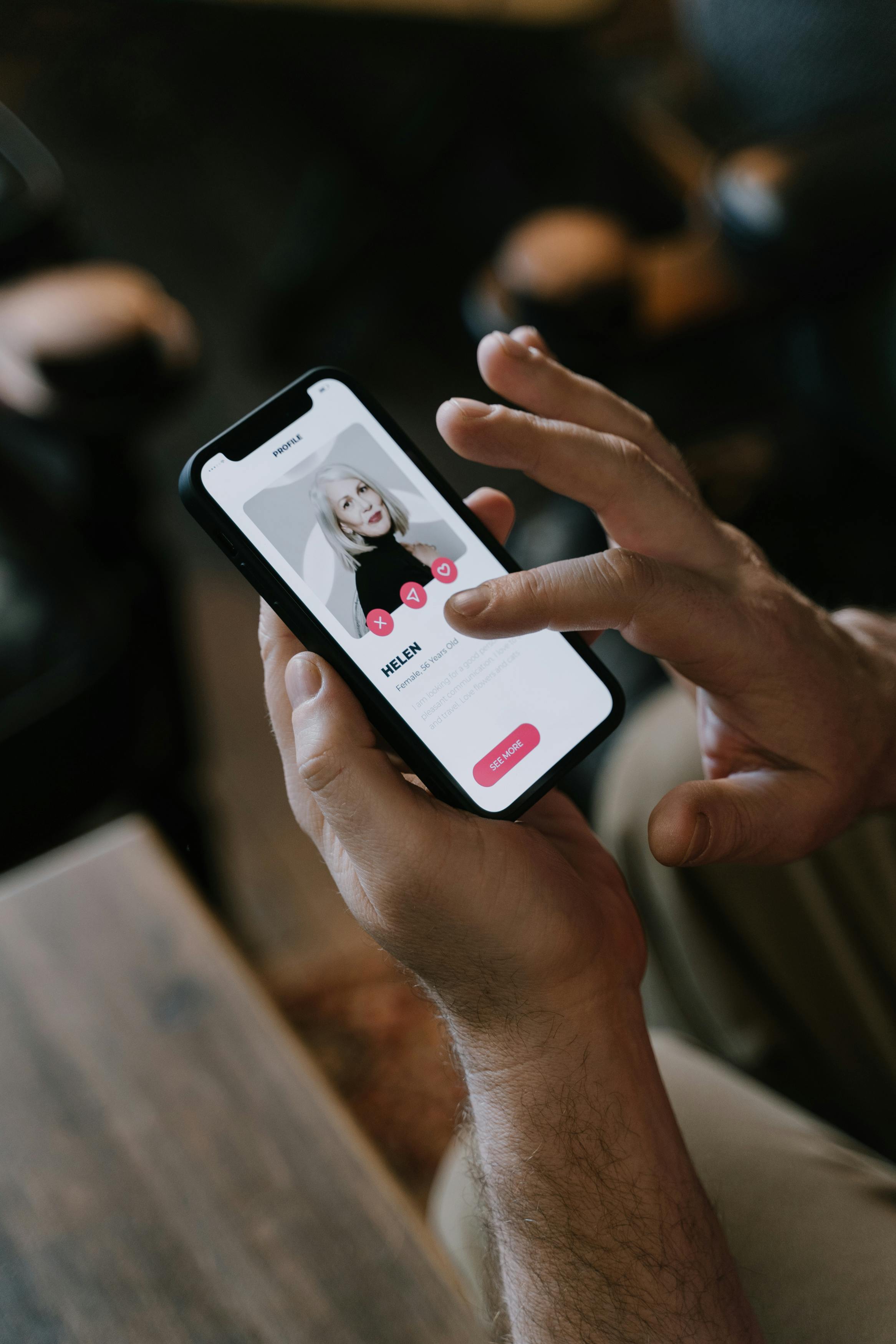
Person using dating app on mobile phone
The concern among LGBTQ+ users—expressed widely when Match's acquisition was announced—was that Her would lose its grassroots identity and become another diversity checkbox within a portfolio optimised for efficiency. This campaign is the first data point. It's distinctly queer in execution and messaging, not generic pride-month branding repurposed for January.
But campaigns are easier than operational autonomy. The harder questions will surface over the next 12 to 18 months. Does Her get budget for event programming that doesn't scale digitally? Does it retain control over trust and safety decisions, particularly around trans inclusion and community moderation, or does it adopt Match Group's centralised policies? Does it keep its own product roadmap, or does it migrate onto shared infrastructure that prioritises features proven to drive engagement on Tinder?
Operators watching this closely should note that Match Group's willingness to let Her differentiate in brand marketing doesn't necessarily translate to structural independence. The dating industry has seen this pattern before: acquired apps retain their logos and colour schemes whilst their product teams get absorbed and their distinctive mechanics get deprecated in favour of proven conversion funnels.
Her's early emphasis on slow dating and emotional readiness is either genuine positioning that Match will support with investment, or it's short-term brand theatre before the app gets optimised into the portfolio. Which outcome emerges will tell us whether niche dating apps can survive acquisition with their identities intact, or whether consolidation inevitably means homogenisation. Investors and operators should watch Her's product development and event programming over the next year, not its marketing taglines.
Watch Her's product roadmap and event programming investment over the next 12-18 months—not marketing campaigns—to determine whether Match Group allows genuine operational independence or gradually absorbs the app into standardised engagement mechanics
Her's user preference for offline events and slow dating creates a structural tension with Match Group's digital-first, high-margin monetisation model that will test whether niche apps can retain distinctive positioning post-acquisition
The success or failure of Her's community-over-conversion approach will signal whether LGBTQ+ dating consolidation can preserve grassroots identities or inevitably leads to homogenisation across corporate portfolios