Spark Networks' Insolvency: A Case Study in Niche Dating's Fragility
·6 min read
Spark Networks Services GmbH filed for preliminary insolvency on 16 January 2025 in Berlin court, affecting Zoosk, EliteSingles, Christian Mingle, SilverSingles, Jdate, and JSwipe
This marks the second financial crisis in three years after using Germany's StaRUG restructuring framework in late 2023 to address over-indebtedness
Dr Philipp Hackländer appointed as provisional administrator under case 3612 IN 328/26 by Charlottenburg Local Court
Preliminary insolvency assessment typically runs 90 to 120 days before determining restructuring viability or liquidation
Spark Networks Services GmbH entered preliminary insolvency administration on 16 January after self-filing in a Berlin court, placing the operational backbone of Zoosk, EliteSingles, Christian Mingle, SilverSingles, Jdate, and JSwipe into financial limbo. For the millions of singles paying monthly subscriptions across these platforms — many targeting seniors, Christians, and Jewish communities with limited alternative options — the next few months will determine whether their profiles vanish entirely, their data gets sold to the highest bidder, or their niche dating havens survive under new ownership. This marks the second existential crisis for Spark in three years.
The parent entity, Spark Networks SE, deployed Germany's StaRUG restructuring framework in late 2023 to address what the company disclosed as "over-indebtedness" and stave off insolvency. That the Berlin-based operational subsidiary is now in preliminary insolvency proceedings — with the Charlottenburg Local Court appointing attorney Dr Philipp Hackländer as provisional administrator under case 3612 IN 328/26 — suggests the earlier restructuring bought time but not salvation.
Financial documents and analysis related to corporate insolvency proceedings
The DII Take
Platform insolvency isn't just a corporate finance story. It's a live experiment in what happens when the infrastructure of modern courtship collapses beneath paying users who've handed over payment details, location data, and years of intimate messaging history.
Spark's portfolio skews heavily toward niche demographics — seniors on SilverSingles, Jewish singles on Jdate and JSwipe, Christians on Christian Mingle — meaning closures wouldn't just scatter users into the broader market. They'd strand communities with genuinely fewer alternatives than the average Tinder swiper, raising uncomfortable questions about whether niche dating can survive outside Match Group's umbrella or venture-backed land grabs.
Enjoying this article?
Join DII Weekly — the dating industry briefing, delivered free.
What preliminary insolvency actually means for active subscribers
Preliminary insolvency administration in Germany establishes a holding pattern. Hackländer's role is to assess whether Spark Networks Services can restructure its debts and continue trading, or whether the company proceeds to formal insolvency and liquidation. During this phase, operations typically continue — meaning Zoosk and EliteSingles members aren't waking up to dead apps tomorrow.
The uncertainty lies in what follows. If Spark's financial position proves untenable, three outcomes present themselves: a sale of the entire portfolio to a single buyer (unlikely given the distressed valuation), a piecemeal auction of individual brands to different operators, or outright closure of underperforming platforms. Each scenario carries distinct risks for users.
A portfolio sale would likely preserve continuity but could see a new operator renegotiating terms, repricing subscriptions, or consolidating overlapping brands. Piecemeal sales raise thornier questions. Christian Mingle might find a faith-focused acquirer willing to maintain its positioning; SilverSingles could attract an age-tech investor.
But smaller assets like JSwipe — a mobile-first Jewish dating app competing against better-funded generalist platforms — might not find buyers at all. Closure is the scenario nobody wants to detail in press releases but compliance teams must plan for. When a dating platform shuts down, subscribers in annual contracts face potential refund claims against an insolvent entity — meaning they join the queue of creditors with limited recovery prospects.
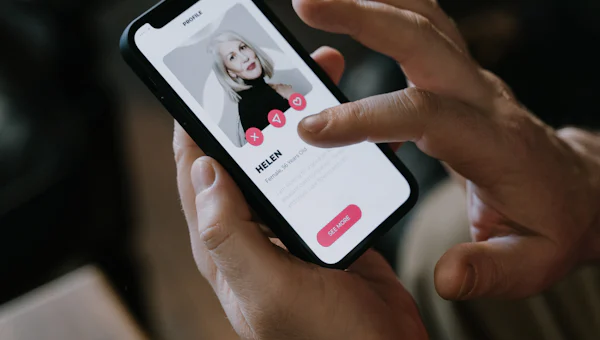
Mobile dating application interface on smartphone screen
The data problem that operators don't discuss
Spark's insolvency filing raises a question dating operators prefer not to answer publicly: what happens to user data when a company enters insolvency proceedings? The platforms hold years of behavioural data, location histories, payment information, and private messages for millions of users across Europe and North America.
Under the EU General Data Protection Regulation (GDPR), data protection obligations survive insolvency. An administrator inheriting a dating platform doesn't gain carte blanche to monetise or transfer user data without legal basis. But enforcement is murky when a company is actively failing.
Regulators must balance data protection principles against the practicalities of corporate restructuring and potential sales. If Spark's platforms get sold, user data transfers to the acquirer as part of the asset purchase — typically permissible under GDPR's legitimate interests basis, provided users receive notice and retain deletion rights.
Trust and safety teams at other operators should be watching this closely. Spark's predicament will test whether European data protection authorities enforce deletion requirements against insolvent entities, or whether financial collapse creates a de facto exemption that leaves user data in administrative limbo.
Why niche dating struggles outside the duopoly
Spark's portfolio was purpose-built for demographics underserved by swipe-first generalist apps: SilverSingles for over-50s seeking serious relationships, Christian Mingle for faith-based matching, Jdate and JSwipe for Jewish singles. These platforms command subscriber loyalty precisely because alternatives are scarce.
That loyalty hasn't translated to financial resilience. According to the company's self-filing, "strained economic conditions" drove the insolvency application — corporate language that likely obscures a combination of factors including sustained customer acquisition cost inflation, subscriber churn to free alternatives, and the weight of debt from previous restructurings.
Match Group's scale allows it to sustain losses on experimental products while monetising Tinder and Hinge. Bumble went public and weathered a valuation collapse but retains venture backing and a diversified product suite spanning dating, friendship, and professional networking. Spark had neither the cash reserves to survive prolonged unprofitability nor the growth trajectory to attract fresh capital.
The market has spoken clearly over the past 24 months: mid-tier dating operators without unique distribution advantages or category-defining products cannot compete on customer acquisition whilst servicing legacy debt. Spark's second restructuring in three years proves the point.
Business meeting discussing corporate strategy and financial restructuring
What happens next
The preliminary insolvency phase typically runs 90 to 120 days, during which Hackländer will assess creditor claims, evaluate restructuring options, and determine whether Spark Networks Services has a viable path forward. Subscribers should expect continued service in the near term but start considering data export and alternative platforms.
For niche communities, particularly seniors and faith-based users, Spark's instability underscores a structural vulnerability: the dating products built specifically for them operate on thinner margins and shakier financial foundations than the generalist apps they avoid. If Christian Mingle or SilverSingles disappear, the next closest alternative is often a Facebook group or a generalist platform with rudimentary filtering — a material step backwards in user experience.
Operators watching this unfold should recognise that niche dating's future likely involves either Match Group absorption (the company already owns OurTime for seniors and has dabbled in faith-based features) or venture-funded challengers building community-first models that don't rely solely on subscription revenue. The middle ground Spark occupied — profitable enough to survive but not to thrive — has collapsed.
Niche dating platforms serving seniors, faith-based, and ethnic communities face structural vulnerability when operating outside major tech conglomerates, with limited ability to compete on customer acquisition costs whilst servicing debt
Current subscribers should immediately export personal data and conversation histories whilst services remain operational, as insolvency proceedings create uncertainty around data protection enforcement and platform continuity
The collapse of middle-tier operators signals consolidation ahead: niche dating services will likely either be absorbed by Match Group or require venture-backed community-first business models that extend beyond pure subscription revenue