Snapchat's Super Bowl Playbook: A Missed Opportunity for Dating Apps
·6 min read
Match Group reported an 8% year-on-year decline in average session times across its portfolio in Q4 2025
63% of UK singles cite 'too many features I don't use' as a reason for deleting dating apps, according to the Online Dating Association's 2025 survey
Snapchat's Super Bowl LX strategy deploys immersive AR lenses, in-stadium camera tech, and curated creator content as a second-screen playbook
Bumble and Hinge report increasing 'match and ghost' behaviour as members struggle to build meaningful exchanges
Dating operators looking for lessons in real-time engagement should watch what Snapchat is doing this weekend. The platform's Super Bowl LX strategy—immersive AR lenses, in-stadium camera tech, and curated creator content—represents a fully realised second-screen playbook that dating apps have barely begun to explore. Whilst Bumble experiments with conversation prompts about trending topics and Hinge occasionally surfaces cultural moments in its interface, no major platform has cracked how to turn shared live events into genuine connection opportunities at scale.
The gap matters because dating apps face a retention crisis that conversation starters alone won't fix. According to Match Group's Q4 2025 earnings, average session times across its portfolio declined 8% year-on-year. Bumble reported similar trends, with CEO Lidiane Jones acknowledging that members increasingly 'match and ghost' rather than building meaningful exchanges. Features anchored to real-time cultural moments—a playoff game, a finale, an awards show—could provide the hooks that tired openers like 'what are you up to this weekend?' no longer deliver.
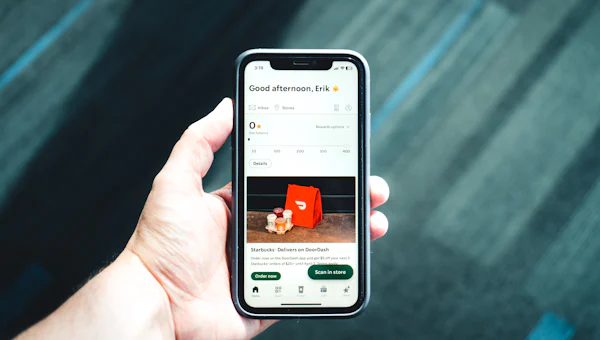
Mobile phone displaying social media engagement during live sporting event
The DII Take
Snapchat's Super Bowl activation is feature theatre for its own business model, but the underlying infrastructure—location-aware AR, real-time content feeds, curated creator perspectives—maps surprisingly well onto dating's core problems. The challenge isn't whether dating apps can build second-screen features; it's whether they can do so without adding yet another layer of complexity to already cluttered interfaces. Most dating product teams would do better to solve for boring reliability than chase temporal engagement spikes. Still, platforms willing to experiment with event-driven prompts and location-based experiences may find a middle path worth testing.
Enjoying this article?
Join DII Weekly — the dating industry briefing, delivered free.
Bridging digital suggestion and physical reality
Snapchat's AR stadium integration—custom team overlays and location-triggered lenses for attendees—demonstrates how platforms can layer digital context onto physical spaces without requiring users to abandon the real world for their screens. Dating apps have flirted with this concept through check-in features and location tags, but execution remains clumsy. Tinder's 'Places' feature, quietly killed in 2020, never solved the privacy-versus-utility trade-off. Happn's proximity-based matching works for a narrow use case but hasn't scaled beyond that core proposition.
What Snapchat gets right is optionality. Users at the Superdome can engage with AR effects or ignore them entirely; the experience doesn't demand participation to function.
Dating apps, by contrast, tend to make location features binary: share your real-time whereabouts or lose access to the functionality. That's a product design failure, not a technical constraint.
The opportunity lies in softer implementations. A dating app could surface event-based conversation prompts—'Are you watching the final?' or 'Did you see that goal?'—without requiring location data or disrupting the core match feed. Members who respond signal both availability and shared interest; those who don't remain unaffected. Bumble's 'Opening Moves' framework, introduced in 2024 to reduce the burden on women making first contact, could easily accommodate event-triggered prompts as an optional layer.
Couple on first date using smartphone together
More ambitious platforms might explore AR features for video dates or in-person meetups. Imagine a first-date mode that lets both parties access shared visual prompts—icebreaker questions, nearby activity suggestions, or even playful filters that reduce the awkwardness of those first few minutes. The technology exists; the product thinking does not.
The creator programme model and dating's influencer problem
Snapchat's decision to embed curated Snap Stars—Katie Austin, Ross Smith, Jack Mancuso, Treasure Wilson—at the Super Bowl mirrors a trend dating apps are tentatively exploring: verified voices who model healthy platform behaviour. Bumble introduced 'Compliments' badges in 2024, rewarding members whose interactions receive positive feedback. Hinge's 'Most Compatible' algorithm surfaces profiles that exemplify active engagement. Both efforts attempt to guide user behaviour through example rather than mandate.
The influencer approach carries obvious risks. Dating apps exist to facilitate peer-to-peer connection; introducing a creator layer risks platformising what should remain intimate. Nobody wants their match feed to feel like a TikTok clone. But there's a defensible middle ground: verified members who share date ideas, conversation techniques, or even just honest accounts of what works and what doesn't. Field, the London-based dating app that pivoted to in-person events in 2023, has quietly built this model into its core product.
Snapchat's creator programme highlights the value of exclusive access. The platform didn't just show its users the Super Bowl; it gave them perspectives unavailable elsewhere.
Dating apps could apply similar thinking to location-based features. Members attending the same concert, festival, or sporting event might access a temporary shared feed—not a public forum, but a curated space where verified attendees can connect around the moment they're experiencing. Grindr already does this for Pride events and circuit parties; heterosexual-focused platforms remain risk-averse.
Why dating apps won't build this (and why they should anyway)
The structural barriers are real. Dating apps optimise for conversion: free user to subscriber, match to message, message to date. Features that don't directly ladder up to revenue face scepticism from product leaders and outright hostility from growth teams. Real-time event integrations are expensive to build, difficult to scale, and hard to monetise. Snapchat can justify the investment because its business model rewards attention and ad inventory; dating apps make money from frustration and scarcity.
Person reviewing dating app interface on smartphone
There's also the trust problem. According to figures from the Online Dating Association's 2025 member survey, 63% of UK singles cite 'too many features I don't use' as a reason for deleting apps. Adding event-based prompts or location-triggered AR risks exacerbating feature bloat rather than solving for engagement. Any new functionality must clear an increasingly high bar: does this help people meet, or does it distract from that goal?
But dismissing second-screen thinking entirely would be shortsighted. Younger cohorts—particularly Gen Z members who've aged into dating apps over the past three years—expect platforms to integrate with their lived experiences rather than exist as separate digital spaces. The most successful consumer apps of the past decade have been those that bridge online and offline contexts seamlessly. Dating apps remain stubbornly bifurcated: you're either swiping or you're not, chatting or you're not, on a date or you're not.
Platforms that crack real-time, event-driven engagement without sacrificing simplicity will differentiate in a market where features increasingly blur together. Whether that means Super Bowl lenses or something far simpler—a prompt, a conversation starter, a reason to message that match you've been ignoring—depends on who's willing to experiment first. Based on MTCH and BMBL's recent product roadmaps, neither incumbent seems inclined to try. That leaves room for someone else.
Dating platforms must balance innovation with simplicity—event-driven features only work if they don't add to existing feature bloat that already drives 63% of users away
The real opportunity lies in optional, contextual engagement rather than mandatory participation—soft integrations that bridge online matching with offline cultural moments without demanding location data or complex interactions
With Match Group and Bumble showing little appetite for experimentation, smaller platforms have a window to differentiate through real-time, event-based connection features before incumbents catch up