India's Running Clubs: The Real Threat to Dating Apps
·6 min read
60% of Indian running club participants cite 'meeting people' as primary motivation over fitness goals
Membership in Delhi and Bangalore clubs doubled between late 2023 and early 2025
Match Group generated only $45M in India revenue during 2024 from a population of 1.4 billion
Running clubs maintain 55:45 male-to-female ratios versus 70:30 male-skewed ratios on Tinder India
India's metropolitan running clubs have exploded over the past 18 months, but the interesting bit isn't the fitness trend itself—it's what participants are actually using them for. These groups are becoming the social infrastructure that dating apps have failed to provide, offering plausible deniability in a market where parental oversight and conservative norms make explicit dating platforms culturally problematic. For operators and investors, this represents a warning signal about whether India's digital dating market will ever materialise as projected.
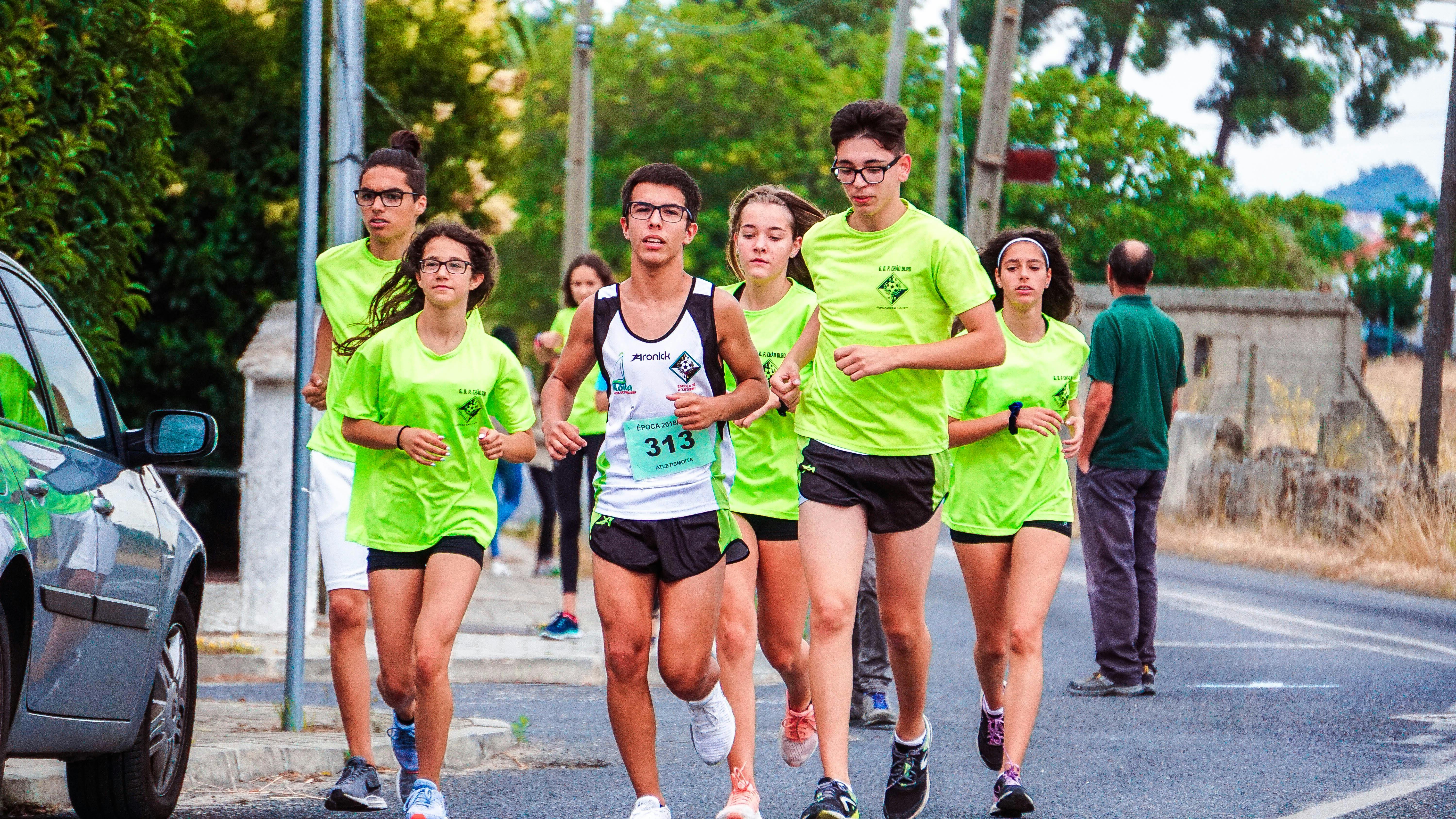
Group of runners exercising together in urban setting
The phenomenon centres on India's Tier 1 cities, where groups ranging from 30 to 300 runners gather weekly for 5K to 10K runs followed by coffee or breakfast. Organisers report membership doubling between late 2023 and early 2025, with waiting lists now common for popular routes. What began as scattered WhatsApp groups has professionalised into structured clubs with branded gear, corporate sponsorships, and Instagram presences that look suspiciously like lifestyle marketing campaigns.
This matters for dating operators because it represents exactly what platforms have struggled to deliver: low-stakes, mixed-gender social infrastructure that sidesteps India's still-conservative dating norms.
Running clubs offer plausible deniability—you're there for fitness, not explicitly to meet someone—which matters enormously in a market where parental oversight and social judgment around dating remain significant barriers to app adoption. If this trend holds, it suggests the real competition for dating platforms in India isn't other apps—it's offline social formats that solve the stigma problem more elegantly than any product feature can.
Enjoying this article?
Join DII Weekly — the dating industry briefing, delivered free.
Circumventing the courtship question
The structural advantage running clubs hold in the Indian context has little to do with endurance training. Parents object to dating apps. They don't object to exercise. This creates a massive permission infrastructure that platforms can't replicate, regardless of how sophisticated their matching algorithms become.
Interviews with participants across Mumbai, Bangalore, and Delhi reveal consistent patterns. A 28-year-old consultant in Bangalore described joining a running group after 'app fatigue', citing the ability to gauge personality and chemistry before any explicit romantic interest gets declared. A Mumbai-based product manager noted her parents actively encouraged the hobby, viewing it as 'productive' unlike her previous Bumble subscription, which prompted uncomfortable family conversations.
Runners socialising after morning workout session
The clubs typically maintain a 55:45 male-to-female ratio, far more balanced than India's dating apps, where Match Group has previously disclosed gender ratios approaching 70:30 male on Tinder India. Organisers actively manage these ratios, with several groups implementing alternating registration windows by gender to prevent male-heavy cohorts.
What's notable is how explicitly the groups avoid acknowledging their social-romantic function whilst structuring everything around it. Post-run breakfasts extend to two-hour affairs. Route selections prioritise scenic backdrops over training efficiency. Multiple organisers mentioned crafting 'pace groups' specifically to encourage mixing, despite this making zero sense from a training perspective.
The platform response question
Dating platforms operating in India face a legitimacy problem that no amount of product iteration solves. According to industry data, India represents Match Group's fastest-growing revenue market by percentage but remains tiny in absolute terms—approximately $45M in 2024 revenue from a population of 1.4 billion, according to figures disclosed in MTCH's Q3 2024 earnings.
Platforms require users to declare intent (I am here to date), which carries social cost in a market where arranged marriage remains the statistical norm for relationship formation.
Activities like running clubs, cooking workshops, or hiking groups allow connection formation without declaration, which is precisely what many young Indians need. Bumble has attempted to address this with Bumble BFF, positioning itself as broader social infrastructure rather than purely romantic matching. Usage data for BFF in India hasn't been publicly disclosed, but the company noted in Q2 2024 earnings that international markets show higher BFF adoption than North America, suggesting some traction.
The competitive threat isn't existential—running clubs don't scale messaging, don't facilitate discovery beyond geographic proximity, and require significant time investment. But they do compete for the same evening and weekend hours that might otherwise go to swiping, and they offer something platforms fundamentally can't: the ability to tell your parents you're going for exercise whilst actually pursuing romantic connection.
The investor attention question
For operators and investors tracking Indian market development, the running club trend represents a canary-in-coal-mine moment about stigma barriers. If young professionals with disposable income and smartphones are choosing analogue social formats over digital platforms, it suggests the product-market fit problem in India is cultural, not technical.
Athletic community gathering in metropolitan area
This has implications for valuation models that treat India as a future growth engine once smartphone penetration reaches critical mass. Bumble's market entry strategy assumed cultural conservatism would ease as younger cohorts aged into partnership formation. The running club boom suggests those cohorts may simply route around platforms entirely, choosing social formats that don't require them to fight cultural norms.
Match Group's recent India investments have focused on localisation—vernacular language support, India-specific features like astrological matching on Tinder. But localising features doesn't solve the fundamental issue that using a dating app remains a disclosure of intent that carries reputational risk, particularly for women. Until that shifts, platforms are competing with one hand tied behind their backs against social formats that don't require disclosure at all.
The fitness industry will likely see continued investment in group formats that facilitate connection without naming it. The trend echoes how exercise apps have emerged as alternative social platforms in other markets, though India's cultural context makes the phenomenon particularly pronounced. Meanwhile, dating platforms globally have explored fitness-focused features, and niche players like fitness-specific dating apps have attempted to bridge the gap. For dating platforms, the question becomes whether to compete directly—launching their own event verticals, perhaps—or accept that some markets require social infrastructure that doesn't look like a dating product at all, even when everyone involved knows exactly what it is.
India's cultural stigma around dating apps may not diminish as quickly as platform operators have projected, undermining growth models that assume smartphone penetration alone will drive adoption
Offline social formats that provide plausible deniability represent structural competition that product features cannot address—platforms may need to build event and activity verticals rather than purely digital matching
Watch whether dating platforms launch their own offline event infrastructure or partner with existing group activity operators to capture user attention without requiring explicit dating intent declarations