Surf Dating's HYROX Play: A Fitness Fix for Swipe Fatigue?
·6 min read
Surf Dating has secured official partnership status with HYROX, the mass-participation fitness racing format, to host in-person meetups across North America
HYROX events draw between 2,000 and 8,000 participants with entry fees typically ranging from $100 to $150, representing an affluent, active demographic
The racing series operates across North America, Europe, and parts of Asia, staging more than 50 events annually as of 2024
Match Group and Bumble have largely avoided ongoing third-party sports partnerships, focusing instead on owned brand experiences or performance marketing
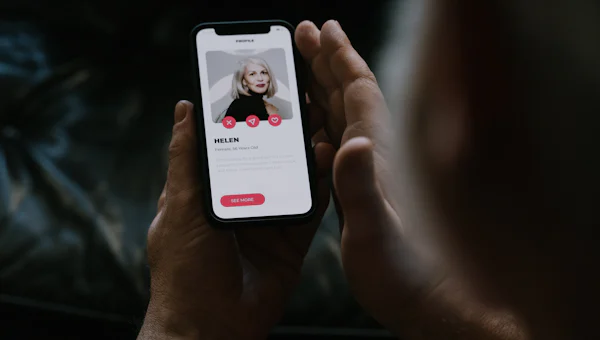
Dating apps have a retention crisis, and Surf Dating thinks it's found the cure: corralling singles into sweaty fitness venues rather than letting them swipe themselves into oblivion. The company's new partnership with HYROX, the booming fitness racing format, puts it alongside established brand sponsors and represents the latest attempt to solve swipe-fatigue by forcing proximity between physically active, financially stable singles.
According to the company's announcement, Surf will facilitate offline connections between singles at HYROX events, positioning the partnership as a route to 'authentic connections' among fitness-focused members. HYROX, which launched in 2017 and has since expanded to more than 20 countries, combines running with functional fitness stations in a standardised race format that's drawn comparisons to obstacle course racing but with broader accessibility.
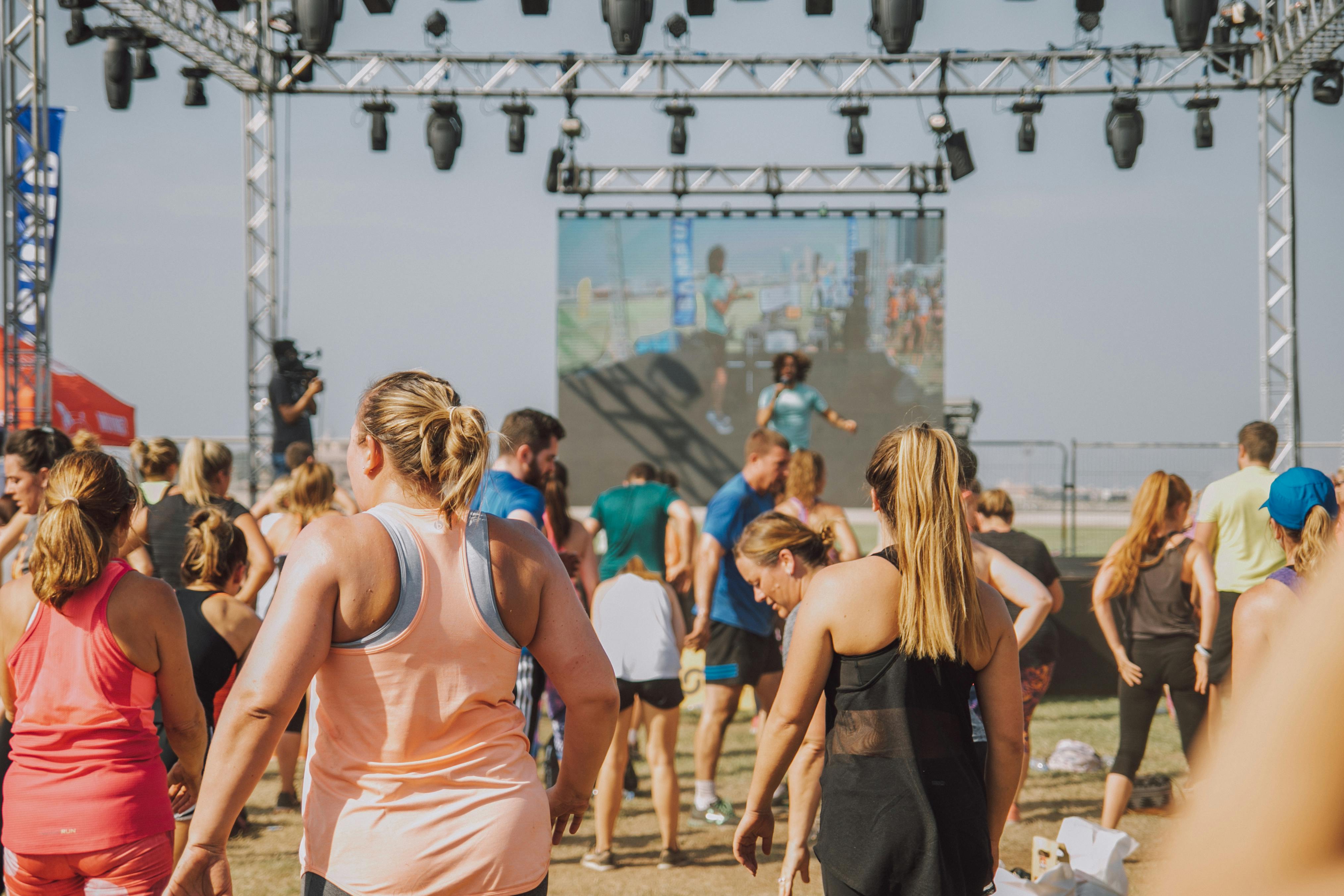
Fitness event participants competing in athletic competition
The DII Take
This is the dating equivalent of trading floor arbitrage: if you can't solve the product problem (matching people who actually want to meet), change the venue. Surf is betting that physical proximity plus a shared endorphin rush equals better outcomes than algorithmic compatibility scores. Whether that thesis holds depends entirely on execution—and whether paying to stand near other sweaty singles at a fitness event actually feels less transactional than swiping left in your kitchen.
Enjoying this article?
Join DII Weekly — the dating industry briefing, delivered free.
The partnership signals something more interesting: smaller operators are willing to burn capital on experiential differentiation because they can't outspend Match Group or Bumble on user acquisition.
Why fitness racing makes strategic sense
HYROX represents a particularly attractive demographic capture for dating operators. The format skews younger and more affluent than traditional road racing, with entry fees typically ranging from $100 to $150 per participant. Events regularly draw between 2,000 and 8,000 participants depending on venue size, creating concentrated pools of active, financially stable singles—precisely the cohort that dating apps struggle to retain beyond the first few months.
For Surf, which operates well outside the top tier of dating apps by user base, the partnership offers a differentiation lever that established platforms can't easily replicate at scale. Bumble has experimented with IRL events in select cities, and Hinge ran a summer pop-up series in 2023, but neither has committed to ongoing third-party sports partnerships as a core distribution channel. That reluctance likely stems from unit economics: sponsoring niche fitness events doesn't scale the way performance marketing does, and the conversion path from race participant to paying subscriber remains unproven.
People socializing at fitness and sporting venue
HYROX's rapid geographical expansion does provide Surf with potential reach beyond a single-city activation. The racing series operates across North America, Europe, and parts of Asia, staging more than 50 events annually as of 2024. If the North American partnership delivers meaningful member acquisition or retention lift, the model theoretically travels.
The real product problem this doesn't solve
Surf's pitch centres on guaranteed commonality—both parties attend the same fitness event, therefore they share interests. The claim requires scrutiny. Attending a HYROX race indicates one data point: willingness to pay for a structured fitness challenge on a particular Saturday. It doesn't signal relationship readiness, communication style, life stage alignment, or any of the compatibility vectors that determine whether two people actually want a second date.
Singles can register for a HYROX event as fitness participants first, daters second, which lowers the psychological barrier compared to explicitly singles-focused mixers or speed-dating formats.
What the partnership does offer is plausible deniability for attending. That framing matters in a market where 'dating fatigue' consistently ranks among the top reasons members churn, according to survey data from Pew Research Center and others.
The competitive context here is telling. Match Group's portfolio hasn't pursued sports partnerships with anywhere near this level of integration, likely because its scale demands channels that can drive six-figure monthly user adds. Bumble's event strategy has focused on owned brand experiences rather than third-party tie-ups, maintaining tighter control over messaging and attendee experience. Surf's approach suggests a different calculation: that association with an established fitness brand carries more credibility than hosting branded mixers under its own name.
What operators should watch
The HYROX model represents a test case for whether dating apps can credibly pivot from software products to experience facilitators without fundamentally rebuilding their business models. If Surf can demonstrate meaningful conversion—attendees who meet at events and convert to active, paying app members—it validates a new wedge for customer acquisition that doesn't rely on Instagram ads or TikTok influencers.
Athletic individuals training together in group fitness setting
Monetisation mechanics remain unclear from the announcement. Does Surf pay HYROX for partnership rights? Do members receive discounted race entry? Is there a co-branded registration tier? The answers matter because they determine whether this is a sustainable acquisition channel or an expensive brand exercise.
For trust and safety teams, IRL activations introduce operational complexity that purely digital platforms avoid. Facilitating in-person meetups at third-party events requires clear policies around harassment reporting, liability, and duty of care—issues that don't exist when members arrange their own dates through chat. Surf's compliance obligations don't change because the introduction happens at a fitness venue rather than a coffee shop, but the perceived association does shift.
The broader strategic question is whether niche partnerships like this actually move the needle on retention or simply create marketing moments. Dating apps have a novelty problem: new features generate initial buzz, then usage reverts to baseline within weeks. If attending a HYROX event doesn't result in better match outcomes—measured by conversation rates, date completions, or relationship formation—then the partnership becomes another top-of-funnel tactic rather than a structural improvement to product-market fit.
The partnership will likely prompt other challenger dating apps to explore similar sports and lifestyle tie-ups, particularly in verticals with strong self-identified communities. Expect climbing gyms, cycling clubs, and running crews to field more partnership enquiries over the next 12 months. Whether any of those deals translate to sustainable user growth or merely create content for funding pitch decks remains the open question.
Watch whether Surf can prove meaningful conversion from event attendees to active paying members—this validates or invalidates the experiential acquisition model for dating apps
Monitor how trust and safety obligations evolve when dating platforms facilitate in-person meetups at third-party venues, particularly around liability and duty of care
Expect challenger dating apps to pursue similar lifestyle and sports partnerships over the next 12 months, particularly with climbing gyms, cycling clubs, and running communities